
If you’ve ever watched a lacrosse game, you’ve likely noticed how fast the ball moves and the intensity with which players handle it. This leads to a common question: How hard are lacrosse balls?
- History of Lacrosse Balls
- Lacrosse Ball Size (Circumference)
- Lacrosse Ball Weight
- Lacrosse Ball Diameter
- Lacrosse Ball Material
- Lacrosse Ball Color
- Comparing Lacrosse Balls to Other Sports Balls
- Regulation and Standard
- Certified balls must display the NOCSAE® SEI logo.
- Impact of Not Following The Regulations
- People Also Ask
Lacrosse balls are hard because they are made with dense and solid vulcanized rubber; these are specialized balls and without them, a lacrosse game cannot be played.

As we move on in this article, I’ll tell you about the details of lacrosse balls, including their size, material, weight, and why they are built the way they are.
History of Lacrosse Balls
From ancient times to the modern era, lacrosse balls went through quite a glow-up by the experts to improve the quality while ensuring the safety of the players.
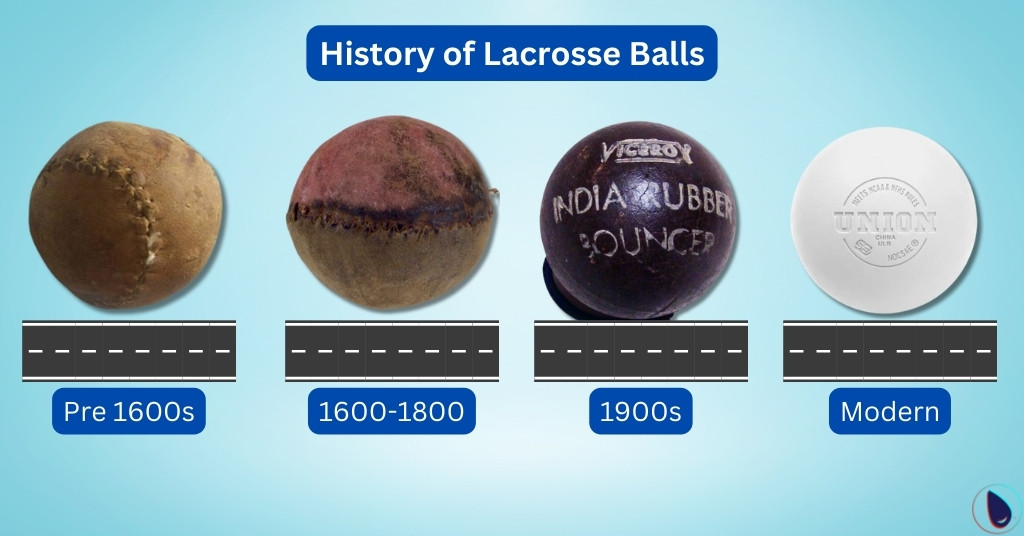
| Period | Material | Description |
| Pre-1600s | Deerskin, Wood, Stone, Clay | Original lacrosse balls were made with natural materials like deerskin stuffed with fur, wood, or clay. They were egg-shaped in the beginning. |
| 1600s-1800s | Wood, Leather, Stone | They started making balls with leather wrapped around the stone. |
| 1900s | Rubber | Dr. William George Beer in 1860 ruled that the lacrosse ball should be made of rubber. |
| Modern Day | Solid Vulcanized Rubber, Synthetic Blends | Now, NOCSAE-approved lacrosse balls made of rubber are used. However, innovations are allowed as long as they meet the standards. |
When considering the question, “How hard are lacrosse balls?” It’s important to understand the lacrosse ball size and diameter.
Read More: Where Did Lacrosse Originate?
Lacrosse Ball Size (Circumference)
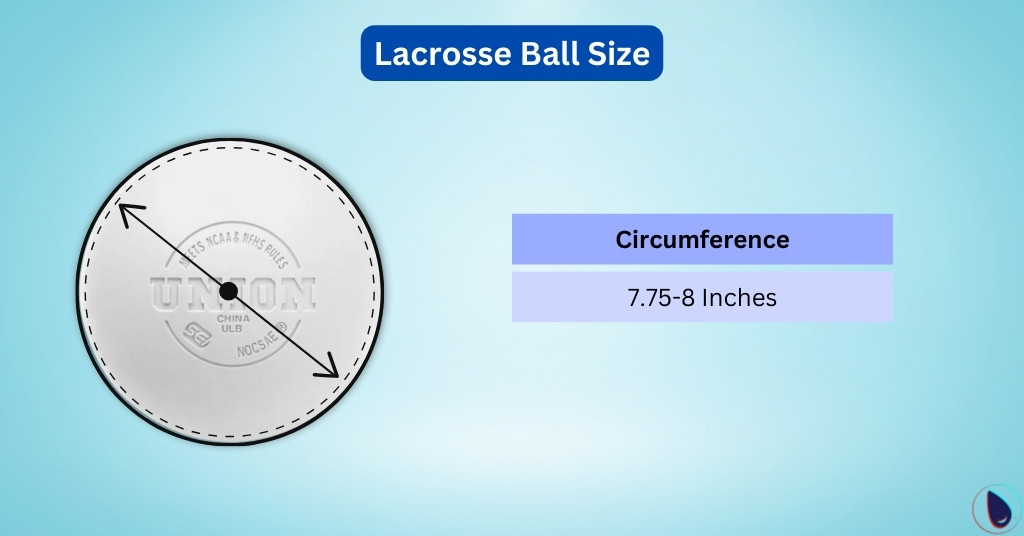
According to the official NOCSAE regulations, the standard lacrosse ball size (circumference) is about 7.75 to 8 inches.
This lacrosse ball size remains the same across all lacrosse leagues, from college clubs to professional games.
Lacrosse Ball Weight
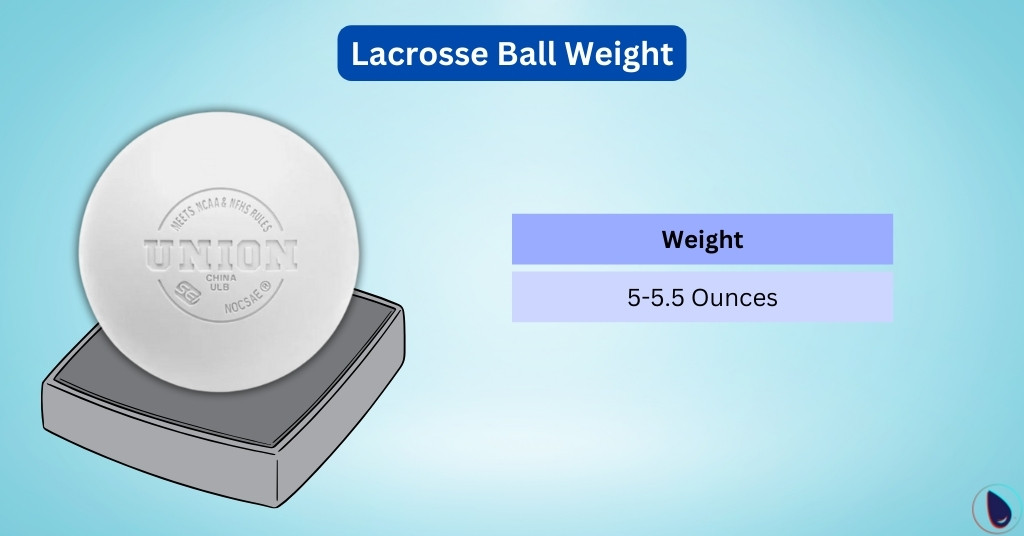
The standard lacrosse ball weight is between 5 and 5.5 ounces (141.75 and 155.92 grams). This weight is carefully chosen to balance control and speed during play.
A heavier ball would be more challenging to throw accurately, while a lighter ball might not maintain momentum during gameplay.
The standard lacrosse ball weight is between 5 and 5.5 ounces (141.75 and 155.92 grams). This weight is carefully chosen to balance control and speed during play.
A heavier ball would be more challenging to throw accurately, while a lighter ball might not maintain momentum during gameplay.
Lacrosse Ball Diameter
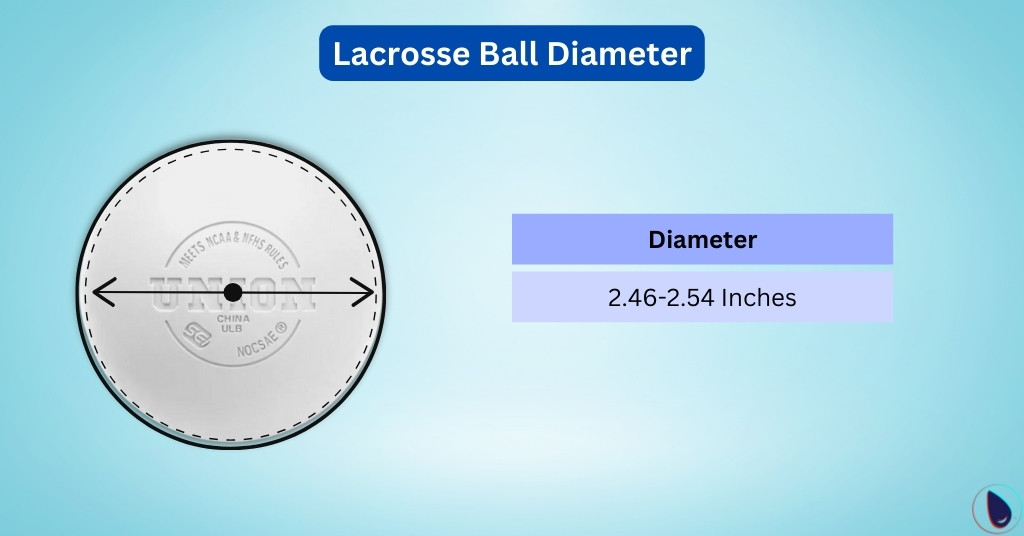
Lacrosse ball diameter ranges between 62.7 mm and 64.7 mm. To put that in simpler terms, in inches, that’s about 2.468 inches at the smallest and 2.547 inches at the largest.
When released from a height of 1.83 meters (72 inches), the ball should rebound to a height between 1.09 and 1.30 meters (43 to 51 inches).

Lacrosse Ball Material
Knowing lacrosse ball material is crucial to answering “How hard are lacrosse balls?”. Each material holds different characteristics.
Lacrosse balls are mostly made from either natural or synthetic rubber. This material is key because it helps the ball keep its bounce and durability, which are both super important.
To help lacrosse balls keep their shape and not get too soft or too hard, stabilizers like silica are mixed into the rubber.
Pigments are added to give the ball its color, whether it’s the classic white, bright yellow, or something else.
It’s also important that these pigments meet safety standards since lacrosse balls come into contact with players’ skin and the ground during games.
Lacrosse Ball Color
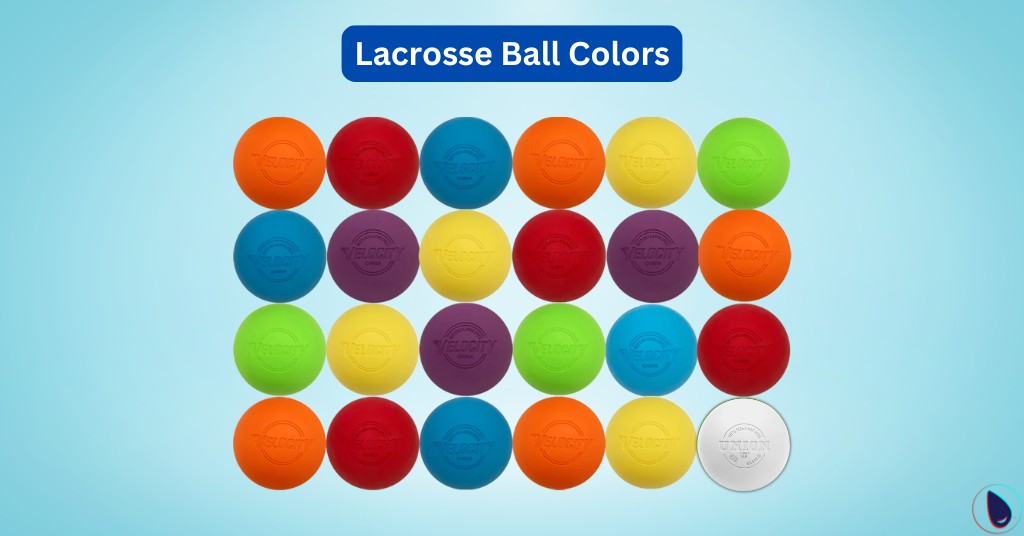
One of the first things you’ll notice about a lacrosse ball is its color. White is the standard for men’s field lacrosse, helping the ball stand out against the green grass.
Women’s lacrosse often uses yellow balls, while orange is a go-to for indoor or box lacrosse.
You might even see colors like blue, green, and pink during practices and special events.
Comparing Lacrosse Balls to Other Sports Balls
Just like lacrosse, all the other ball sports differ from each other, varying according to the demands of the game. How do they differ? Let me draw a comparison.
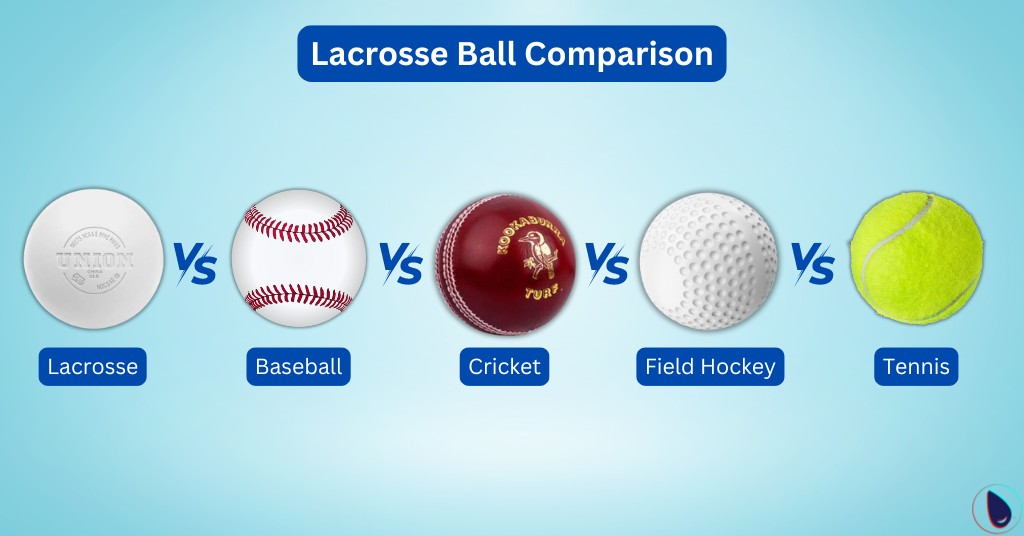
| Sport | Ball Material | Size (Diameter) | Weight |
| Lacrosse | Solid Rubber | 2.5 inches (63.5 mm) | 5.0 - 5.25 ounces (142-149 g) |
| Baseball | Rubber Core with Leather Cover | 2.9 inches (74 mm) | 5.0 - 5.25 ounces (142-149 g) |
| Cricket | Cork Core with Leather Cover | 2.8 - 2.9 inches (71.3-73 mm) | 5.5 - 5.75 ounces (156-163 g) |
| Field Hockey | Plastic or composite | 2.9 inches (73 mm) | 5.5 - 5.7 ounces (156-163 g) |
| Tennis | Rubber Core with Felt Cover | 2.57-2.70 inches (65.41-68.58 mm) | 1.98 - 2.10 ounces (56-59.4 g) |
Regulation and Standard
NOCSAE has set specific standards for new lacrosse balls. These regulations ensure safety and prevent possible injuries. These standards include:
- Surface: smooth or slightly textured, made from solid elastomeric materials, with embossed data and logos allowed.
- Weight: Between 5.0 and 5.55 ounces.
- Circumference: Between 7.75 and 8.0 inches.
- Compression Deflection (C-D): 110-150 pounds at 25% displacement.
- Coefficient of Restitution (COR): Between 0.60 and 0.70.
Certified balls must display the NOCSAE® SEI logo.
Read More: Rules of Lacrosse
Impact of Not Following The Regulations
Certification of lacrosse balls is an important safety issue. A ball weighing 150 grams, traveling at 90 mph can cause severe concussion, leading to over 1,000 on the Severity Index.
The risk increases if a ball hardens beyond the NOCSAE standard of 110-150 compression deflection (CD).
A ball with a hardness of 215 CD can push the severity index above 1,300, potentially causing even more significant injuries, such as crushing the jaw. Maintaining the correct hardness level is essential for player safety.
I have put together a list of the best lacrosse equipment you should own before you hit the field.
Read More: Positions in Lacrosse
People Also Ask
Is the Lacrosse Ball Hard or Soft?
Lacrosse balls are hard. They are made from solid vulcanized rubber, designed to endure the physical demands of the game while maintaining bounce and durability.
How Hard Does a Lacrosse Ball Hit?
A lacrosse ball can hit hard due to its dense material and high speed, especially when shot by advanced players, potentially causing significant impact.
Is a Lacrosse Ball Harder Than a Tennis Ball?
Yes, lacrosse balls are much harder than tennis balls. While lacrosse balls are made of solid rubber, tennis balls have a softer felt-covered rubber core.
Does It Hurt to Get Hit in Lacrosse?
Yes, getting hit by a lacrosse ball can hurt. The ball’s hardness and speed during gameplay can cause bruises or injury, especially if protective gear isn’t worn.
Why Are Lacrosse Balls Made of Rubber?
Lacrosse balls are made of rubber to ensure durability, consistent bounce, and compliance with NOCSAE standards, providing optimal performance and safety during the game.
So, how hard are lacrosse balls? Honestly, they’re pretty tough! Made from solid rubber, they’re built to handle the rough nature of the game.
After reading the article, you know the specifications like size, weight, and material, giving you a better understanding of why lacrosse balls are made with much precision.
If you haven’t held one yet, I suggest you pick it up to feel its density and experience firsthand why lacrosse balls are built this way.
Now, where can you get the best lacrosse balls? I have got you covered. Read this article to know all about it.
Check out the best lacrosse apparel on the market here.