
Every game has its MVP—the one who can flip the script and leave everyone cheering or groaning. In lacrosse, that game-changer is the FOGO. But what does FOGO mean in lacrosse? That sounds like a weird Gen Z term, right? Well, it’s lacrosse term for “Face Off, Get Off.”
Lacrosse is a dynamic sport, with tradition and strategy, involving different positions that contribute uniquely to the game. If you’re a lacrosse fan or want to know the sport, understanding this term is essential to appreciate the game.
In this article, I’ll tell you what does FOGO mean in lacrosse, the role of a FOGO in lacrosse, some notable lacrosse face-off specialists, and how faceoffs have evolved.
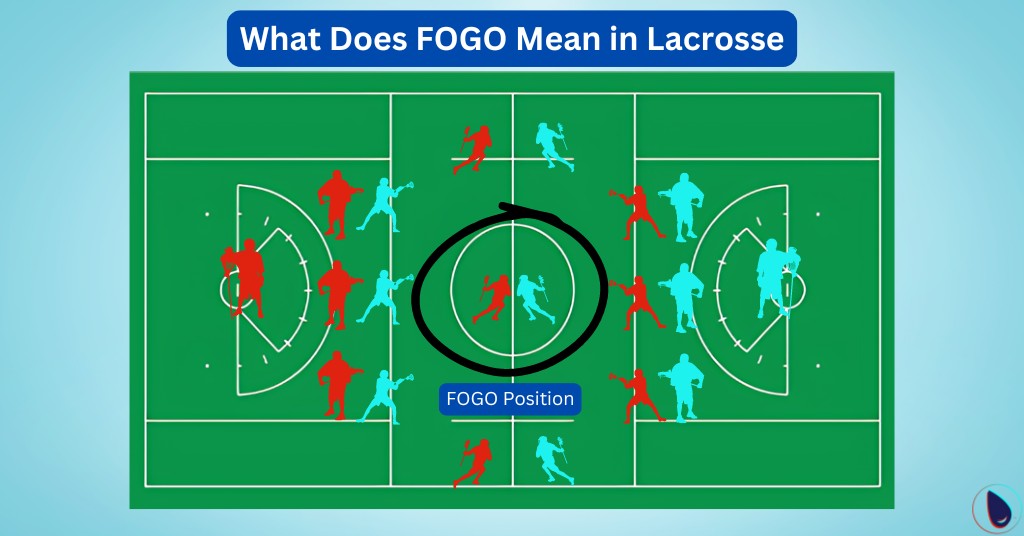
What is FOGO in Lacrosse?
FOGO, in lacrosse, stands for “Face Off, Get Off.” It refers to a player who excels in face-offs. The main role of a FOGO is to win possession of the ball after the initial face-off, which is crucial to start the game strong.
After winning the face-off, the FOGO leaves the field to allow other players to take over. It takes more than physical strength to excel as a FOGO; strategic thinking, pressure handling, and agility are also crucial.
The Role of a FOGO in the Game
A faceoff may last less than a minute in an hour-long lacrosse game, but its impact on the game leaves a mark. In lacrosse, possession is everything. A perfectly executed face-off shifts momentum, leading to a quick score.
Let me tell you, playing as a FOGO can bring a lot of pressure. When a face-off specialist is having a good day, it eases the burden on the defense and goalie, allowing the team to dominate. But when they’re off their game, that pressure shifts, putting the entire team on edge.
During a lacrosse game, the strategic movement of a FOGO to quickly pass the ball to a midfielder after winning the face-off serves to establish an offensive strategy. This quick decision-making makes FOGO an indispensable part of lacrosse.
The Importance of FOGO in Modern Lacrosse
The evolution of lacrosse has seen the FOGO position become increasingly focused. In high school, college, and professional levels, teams often have dedicated FOGO players who train rigorously to master the art of the face-off.
FOGO players study their opponents’ tendencies, practice different face-off techniques, and work closely with their teammates to ensure seamless transitions after gaining possession
If you’re interested in knowing about the equipment of FOGOs, I have reviewed the best face-off heads for lacrosse players
Till now, you have learned about what does FOGO mean in lacrosse. Let me talk about some of the best FOGOs.
Notable FOGO Players and Their Achievements
In recent years, the position of FOGO has completely changed the game. A few outstanding players have redefined what it means to dominate at the faceoff. Trevor Baptiste and Jake Withers aren’t just names in lacrosse—they’re legends.

As of 2024, Jake Withers is currently regarded as the most dominant faceoff specialist in lacrosse. Withers has an incredible faceoff win rate of 78.6%, making him nearly unstoppable at the faceoff dot.
His dominance is further highlighted by multiple games where he won over 90% of his faceoffs. Withers is a pro at creating turnovers and moving the ball down the field (NLL).
Trevor Baptiste is another top contender, known for his versatility and near-70% career faceoff win rate. Baptiste has set records in the NLL and continues to be a formidable force on the field (NLL).

Comparing FOGO Across Different Levels of Lacrosse
The role of a FOGO varies depending on the level at which you’re playing.
| Level | FOGO Role Description |
| High School Lacrosse | FOGO might be more of an all-rounder who participates in other aspects of the game. |
| College Lacrosse | The role becomes more specialized, with FOGOs often focusing solely on face-offs. |
| Professional Lacrosse | The FOGO's role is even more critical; they are heavily relied upon to secure possession and control the game's pace. |
The Evolution of the FOGO Position
The FOGO position has evolved significantly over the years. Initially, face-offs were played by any midfielder or attacker. They didn’t leave but stayed on the field and contributed to the rest of the game.
However, the requirement for a specialist became the need of the hour as the game grew more competitive. The FOGO position emerged as a response to this need, with players dedicating themselves entirely to mastering face-offs.
Today, FOGOs are considered specialists. Introducing rules like the shot clock in professional lacrosse has emphasized the importance of winning face-offs quickly, making the FOGO’s role even more crucial.
Challenges and Limitations of Playing FOGO
While being a FOGO comes with its share of glory, it also has challenges.
| Aspect | FOGO Role Challenges |
| Physical Demands | The position can lead to injuries, especially in the hands and wrists. |
| Mental Pressure | The pressure to consistently win face-offs can be intense, affecting the player's mental health. |
| Need for Focus | FOGOs must stay sharp and focused, as a slight mistake can cost their team. |
| Impact on Versatility | Practicing to be the best FOGO requires spending less time on other aspects of the game, affecting their versatility. |
Read More: Best Face-off Shafts
People Also Ask
What Is the FOGO Position in Lacrosse?
The FOGO position in lacrosse refers to a specialist who excels at face-offs, winning possession quickly, and then immediately leaving the field to allow other players to take over.
What Does FOGO Mean in Lacrosse?
FOGO stands for “Face Off, Get Off,” a term used in lacrosse to describe players who specialize in winning face-offs and then quickly exiting the field.
What Is a FOSO in Lacrosse?
FOSO, similar to FOGO, stands for “Face Off, Stay On.” It refers to players who take the face-off and continue playing on the field rather than exiting.
What Is a FOGO?
A FOGO is a lacrosse player specializing in face-offs, aiming to win ball possession quickly and then leave the field, making them crucial to the game’s momentum.
How Has the FOGO Position Evolved in Lacrosse?
The FOGO position has evolved from a generalist role to a specialized one, with players dedicating themselves solely to mastering face-offs, which is critical in modern competitive lacrosse.
So now, you understand what does FOGO mean in lacrosse. FOGOs use their skills and strategy to win face-offs, give their team an advantage, and leave the field contrary to FOSO’s position.