I may receive a commission if you purchase products through the links on this page at no additional cost to you. This helps me keep this site free but doesn’t affect my opinions in any way.
Having a solid faceoff man is essential to having a successful lacrosse team nowadays. Being able to play “make it, take it” and starting quarters with possession of the ball is a massive advantage.
In the past few years, a number of great faceoff heads have come out, but what about faceoff shafts? Are there any that could give you that slight advantage that could be the difference between winning the clamp or having your opponent running towards your goal with the ball?
This guide goes over just that. Below, you’ll find reviews of the best faceoff shafts currently available and what to consider when choosing one.
Best Faceoff Shafts
As a faceoff man myself, I know how important it is to find the equipment that gives you the best chance of winning each draw.
I can also tell subtle differences between gear (in this case, faceoff shafts) that allow you clamp a little faster, win tie-ups more often, and play well on the offensive and defensive ends of the field.
To find the best faceoff shafts, I tested 20 shafts that I had access to—including my own shafts, friends’ shafts, and teammates’ shafts—in live faceoff scenarios. I took at least 20 faceoffs with each shaft, mainly looking to feel the leverage it gave me and how the grip felt in my gloves.

In the end, I narrowed my list down to the five best faceoff shafts currently available.
Best Faceoff Shafts:
- ECD Carbon 3 Shaft
- Maverik Mission BLANK Shaft
- Maverik A1 Shaft
- Warrior Evo Krypto Pro Shaft
- Maverik Wonderboy Shaft
- Warrior Burn XP2 Carbon Shaft
- Maverik Apollo Shaft
- Maverik Caliber Attack Shaft
- STX Sc-Ti Series ( R, O, X, and X+)
- Maverik Hyperfuse Shaft
- Warrior Evo V Alloy Core Shaft
- StringKing Composite 2 Pro Faceoff
- Maverik Hyperlite
- StringKing Metal 3 Pro Shafts (4 Options)

| Material | Carbon fiber |
| Weight (oz) | 7.2 |
| Shape | Aggressive concave |
| Grip/Finish | Rubberized texture |
| Colors | Black | Grey | White |
| Warranty | 6 months |
I have won multiple faceoffs with Carbon Pro 3, which held up way better than expected. The Kevlar layer increased the durability for repeated clamps and counter battles.
It has subtle flex, but it never felt soft or whippy. The raised grip gave my top hand enough texture to stay locked in without needing a ton of tape. However, I felt slight shifts when I took hard digs against the poles.
Besides, it’s not a lightweight shaft. Regardless, its octagonal shape with a sliding end cap is perfect for comfortable hand placement for controlled passing after faceoffs.
Read More: Best Lacrosse Shafts

| Material | Scandium alloy |
| Weight (oz) | 7.1 |
| Shape | Traditional |
| Grip/Finish | Bead Blasted Finish |
| Colors | Black | Silver | White | Gunmetal |
| Warranty | 6 months |
The Maverik Mission Blank is one of my favorite faceoff shafts because of its stiff scandium alloy and thick walls. Although it feels heavy at 7.1 oz., the weight lets me drive more force straight into the ball on the clamp.
Besides, it remains stable when I power through an opponent, providing the leverage needed to win the ground ball. Its Bead Blasted Finish and ABE Butt End also reduce unwanted slip.
Still, this sandpaper-like finish smoothened after a season. Nevertheless, it’s a perfect faceoff shaft for players who value force over flex.

| Material | Scandium alloy |
| Weight (oz) | 7.4 |
| Shape | Speed |
| Grip/Finish | Textured |
| Colors | Black | Gunmetal | White |
| Warranty | 6 months |
Maverik A1 also weighs 7.4 oz and has Maverik signature ABE Butt End. However, its scandium alloy build is less stiff than the Mission Blank.
It has a slight flex in the middle and a stiffer lower end for enhanced control and stability when cradling the ball after the win. Therefore, it’s always my choice when I have to play as FOSO.
Moreover, the aggressive concave shape helps with thumb placement during clamps. Although its rough texture affected the palm of my gloves, it offered excellent grip even during rain.

| Material | 7000-grade scandium alloy |
| Weight (oz) | 6.1 |
| Shape | Control die shape |
| Grip/Finish | Diamond grip |
| Colors | Black | Silver |
| Warranty | 2 months |
Warrior Evo Kryptolyte is one of the best faceoff shafts; it is durable yet lightweight. I usually don’t prefer lightweight alloy shafts because they are more prone to dents and bends. However, the 7000-grade premium alloy easily absorbs impact.
Despite weighing 6.1 oz., it held firm through tie-ups, and the lower end didn’t flex while facing off. Yet, there was some give in the middle. Thus, I had to struggle to maintain control on the run.
Regardless, I enjoyed the diamond-grip texture over the octagonal shape. It gave me balanced stick control during exits without getting stuck.

| Material | 9000 Series Titanium Alloy |
| Weight (oz) | 7.7 |
| Shape | Signature octagonal |
| Grip/Finish | Matte |
| Colors | Black | Grey | White |
| Warranty | 6 months |
Maverik Wonderboy is the newest shaft in my collection. I only used it for faceoffs a few times, and its flex profile surprised me. The titanium blend alloy is more durable than most alloy shafts.
The concave edges allowed better hand placement, and the TactileGrip provided a slipless grip. Still, make sure you tighten the butt end well before taking it to the field.
Besides, it’s not the lightest shaft at 7.7oz. Yet, my exits were not slowed down a bit. I also put maximum power over it during reverse clamps, and it didn’t lose shape.
Read More: Best Attack Lacrosse Shafts

| Material | Carbon Composite |
| Weight (oz) | 4.4 |
| Shape | Octagonal |
| Grip/Finish | Star Matrix Grip |
| Colors | Black | Grey | White |
| Warranty | 2 months |
The Warrior Burn XP2 Carbon Composite is one of the lightest shafts I have used at the X. At 4.4 oz, it’s light, which helps me get off the line fast and stay quick on counters. However, it’s not a lasting shaft, as mine snapped after a season.
Besides, it doesn’t flex much, but I felt some vibration when absorbing checks. Although it never felt flimsy, young players should opt for a stiffer shaft.
Moreover, the octagonal shape with the Star Matrix grip gave me excellent control during fast breaks. Its customizable end cap provides an even better grip during exits.

| Material | Scandium-titanium alloy |
| Weight (oz) | 5.2 |
| Shape | Speed |
| Grip/Finish | Tactile |
| Colors | Gunmetal | Silver | White |
| Warranty | 6 months |
Maverik Apollo is another best faceoff shaft on my list. Its Dynamic Wall Taper and Scandium-Titanium alloy make it one of the few metal shafts that are tailored for faceoff middies.
The stiffer lower section gives me control of clamps and during power exits. The thinner upper half offers enough give to stay responsive in scrappy battles. At 5.2 oz, it’s light but not flimsy.
Besides, its tactile grip and smooth speed shape helped me stay locked in without tape. I loved the flat facets that offered comfortable thumb placement for better performance.
Read my detailed review of the Maverik Apollo attack lacrosse shaft here.

| Material | Scandium-titanium alloy |
| Weight (oz) | 6.5 |
| Shape | Aggressive concave |
| Grip/Finish | Bead Blast finish |
| Colors | Black | Silver | White | Navy Blue |
| Warranty | 6 months |
Maverik Caliber Attack is built with premium scandium-titanium alloy, and it’s one of the strongest shafts I have used. It’s a thick-walled shaft with no flex along the length.
Despite its durability, it only weighs 6.5 oz and has a balanced strength-to-weight ratio. The rough bead blast finish also offers better stability and power in shooting and passing.
Moreover, I appreciated its stiffness for clamps and control during the battle. However, I would have preferred a slight flex in the middle to add some snap to the release, especially when pushing the ball off the clamp.
Read my detailed review of the Maverik Caliber attack lacrosse shaft here.

| Material | Scandium-titanium alloy |
| Weight (oz) | 4.94 – 6.7 oz |
| Shape | Variable |
| Grip/Finish | Max Sandblast |
| Colors | Platinum | Black | Gunmetal |
| Warranty | 1 month |
The STX Sc-Ti series includes four variants: the R, O, X, and X+. All variants are designed with a blend of scandium-titanium alloy with a high strength-to-weight ratio. However, despite featuring a solid grip and control, each varies in shape, flex, and weight.
The X+ is the heaviest and stiffest, offering maximum strength to handle hard checks. While the Sc-Ti R is the lightest, it’s designed for quick movements.
Yet, I prefer Sc-Ti O for faceoffs. It has a more balanced feel that helps me maintain stability during clamps while allowing me to snap out of them quickly.
It has a responsive feel, making it easier to win 50/50 balls. Still, if you don’t prefer the flex, go for Sc-Ti X. It’s more flexible than X+ but more stable than O.

| Material | Carbon composite |
| Weight (oz) | 4.5 oz |
| Shape | Traditional |
| Grip/Finish | Matte |
| Colors | Black |
| Warranty | 6 months |
Maverik Hyperfuse is another suitable faceoff shaft for those who want a stiff feel and lightweight build. It has Maverik’s traditional concave shape, which feels familiar and comfortable during extended use or transition runs.
Although a carbon shaft, the Hyperfused plays more like a stiff alloy. I didn’t feel the whippy snap as with some other composite shafts. Instead, it gave me a sharp release and easier wins during the draws.
Furthermore, it has a matte finish. However, it’s not as aggressive as the bead blast finish. Hence, I felt a slight shift when fighting for control.

| Material | Alloy Core Carbon |
| Weight (oz) | 6.8 oz |
| Shape | Smooth concave |
| Grip/Finish | Aggressive ridges |
| Colors | Black | Silver | White |
| Warranty | 2 months |
I have taken plenty of faceoffs with the Warrior Evo V Alloy Core Carbon shaft, and it handles both clean wins and scrappy ground ball fights well. Yet, at 6.8 oz, it’s a heavy carbon shaft.
The midsection has minimal flex that gives me extra speed when popping the ball out fast. It’s the sturdiest hybrid shaft with metal strength at the core and carbon’s flex profile.
Furthermore, it has ridges along both ends rather than a rubberized texture. Hence, I got enough stick control and effortless grip to power the X. Its concave shape with smooth edges also helped me hold the stick comfortably for long hours.
Read my detailed review of the Warrior Evo V Alloy Core shaft here.

| Material | Carbon fiber |
| Weight (oz) | 5.47 – 6.17 |
| Shape | Slight Concave |
| Grip/Finish | Smooth |
| Colors | Yellow/Black | Yellow/White |
| Warranty | 6 months |
The StringKing Composite Pro 2 Faceoff is the updated version of the popular Composite Pro Faceoff—leaving these two shafts as the only faceoff-specific shafts on the market.
To make them, StringKing took its popular Composite 2 Pro shaft and adjusted the grip towards the top to provide better grip for the top hand during faceoffs.
As you can tell from the images above and to the side/below, the top fifth of the shaft has an asymmetrical shape that gives you more leverage for clamping.
I’ve tested this shaft out myself and can tell you it really does give you better grip and leverage as compared to a normal shaft.

The StringKing Composite 2 Pro Faceoff is also designed to accommodate one of the best faceoff heads on the market in the StringKing Mark 2F. The combination makes for an amazing pairing that is very popular amongst college FOGOs.
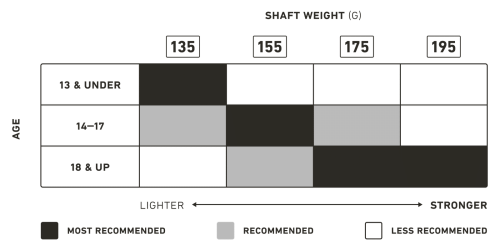
StringKing also gives you two weight options to consider for this faceoff-specific shaft. StringKing recommends the 175 g option for players 18 and up, but we think most high school players will find it manageable. The 155 g option is great for younger players or those who really value a super light shaft for faceoffs.
It’s also worth noting that the StringKing Composite 2 Pro Faceoff is compatible with throat plugs on heads—which most faceoff heads include nowadays.
So, what’s the rub?
That would be the price point. At around $140 for the lighter version of the shaft and $150 for the heavier version, the Composite 2 Pro Faceoff finds itself on the higher end of the shaft price spectrum.
Additionally, there is some needed “getting to know you” time required with this stick for getting comfortable with how it feels at the X and how it cradles.
All in all, the StringKing Composite 2 Pro Faceoff is the best faceoff shaft currently available by far. The extra towards the throat of the shaft gives unmatched leverage that can truly give you an advantage at the faceoff X. It is also legal across all levels of the game as of this writing.
If you’re interested in the original StringKing Composite Pro Faceoff shaft, you can purchase the 155 g version here (Amazon, Lacrosse Monkey, Dick’s Sporting Goods) or the 175 g version here (Amazon, Lacrosse Monkey, Dick’s Sporting Goods).

| Material | Carbon fiber |
| Weight (oz) | 4.8 |
| Shape | Slight Concave |
| Grip/Finish | Smooth matte finish |
| Colors | White/Black | Black |
| Warranty | 6 months |
The Maverik Hyperlite is for those FOGOs that like to turn a faceoff at midfield into a break on the crease. Its stiff design does not come at a cost to its weight, clocking in at just under five ounces to make it the perfect balancing act of strength and speed.
An added adjustable butt-end gives you extra control over your grip and leverage for your bottom hand making you a force to be reckoned with when the whistle blows.
With its light weight, this pairing makes you quick to the clamp, giving you those extra milliseconds to swing possession in your favor.
A matte finish along the shaft gives the stick a natural feel without overdoing the grip that could interrupt quick hand adjustments. Also, since it is hollow at the top, it should work with most throat plugs.
The catch: the Maverik Hyperlite clocks in at the most expensive end of the attack shaft market, just under $150 for the shaft alone.
Still, the Maverik Hyperlite is a great shaft and worth consideration, especially for those midfielders who stay on the field even after the faceoff is over.
ns


| Material | Carbon composite |
| Weight (oz) | N/A |
| Shape | Octagonal |
| Grip/Finish | Dot matrix on bottom half |
| Colors | White |
| Warranty | Warranty: 6 months |
Almost no best lacrosse gear roundup list can be truly complete without a Warrior product—in this case, the Warrior Burn XP Carbon Shaft.
This entry is unique to our list given its purposeful flexibility as an offensive weapon. The Burn XP is designed for maximum velocity on every shot, especially proving formidable for those from distance, which is great for any FOGO that likes to try ripping from the top of the box to catch a goalie napping.
The Burn XP is otherwise traditional in every way, from its profile to its head fit (throat plugs should be usable with this shaft). A dot matrix of targeted grip assures consistent handling from box to box.
The main question mark that comes with the Burn XP is the durability of the shaft over the normal wear and tear of faceoff duties. While made to flex, consistent pressure could end up leaving you with a warped shaft which isn’t ideal. In addition, we’ve received some reports of the shaft breaking easily. While it does come with a 6-month warranty, you want a shaft that you know will hold up well during a game.
Still, the Burn XP is a solid candidate for those free-wheeling and dealing marksmen who create their own opportunities from the centerline to the opponent’s box.

| Material | Metal alloy |
| Weight (oz) | 4.76 – 6.88 |
| Shape | Slight Concave |
| Grip/Finish | Sandblasted finish |
| Colors | Silver | Black |
| Warranty | 6 months |
We finish off with the same company that we started with: StringKing.
Similar to its Composite Pro Faceoff counterpart, the StringKing Metal 3 Pro gives you a variety of weight options to choose from to match your playing style.
The Metal 3 Pro’s premium alloy body has been a response to two previous generations of warranty claims and customer feedback which paved the way for the StringKing team to reinforce this shaft at problem points. This resulted in a durable shaft built to survive the excessive wear and tear that comes with being a FOGO.
The Metal 3 Pro is not built to be faceoff specific, but StringKing does give you the option to add drill holes for their Mark 2F faceoff head if you’re purchasing directly from them. As with the Composite Pro Faceoff, this shaft’s adaptability to throat plug heads is up for debate but accommodating with some added force and maneuvering.
All in all, the StringKing Metal 3 Pro is a solid shaft—both literally and figuratively—and well worth your consideration as a faceoff shaft.
How to Choose a Faceoff Shaft
Now that we’ve given you some solid, specific options to consider for your faceoff duties, let’s walk you through some things to look for in a shaft should you decide to go with another option.
1) Faceoff-Specific Features
The StringKing Composite 2 Pro Faceoff and original Composite Pro Faceoff are the only true faceoff-specific shafts on the market right now. We really do hope this changes with this shaft being a successful guinea pig turned playbook for other companies to follow.
The main faceoff-specific feature to the StringKing Composite 2 Pro Faceoff is the first thing you’ll notice: a knob at the throat of your head that protrudes with an elongated angle at one side. This feature gives your top hand the necessary leverage and torque needed to increase the speed of your clamp and save off valuable milliseconds off the whistle.
Additionally, you want to make sure whatever shaft you go with will work with throat plugs, which most faceoff heads have nowadays. A lot of FOGOs like these kinds of heads as they bring their top grip closer to the head itself without losing any stability in its connection to the shaft.
The main reason a throat plug wouldn’t work with a shaft is if it’s not hollow. While almost all metal shafts are hollow, you’ll find some carbon lacrosse shafts that aren’t.
2) Grip/Finish
This really comes down to personal preference in how much hold you like to have your faceoff shaft.
Some players prefer a smooth finish that gives the ability to slide their hands quicker in the event they need to adjust on the fly and also the freedom to tape up their shaft to perfectly fit their preference.
Others like some level of built-in grip to help with their control and overall force when they come down on the clamp.
Your preference over a textured, matte, or smooth finish comes down to your own feel and style. If you’re already speedy on the clamp and have a specific placement you value, a smooth shaft may be preferred.
If you find yourself a second off the pace or you prefer raking to your wings, something textured may be better suited for you to make sure you have constant control and responsiveness from your spoon.
3) Weight
Faceoff shafts are really a balancing act between weight, speed, and durability. The ideal shaft for a FOGO is light, but shaved ounces typically mean durability issues.
If you don’t want to be back on the market every other month for a new shaft, don’t just go for the lightest lacrosse shaft currently available because it’s light.
Instead, look for a good combination of weight and strength. Our best attack and middie lacrosse shafts guide features many shafts that fit this criterion.
4) Durability
As covered in the weight section, durability is a factor that is even more important to consider when it comes to a faceoff shaft. The main issue that develops for FOGOs is less than the usual denting and breaking thanks to a well-placed check; it is the warping of the shaft over time as you apply pressure in every visit to the faceoff X.
With this in mind, it is extremely important to do your due diligence when it comes to finding a durable shaft by considering player feedback in your calculations. See what other players have to say about warping over time and the overall durability of any given shaft.
How We Rate Faceoff Lacrosse Shafts
We take our ratings seriously and only recommend products that we would use ourselves.
To come up with our ratings for each product, we test the product ourselves whenever possible, review product specifications (weight, strength, material, grip, etc.), and read customer reviews/talk to lacrosse players we know that use the product.
When testing lacrosse shafts, specifically, we weigh the shafts, feel them in gloves (for both grip from the shape of the shaft as well as the texture of the finish), shoot with them to understand how they flex, and check them with another stick to see how they hold up.
We go the extra mile with faceoff shafts by testing them in live draws to see how they actually feel at the X (shoutout to my buddy Andrew for taking hundreds of live reps with me).
If you ever have any feedback for any of the products listed on this page or have a recommended addition, please contact us and let us know!
Taping Your Faceoff Shaft – Rules & Best Practices
For the majority of FOGOs, it’s not a question of if you should tape your shaft but where and what’s legal.
Let’s take a look at both:
Where to Tape Your Faceoff Shaft
The best spots in my humble opinion are a decent serving along the top third of your shaft as close to the head as possible to give your hands plenty of grip without too specific of a needed zone of landing for them. This section of tape will give you a solid grip on the initial clamp and may add a few milliseconds on your opponent that make all the difference.
Another solid serving of tape at the base of your shaft where your bottom hand would land is also helpful to give yourself a steady grip and extra leverage. That bit of grip could give you the extra force you need to slide a ball out to your collapsing wingmen.
Faceoff Shaft Tape Rules
Before you go off taping up your entire shaft, there are rules that every FOGO should keep in mind.
The primary rule is that your tape cannot touch any part of the head, even the throat. This is why many faceoff specialists have sought solace in throat plug heads to make up for some of the stability lost in not being able to tape the connection between stick and shaft.
Your tape also must be an alternate color from the base color of the taped point of the shaft. Basically, if you have a black stick, you cannot use black tape. If you have a two-tone stick, say yellow and white, you cannot use yellow tape for the yellow portion of your shaft nor white tape for the white portion.
Lastly, FOGOs cannot have multiple layers of tape at the top of your stick. This is to prevent a multi-layered tape “knob” near the throat that could give an unnatural advantage to the player.
Is a Lacrosse Faceoff Shaft Really Necessary?
I mean, we’ve written a whole article about them; faceoff shafts MUST be necessary, right?
Eh, not necessarily.
A faceoff-specific shaft is more of a luxury for a FOGOs arsenal than a necessity. While it may give you a slight advantage compared to a traditional shaft, your success at the X ultimately comes down to your reaction time and technique.
If you don’t want to go with the StringKing Composite 2 Pro Faceoff, we recommend checking out our best attack and middie lacrosse shafts guide to see some of our favorite shorty shafts.
Photo credit: Flickr