
Lacrosse is a high-contact sport, and expecting to leave without any scars is as unlikely as hoping it snows in the summer. But is lacrosse dangerous?
When it comes to injury rates, lacrosse falls somewhere in the middle compared to other popular sports. According to the NCBI, men have an injury rate of 3.61 injuries per 1,000 athlete exposures, while women experience 3.01 injuries.
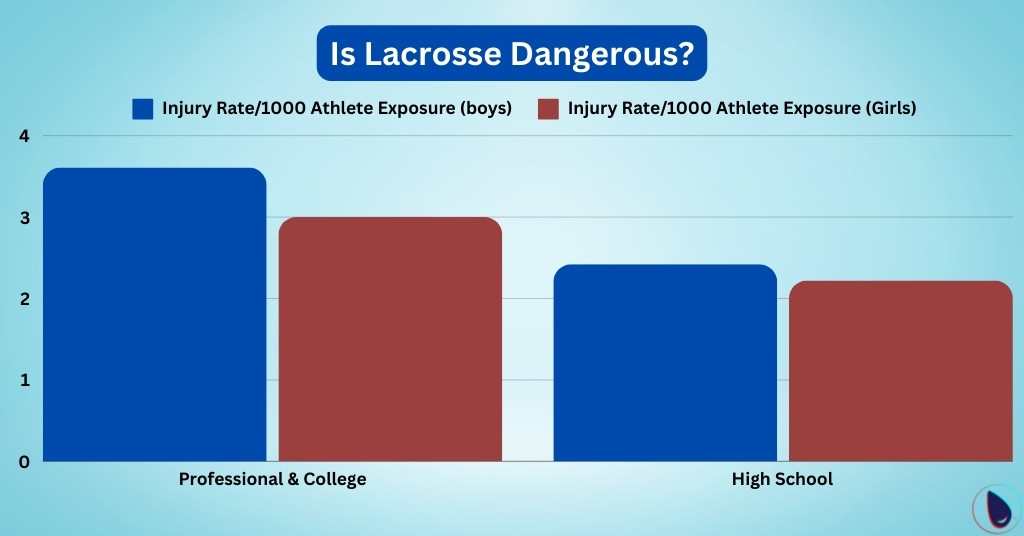
This is significantly lower than football, which has an injury rate of 8.1 per 1,000, but higher than baseball, which averages around 1.9 injuries per 1,000 exposures.
The High School Reporting Information Online (HS-RIO) database ranks lacrosse as the third most dangerous sport for high school athletes, with an average of 2.42 injuries per 1,000 exposures for boys and 2.22 for girls.
After seeing these statistics, you might consider lacrosse dangerous. However, I will present my arguments that it is not.
The sport benefits from various safety gear and rules aimed at protecting players. While you may experience bruises and broken bones (under extreme playing conditions), the excitement and enjoyment of the game make it worthwhile.

I will discuss the risks involved, compare lacrosse with other sports, and provide safety tips to help players enjoy the game with confidence.
What is Lacrosse?
Before I tell you about the safety zone, for those who are new here, let me give you a quick overview of lacrosse. This sport involves two teams fighting for possession of a rubber ball using netted sticks.
Players use their skills and strategy to carry the ball down the field to score goals by shooting it into the opponent’s net. Sounds simple, right? It is, but the fast-paced nature and physicality of the game can lead to injuries if proper precautions aren’t taken.
Read More: History of Lacrosse
How Dangerous is Lacrosse Compared to Other Sports?
Lacrosse, like any sport, has its probable risks. However, when we compare it to other high-contact sports such as football, hockey, or soccer, lacrosse often ranks lower in terms of injury severity.

Injury Statistics in Lacrosse
Injury rates in lacrosse are significant compared to other sports. Recent studies show that the overall injury rate in collegiate lacrosse is approximately 4.99 injuries per 1,000 athlete exposures (AEs).
For high school players, the injury rate is 2.42 injuries per 1,000 AEs for boys and 2.22 for girls.
This data suggests that while lacrosse carries certain risks, it is important to compare these rates with those of other high-contact sports.
| Sport | Injury Rate per 1,000 Athlete Exposures |
| Football | 8.1 |
| Ice Hockey | 6.2 |
| Soccer | 6.0 |
| Lacrosse (Men's) | 3.61 |
| Lacrosse (Women's) | 3.01 |
| Baseball | 1.61 |
The table above shows that lacrosse is statistically safer than football and soccer, which are both known for higher injury rates.
Common Injuries in Lacrosse
As I have said above, lacrosse is relatively safer than some other sports, but there are some common injuries that players often find themselves benched to.
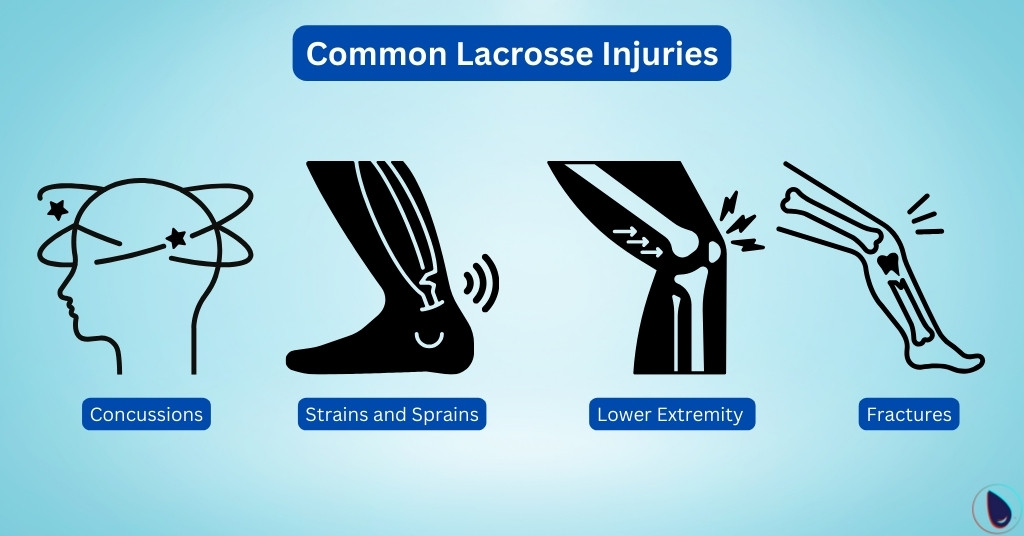
The most frequent types of injuries seen in lacrosse include concussions, strains and sprains, ligaments and muscles, and fractures.
Concussions
These head injuries are a major concern, especially for female players who experience them more frequently than males. Stick checks and accidental collisions are the primary cause.
Concussions represent about 19.4% of injuries in high school boys’ lacrosse and 24.5% in girls’ lacrosse.
Strains and Sprains
Pulled muscles and ligaments. These are all too common in lacrosse, affecting ankles, knees, and lower back areas.
Lower Extremity Injuries
Knees and ankles take a beating in lacrosse, with ACL tears being a significant concern, particularly for female players.
For male lacrosse players, knee injuries are the most common, making up 16.1% of reported cases, followed by injuries to the hip, thigh, and upper leg areas at 15.1%. Ankle injuries account for only 5.9%.
On the other hand, female lacrosse players experience a higher rate of knee injuries at 20%, along with a greater occurrence of ankle injuries, which account for 17.3% of their injuries.
Fractures
Particularly clavicle fractures are prevalent among male players.
| Injury Type | Percentage of Total Injuries |
| Concussions | 19.4% (Boys), 24.5% (Girls) |
| Ankle Sprains | 7.7% |
| Fractures | Varies by Gender and Age |
| Knee Injuries | 16.1 % In Males and 20 % in Females |
Preventive Measures in Lacrosse
How dangerous is lacrosse depends on how diligently you take preventive measures in the field. To minimize the risk of injury, lacrosse has implemented several safety protocols and equipment standards.
Helmets and Protective Gear
This is a must-have. All players are required to wear helmets, gloves, and padding (shoulder pads, elbow pads) to protect against collisions and falls.
Read More: Durable Lacrosse Helmets
Mouthguards
These are essential to prevent dental injuries and reduce the risk of concussions. I won’t certainly risk getting my dentures broken.
Read More: Best Mouthguards for Sports
Eye Protection
In women’s lacrosse, goggles are mandatory to protect against eye injuries.
Safe Play Regulations
Officials strictly enforce rules regarding dangerous checks and excessive force, particularly aimed at head and neck areas.
Read More: Rules of Lacrosse
| Equipment | Purpose |
| Helmet | Protects head from impacts |
| Mouthguard | Prevents dental injuries |
| Shoulder Pads | Absorbs impact during play |
| Gloves | Protects hands from sticks |
Role of Age and Skill Level
It’s important to note that the risk of injury in lacrosse can vary depending on age and skill level. Youth players, for example, are more likely to suffer from sprains and minor fractures, as their bones and muscles are still developing.
I was 11 years old when I got my first lacrosse injury. I suffered from a broken ankle from a collision impact. It usually takes 6-8 weeks to heal from a fracture, but my doctor told me that I might recover fast because of the rapid growth of muscle at that age.
In contrast, collegiate and professional players may experience more severe injuries due to the increased speed and physicality of the game.
Coaches and parents should ensure that younger players are equipped with proper gear and are taught the basics of safe play early on.
Expert Opinions on Lacrosse Safety
Many coaches, players, and sports medicine experts agree that while lacrosse does come with risks, these can be mitigated with proper training and the right equipment.
Julie Wiebe, PT, DPT was asked ‘Is lacrosse a dangerous sport’, and she replied that
“Lacrosse, like any other sport, can be dangerous if safety protocols are ignored. However, with the right coaching and equipment, the risk of serious injury can be greatly reduced.”
Safety Guidelines
Here I have mentioned some safety guidelines that every lacrosse player should follow that people start to think How is lacrosse a dangerous sport?
- All players wear appropriate equipment at all times.
- Players should undergo health evaluations before each season.
- Coaches should educate players about recognizing concussion symptoms.
- Players should feel comfortable reporting injuries or discomfort without fear of losing playtime.
Also, check out the US lacrosse rules and safety for more extensive guidelines.
People Also Ask
Is Playing Lacrosse Dangerous?
Lacrosse carries some risks, but it’s safer than sports like football. The injury rate is 3.61 per 1,000 exposures for men and 3.01 for women, with common injuries being sprains and concussions.
Is Lacrosse the Toughest Sport?
While lacrosse is physically demanding and high-contact, it’s not necessarily the toughest sport. Injury rates and severity are lower than in football and ice hockey, making it relatively safer.
Is Lacrosse More Brutal Than Football?
No, football is considered more brutal, with an injury rate of 8.1 per 1,000 exposures compared to lacrosse’s 3.61. Football also sees more severe injuries, like traumatic brain injuries, compared to lacrosse.
What Is the Injury Rate for Lacrosse?
In collegiate lacrosse, the injury rate is approximately 4.99 per 1,000 athlete exposures. For high school players, it is 2.42 injuries per 1,000 exposures for boys and 2.22 for girls.
How Can Lacrosse Players Reduce Injury Risk?
Wearing helmets, protective gear, and mouthguards are essential. Following safe play rules and using proper techniques can significantly lower the risk of injury, especially for younger and novice players.
I have answered the questions of thudding hearts and new players who wanted to learn: Is lacrosse dangerous? The passion a player has for the sport and the adrenaline rush normally make you forget about the risks of the game.
Every physical sport is followed by the risk of injuries that you might experience. No matter how much you love a sport, it is important to take care of the safety protocols to minimize the risk of injury.