I may receive a commission if you purchase products through the links on this page at no additional cost to you. This helps me keep this site free but doesn’t affect my opinions in any way.
There is a risk of concussions with any activity involving big body checks, swinging metal sticks, and firing hard rubber balls 90+ miles per hour—and lacrosse is no exception.
Of all the equipment lacrosse players are required to wear, the helmet is the most important. It protects your head from fast-moving balls, unintentional slashes to the head, and big hits.
I made this guide to help you find the best lacrosse helmet for yourself or your child so you can stay protected.
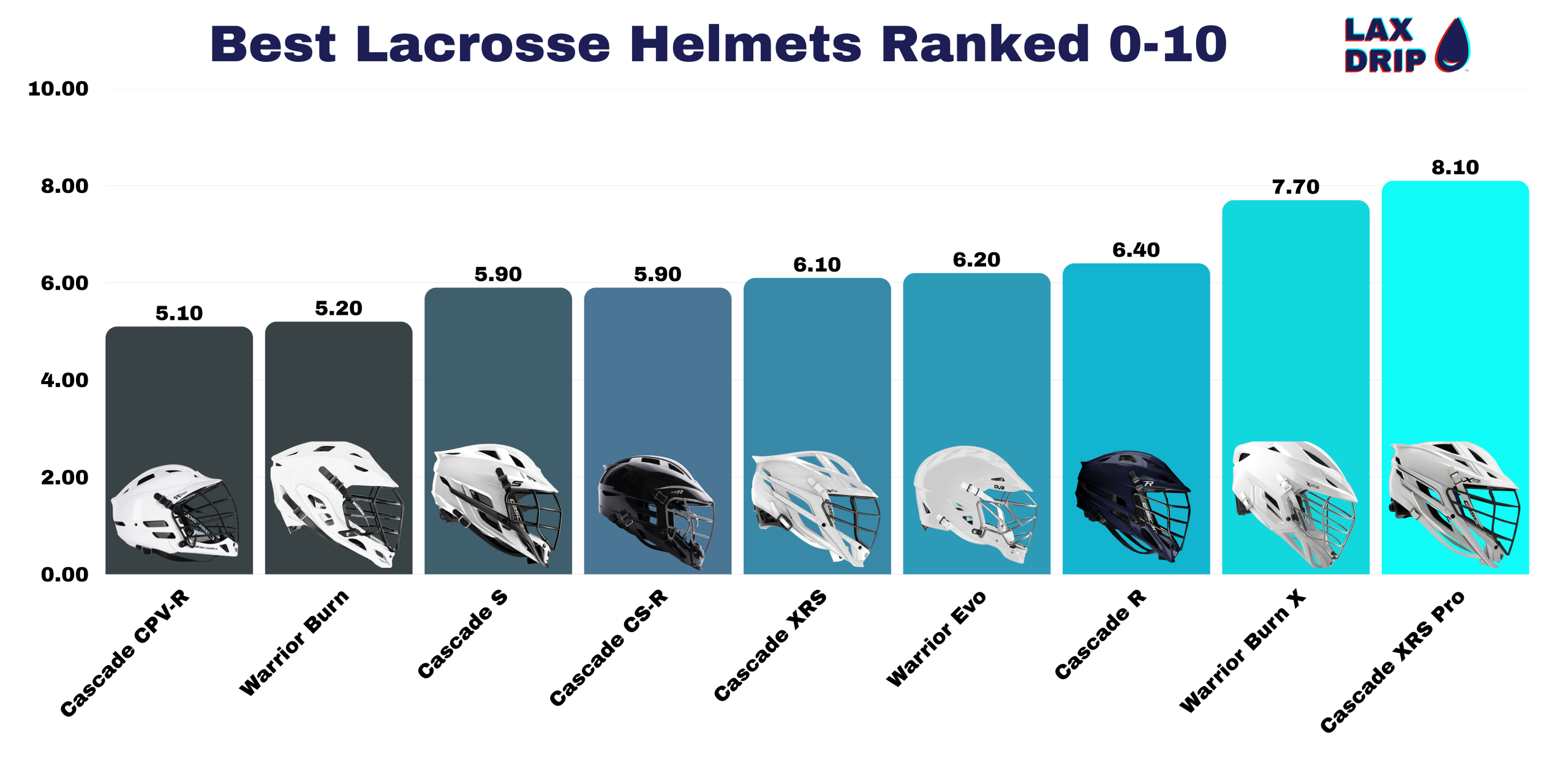
Best Adult Lacrosse Helmets (12 Years & Older)
Adult lacrosse helmets are typically good for players who are 12 or older. More specifically, if your head is over 21.5 inches in circumference at the forehead, you likely need an adult helmet. If you are looking for a youth helmet, click here. Also, if you are a goalie, check out our top picks for the best goalie helmets and throat protectors here.
Here are reviews of my top picks for the best adult lacrosse helmets.
Best adult lacrosse helmets:
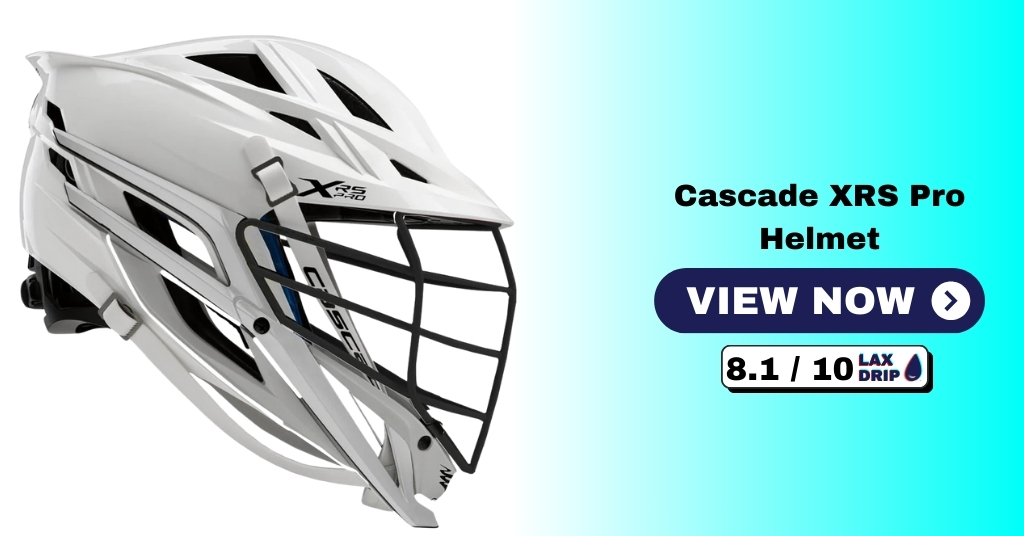
The Cascade XRS Pro isn’t an entirely new model; the design is similar to the OG XRS lacrosse helmet. However, the Cascade flattened the second vision bar. Hence, I had even better downward visibility.
Besides, I loved the softer comfort liner with a mesh layer. It doesn’t improve the protection but molds into the head, providing a comfortable fit with ample breathability.
Moreover, the back panel is slightly longer, wrapping around the neck for a more secure fit. The Quick Clip chin strap uses a magnet that is very easy to snap on and off.
Still, it snapped on after the hit during the game, so make sure you tighten the straps correctly.
Read my detailed review of the Cascade XRS Pro here.
All Buying Options
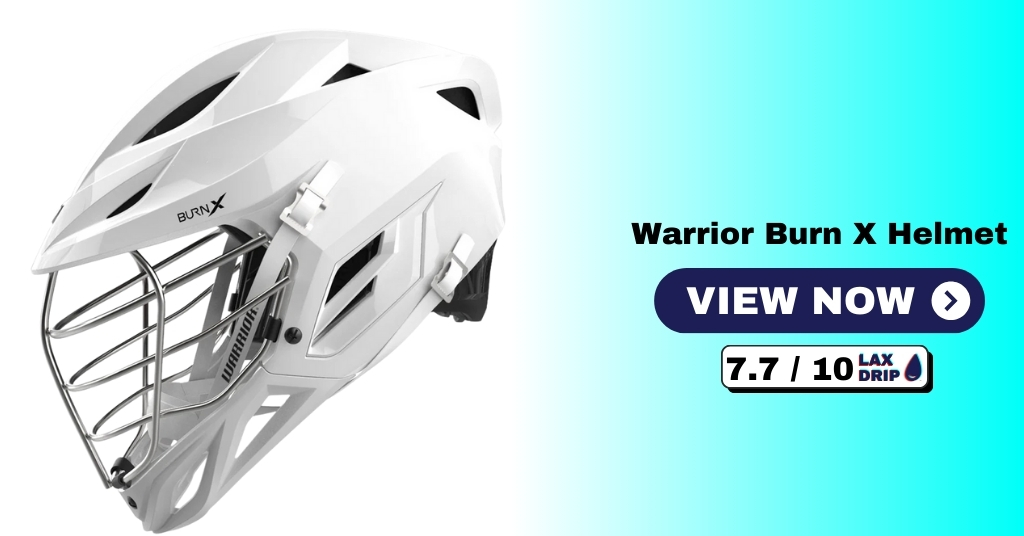
Initially, the Warrior Burn X lacrosse helmet wasn’t my favorite, but it proved otherwise after a few weeks of use. Although slightly heavy, I got elite-level protection with the Burn X helmet and barely felt the impact.
The BOA fit system allows a comfortable but snug fit. As a result, my helmet rarely displaced during the game. Yet, it starts to feel heavy after a few hours.
Nonetheless, the inside ventilation pads offer a sweat-free and dry feel, keeping my head cool. The outer shell is extremely durable, with new back fins and swooping eyelets. It holds up well against unintentional hits, showing minimal wear even after multiple games.
Read my detailed review of the Warrior Burn X lacrosse helmet here.
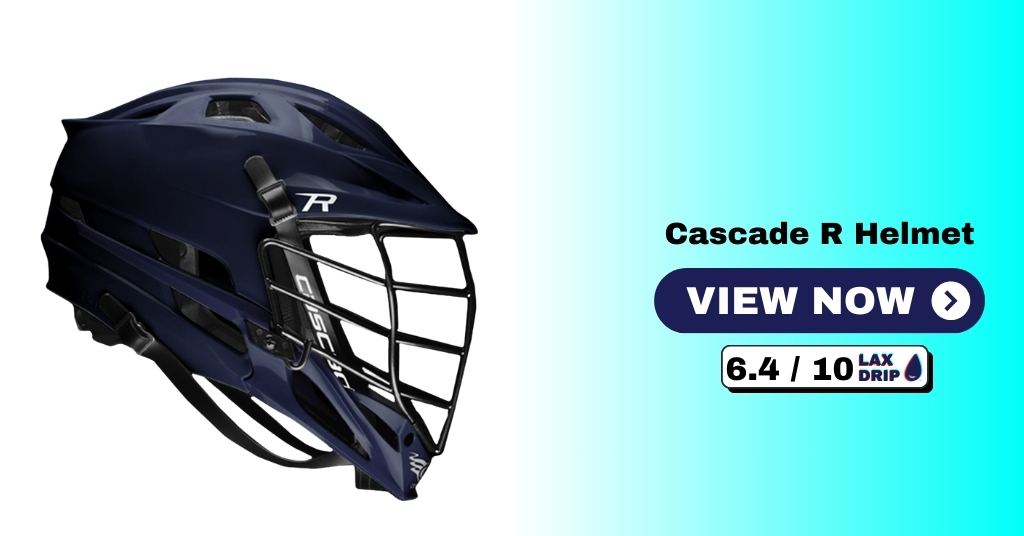
Cascade R has been my go-to helmet for three years. It’s comfortable, fits well, and offers excellent protection.
Although it’s heavy and the ventilation isn’t as advanced as the S, I rarely found it to be an issue. The one-piece shell is sturdy and cushioned on the inside, keeping me safe from head injuries.
Moreover, despite the old-school vision bar design, I didn’t have major visibility concerns. It may slightly obstruct the peripheral vision when side-glancing at the defender while cradling.
It also offers a roomier fit rather than being snug, and once the chin strap is adjusted, it’s exceptionally comfortable. Hence, while newer models bring improvements, the R remains one of the best.
Read our detailed comparison here about the differences between Cascade R, S, and XRS.
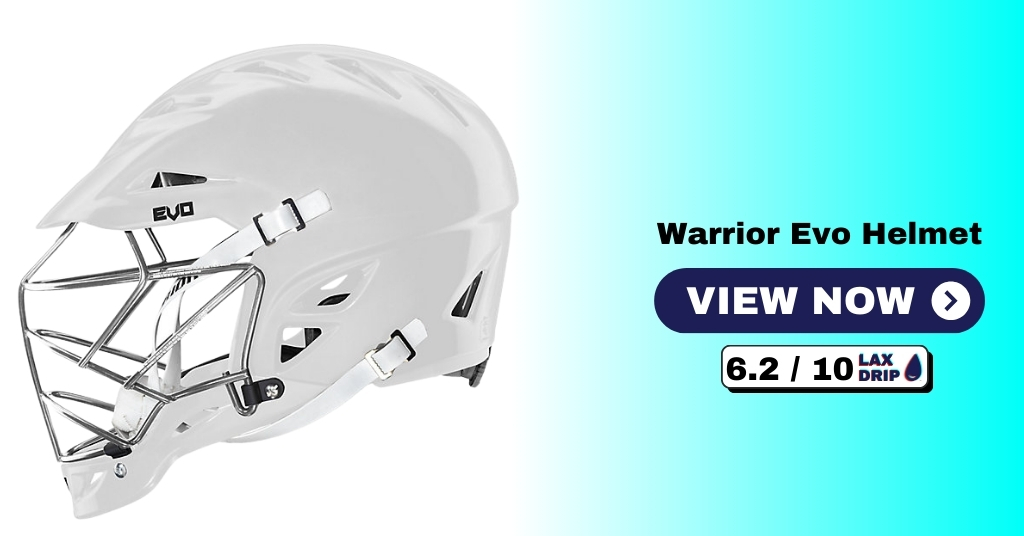
The Warrior Evo lacrosse helmet is one of the best helmets for lacrosse players with bigger heads. Initially, I thought that it would shift during lateral head movement. However, the chin strap kept it locked, offering a perfect fit.
Furthermore, there’s enough space between the bars to track the ball. However, I didn’t like the warrior straps on each side moving diagonally to the head. It sometimes obstructed my vision.
Regardless, it’s quite durable and lightweight. The hard shell layered with soft padding inside doesn’t transfer the blow to my dome, keeping it safe from injuries. Still, it doesn’t offer the best ventilation, as I felt warmer during the summer than I should have.
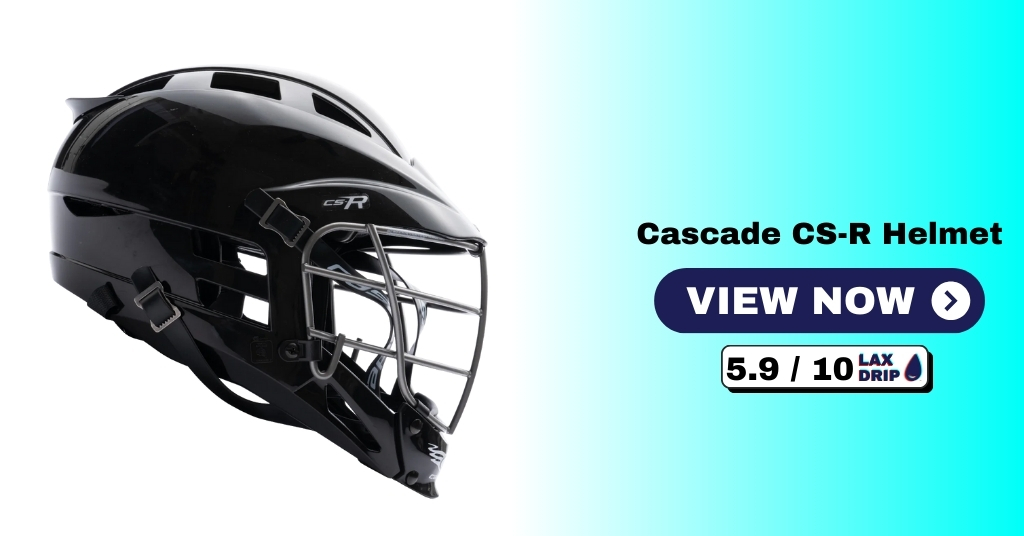
Cascade CS-R is another lightweight helmet with an R-series shell upgraded for even better performance. It has freeform padding that molds into the head shape and gives me a snug fit. Yet, it’s only available in one size fits all. Thus, some players might need a custom size for a perfect fit.
The best thing about wearing a CS-R is that it’s weightless and doesn’t cause neck cramps, unlike Cascade R. Although its outside shell is thick, the venting cutouts offer good airflow, keeping my head dry even in the second half.
Moreover, the front bars are very thoughtfully designed. I got better visibility of the field in every direction.
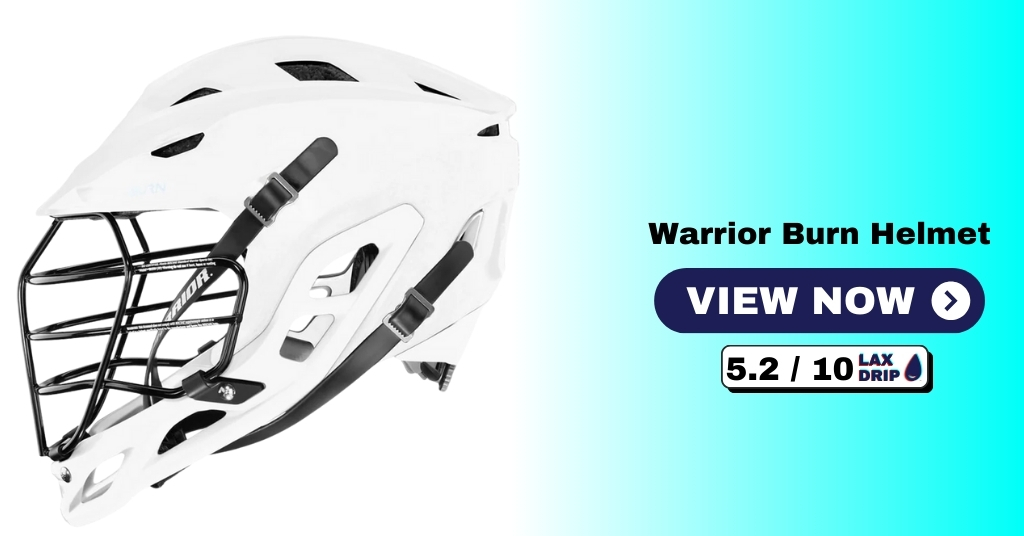
I have used the Warrior Burn lacrosse helmet for a year, and it’s one of the most stylish helmets in my collection. It features a BOA system that tightens evenly around the head rather than just at the back. Hence, I got a snug, uniform fit that stays locked in.
Its chin strap is also very soft, flexible, and way more comfortable than the glossy, rigid ones available in Cascade R. I loved how easily the outer shell dispersed the impact without even shifting the helmet.
However, the oversized chin piece feels a little out of place. The facemask bars usually get in the way of peripheral vision more than I prefer.
All Buying Options
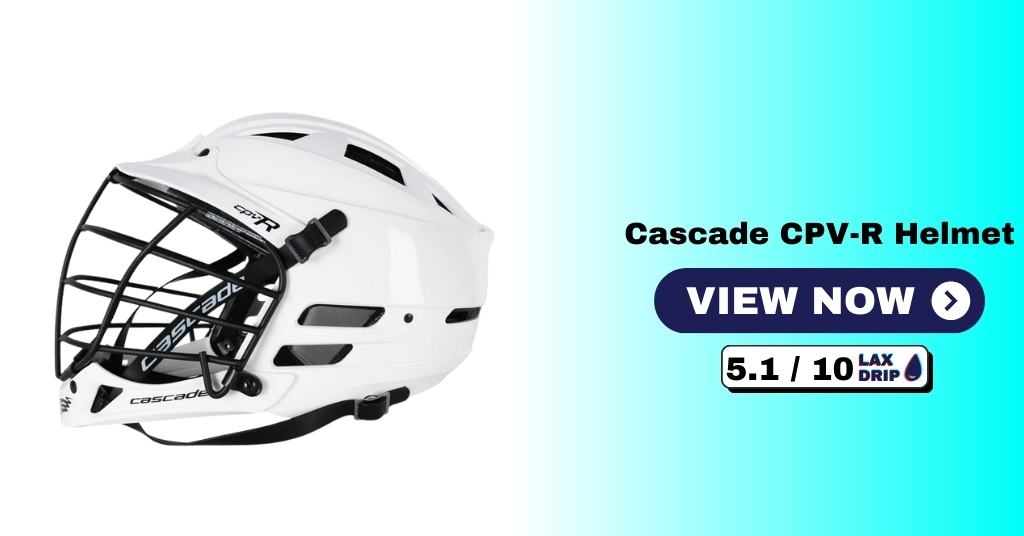
Cascade CPV-R is an older model, but it’s still one of the best helmets for high school middies. It’s the lightest helmet with an R-style shell, weighing just 30.4 oz. Thus, it doesn’t feel bulky when dodging or sprinting in transition.
The SPRfit system lets me fine-tune the fit quickly without messing around with padding. However, it doesn’t lock in as tightly as the BOA system in the Warrior Burn.
Moreover, the Chevron mask design helps frame the field well, but the facemask bars felt slightly more restricting the lateral vision.
Besides, it also comes with a Freeflow venting system, which keeps my head cool even during summer practices.
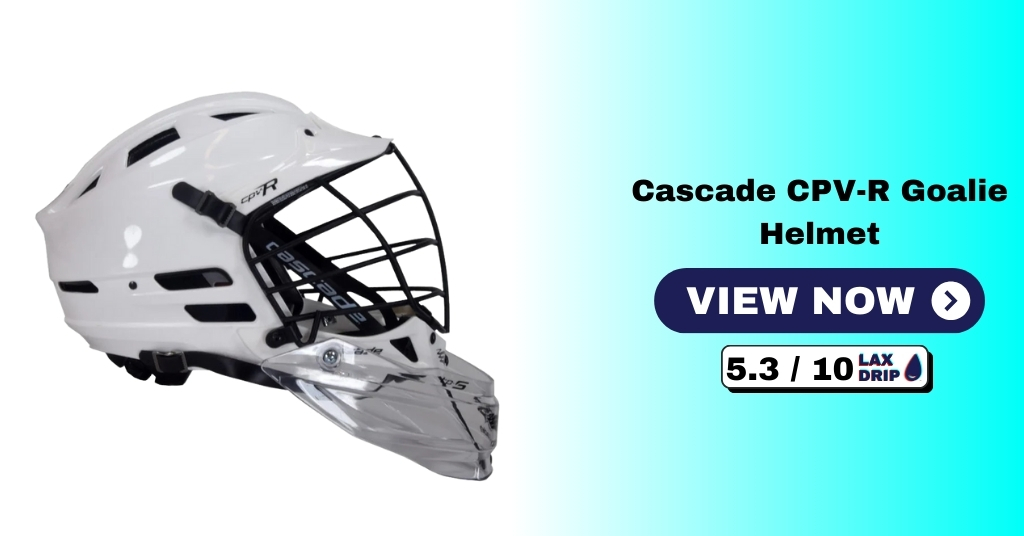
Cascade CPV-R is the most protective helmet on my list for lacrosse goalies. Its thick outer shell and durable, stiff chin guard kept me safe from high-velocity shots and unexpected slashes in the crease.
The SPRfit adjustable rachets let me adjust the fit one-handed, locking the helmet in place without any annoying shifting. However, the EPP system is very snug. Thus, if you like a roomier fit, go for a size up.
Furthermore, the FreeFlow venting kept me cool even during long, fast-paced games. Still, the CPV-R lacks a dedicated moisture-wicking liner for summer games. Whereas the Chevron Mask gave me a clearer view of ground balls and passing lanes.
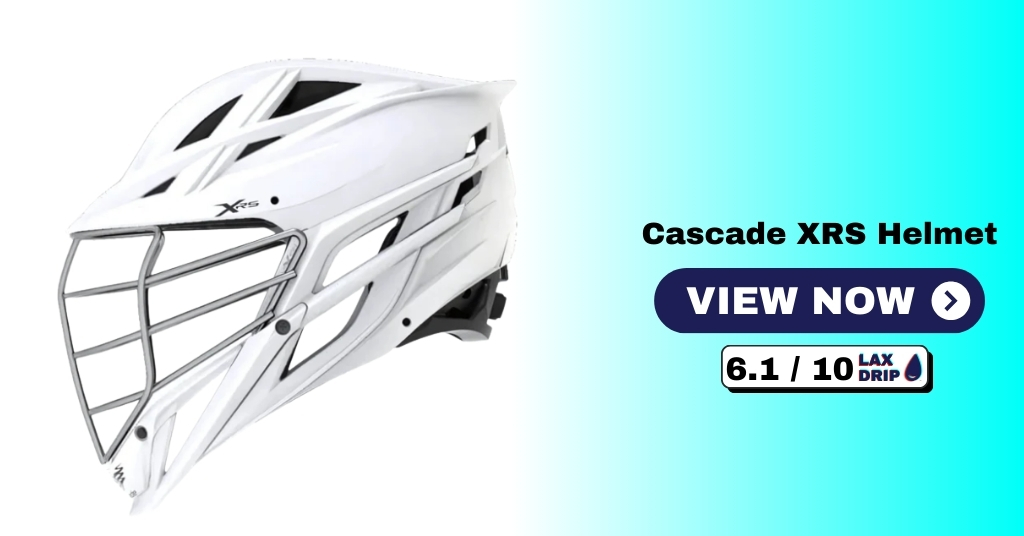
Cascade released its newest helmet just in time for the 2023 NCAA Tournament Championship Weekend. The XRS is Cascade’s most protective and comfortable helmet to date.
It features a tri-liner system to disperse different kinds of impacts while providing a better hit on your head. There is also a Double Jaw Deflection system that provides increased protection as compared to previous models and better ventilation to keep you cool.
Aside from the increased protection and comfort, the XRS also improves on the S (Cascade’s previous model) by providing better visibility for players. The VISION system increases peripheral vision by 20% and the Power-Pressed Vision Bar reduces the size of the top part of the face mask without sacrificing rigidity.
Overall, the Cascade XRS is the cream of the crop when it comes to lacrosse helmets. If you are looking for a new helmet, the XRS should be at the top of your list.
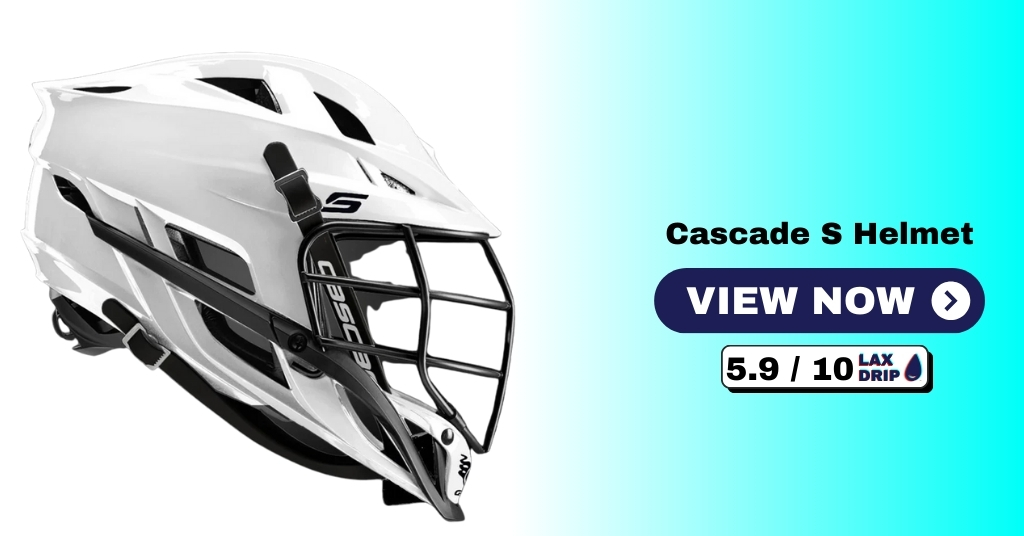
Despite the XRS coming out in 2021, the Cascade S is still a solid option for lacrosse players.
The helmet uses a tri-liner system along with the Supermono S Shell to absorb different types of impacts in different locations, helping you stay protected no matter what happens on the field.
The helmet is also extremely comfortable and looks great too. The tri-liner system along with the multiple ventilation ports help keep the helmet breathable so your head stays cool even on the hottest of days. Finally, the HardTail SPRfit allows you to adjust the helmet so it fits perfectly on your noggin.
Best Youth Lacrosse Helmets (Under 12 Years Old)
Youth helmets are typically good for children under 12 years old or those whose forehead circumferences are 22 inches or less.
Here are reviews of my top picks for the best youth lacrosse helmets.
Best youth lacrosse helmets:
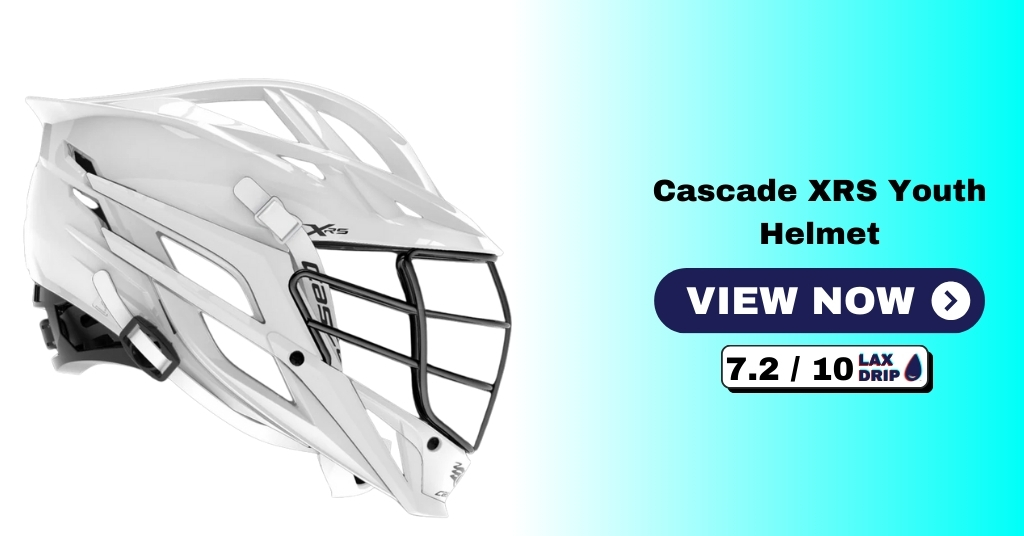
The Cascade XRS youth helmet is another stylish helmet, but it’s more suitable for young lacrosse players. The Tri-Liner system absorbed impacts effectively, providing the confidence that it can handle tough hits.
The soft inside padding absorbs 90% of the impact, only transferring the minimal impact. Thus, it provides high-level protection despite being lightweight.
Besides, the R-type outer shell is extremely sturdy against rough use. The low-profile design with maximum cutouts also offers enough airflow to keep your head dry.
Although it also has a chinstrap for an adjustable fit, it gets loosened after some time. Otherwise, it’s pretty durable.
Cascade has owned the lacrosse helmet market for years, but STX is making a serious push with the Rival Jr lacrosse helmet. It offers the best airflow with cutouts and sweat-absorbing liner, keeping the head cool.
Moreover, instead of messing with extra padding, STX built in a pump system from Schutt. It tightens evenly around your head upon hitting the pump and loosens with the air release.
Furthermore, it allows a snug feel, but not in an uncomfortable way. The helmet doesn’t wobble during quick cuts and sharp head movement.
Tilt and vision were solid, with the facemask positioned well so the sightlines felt natural.
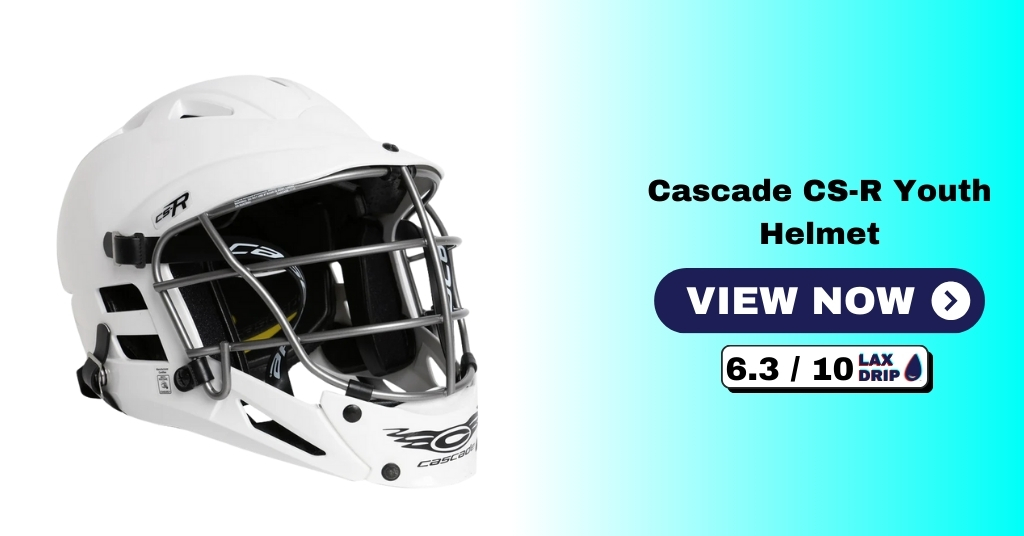
I haven’t bought a Cascade CS-R youth helmet, but it has been young players’ favorite for the past 2 years. Even my nephew is not replacing it with the upgraded version.
The EPP liner with Poron XRD foam absorbs impact well, and the memory foam sides offer an excellent fit. Although the velcro system loosened with time, it’s very easy to adjust according to comfort.
Besides, despite the one-size-fit design, the velcro strap reduces unnecessary helmet shifts during the game. It also has a three-bar front cage for better visibility.
Similarly, the cutouts over the top shell and back of the head allow maximum airflow during the game.
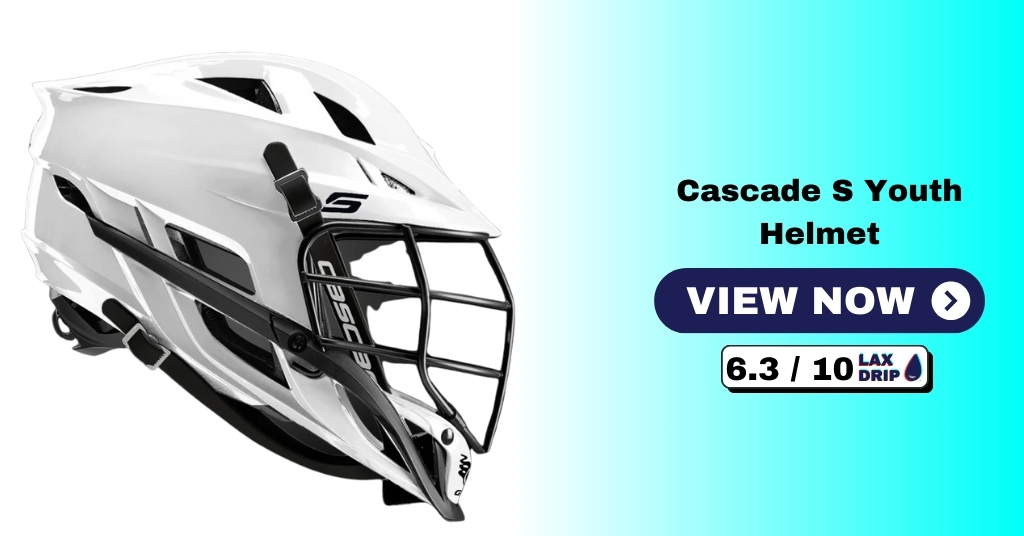
The Cascade S comes in as the best youth helmet for many of the same reasons that it was the best adult helmet. It features the same shape, design, and safety features.
The S helmet uses a tri-liner system along with the Supermono S Shell to absorb different types of impacts in different locations, helping your child stay protected no matter what happens on the field.
The helmet is also extremely comfortable and looks great too. The tri-liner system along with the multiple XFLO ventilation ports help keep the helmet breathable even on the hottest of days.
Finally, the HardTail SPRfit allows you to adjust the helmet so it fits perfectly on your child’s head.

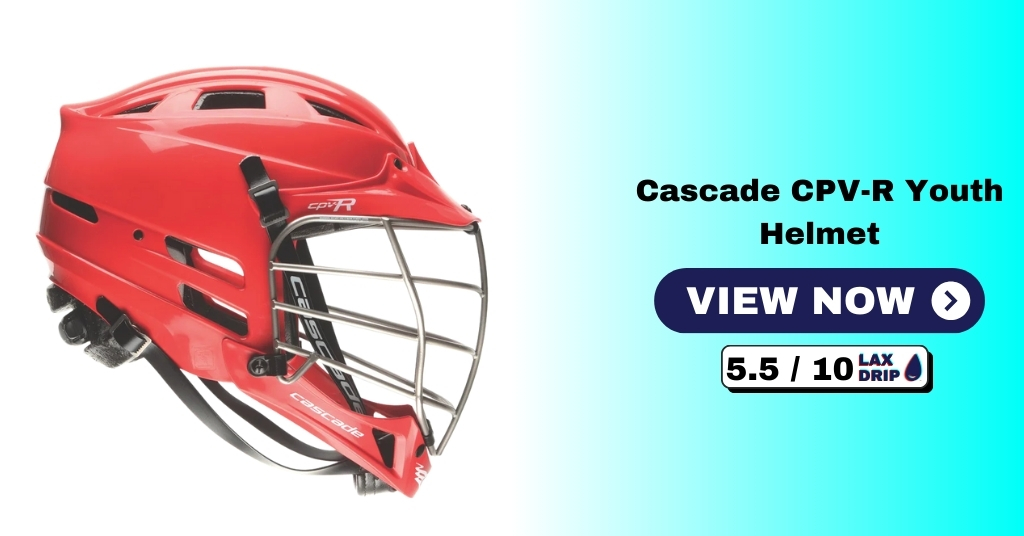
The Cascade CPV-R is the next option to consider on our list of the best youth lacrosse helmets. What makes the CPV-R great is that it costs nearly half as much as the Cascade S but still meets all safety standards.
This helmet comes in 4 different sizes, so you can be sure that there is an option that fits your child’s head. It also comes with Cascade’s SPRfit adjustable ratchet system that allows you to change the fit of the helmet as needed.
The EPP liner system and R Series shell help protect your child’s head while keeping the helmet as comfortable as possible.
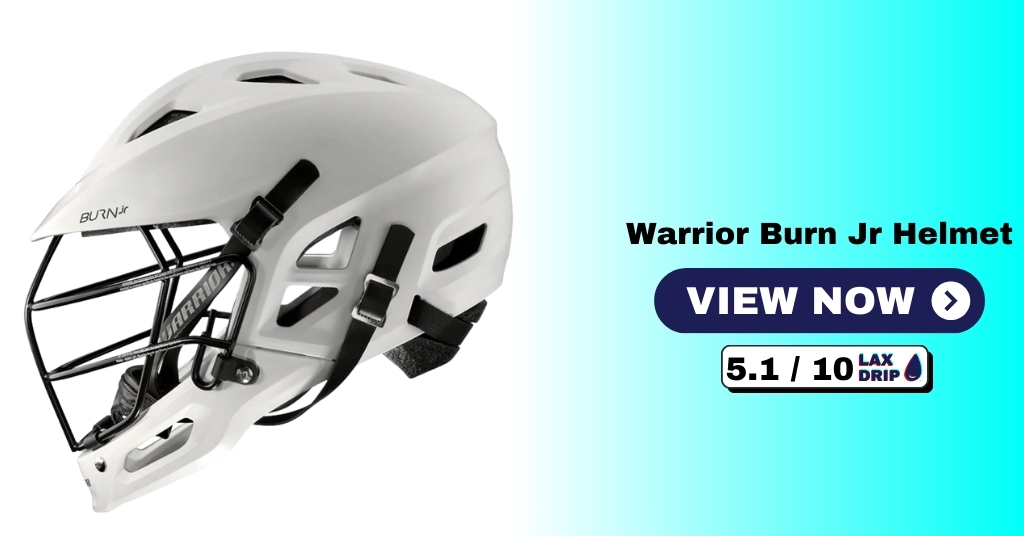
If you don’t want to go with a Cascade helmet, the Warrior Burn Jr Helmet—designed for players under the age of 12—is a decent alternative.
It has an energy-absorbing vinyl nitrate foam liner as well as an expanded polypropylene liner to help with impacts. There are also pull-tab attachments that allow you to adjust the fit of the helmet as your player gets older.
Like the others on this list, the helmet meets the National Operating Committee on Standards for Athletic Equipment’s (NOSCAE) and Safety Equipment Institute’s (SEI) standards for lacrosse helmets, so you can rest assured knowing that your child is protected.
How to Choose a Lacrosse Helmet
Here is what you should consider when choosing a helmet for yourself or your child.
Safety
First and foremost, you want to pick a helmet that is safe. That’s what is most important, and if your child isn’t safe, then comfort and style don’t matter.
How do you tell if a helmet is safe?
The easiest way is to check if it meets the standards set by the National Operating Committee on Standards for Athletic Equipment (NOSCAE) and Safety Equipment Institute (SEI).
I would be surprised if any new helmets that were released nowadays didn’t meet these standards. I guess an older version of a helmet may fail to meet standards if they are updated, but generally all helmets on the market today should meet these standards.
You may also want to read customer reviews to see if players have had any issues with the helmets breaking or hurting—which I have done to create the above list.
Size
You should also make sure to order the correct size when choosing a helmet. There are generally two different sizes: Youth and Adult.
Youth sizes are typically for players around 12 and under, whereas Adult helmets are for older players.
Aside from being comfortable, choosing a correctly sized helmet is also crucial for safety. If your helmet is too tight or loose, the helmet won’t absorb and disperse hits correctly, possibly leading to injury.
If you’re not sure which size makes sense, you can always measure your or your child’s head. Most helmet companies have reference tables that allow you to match up your head’s circumference to the correct helmet size.
You can also go to your local lacrosse or sporting goods store or try on teammates’ helmets to see which fit the best.
Comfort
While not all people find lacrosse helmets to be necessarily “comfortable” by any means, your helmet shouldn’t cause you any pain.
If it’s overly tight, you may have to use the adjustment mechanism (often located on the back of the helmet) or adjust the chin strap to loosen it up—and vice-versa if it’s too tight.
Note that some helmets may be more comfortable than others simply because they fit your head shape better. This is another good reason to try on different models before choosing one.
Vision
Having good vision out of your helmet is also very important. Though most have a very similar shape, the shells and facemasks can vary slightly from model to model which may affect how well you can see out of it.
Your field of vision shouldn’t be dramatically reduced by putting on a helmet, especially considering most don’t cut off much of your peripheral vision.
Weight
If you are comparing helmets that meet all safety standards and seem to be equally safe otherwise, it may be beneficial to choose a lighter helmet.
Having a lighter helmet can help you play faster on the field, both in your overall running speed as well as how fast you can move your head to react to passes and checks.
Colors
Many organized teams have specific helmet colors that players are supposed to wear.
Before buying a helmet, check if your team gives players helmets or if there are certain colors that players should buy.
Most lacrosse sites like lax.com and lacrosseunlimited.com allow you to customize your helmet completely on the site before purchasing.
If colors don’t matter as much, you can usually get a helmet faster and possibly cheaper on Amazon. Depending on the helmet, you may also be able to customize the colors too.
Parts of a Lacrosse Helmet
I thought it would be helpful to put together a diagram of the different helmet parts. The terminology is pretty consistent across different brands.
(And yes, that’s me in the picture)

Shell
The shell makes up the bulk of the outer layer of the helmet. It is typically made of a hard plastic with liners inside that keep your head safe and comfortable.
Visor
The visor is like an extension of the shell that covers your forehead. Some helmets may have a separate piece of plastic for the visor whereas it is just continuous with the shell for others.
Chin
The chin—as the name suggests—covers your chin area. It is usually made of a similar material to the shell and visor but may be a different color.
Facemask
The facemask is typically made of metal and covers your (you guessed it!) face.
The facemask can have a big impact on your visibility. If the horizontal bar lines up with your eyes when wearing your helmet properly, you may have trouble seeing. In this case, you can try tilting the helmet up or down more, just make sure that it still fits properly so you aren’t risking injury.
Chin Strap
The bottom of the chin strap covers your chin while the straps to each side run up the side of the helmet and connect to the shell to keep your helmet secure.
There are two straps per side. One connects around the temple and the other connects around the base of the shell towards the back.
It’s important to make sure the chin strap is tight enough that your helmet won’t move around too much independently from your head. For example, if you grab a player’s facemask and move it from left to right or up and down, the helmet shouldn’t move all over while the head stays still.
Your chin strap also shouldn’t be so tight that the helmet hurts.
Mouthpiece
Though it’s not technically a part of the helmet, most players also wear a mouthpiece which may be connected to the facemask with a strap or just rest in the player’s mouth.
Be sure to check your league’s rules to see if a mouthpiece strap is required. My state, for example, required one for high school players.
Many players boil their mouthpieces so they can form them to their teeth. This makes the mouthpiece more comfortable, increasing the chances that the player wears it, while also making it safer.
How We Rate Lacrosse Helmets
We take our ratings seriously and only recommend products that we would use ourselves.
To come up with our ratings for each product, we test the product ourselves whenever possible, review product specifications (weight, protection metrics, etc.), and read customer reviews/talk to lacrosse players we know that use the product.
When testing helmets, specifically, we mainly test them for comfort and fit with our staff and our staff’s friends. We also only recommend products that meet the current NOCSAE standars.
When it’s not possible to extensively test a product ourselves, we spend extra time talking to real customers who have used the product for a while themselves.
If you ever have any feedback for any of the products listed on this page or have a recommended addition, please contact us and let us know!
Tying It Together
I hope this guide helped you find a lacrosse helmet that works for you. The most important thing is to pick a helmet that is safe and comfortable. If your helmet ever causes you pain or breaks, stop using it immediately and either get it adjusted or find a new one.
If you are interested in taking your lacrosse game to the next level, you may be interested in some of our other guides:
- Best Lacrosse Gloves
- Best Lacrosse Arm Guards & Pads
- Best Lacrosse Shoulder Pads
- Best Lacrosse Rib Pads & Kidney Pads
- Best Lacrosse Bags
- Best Lacrosse Backpacks
- Best Lacrosse Sticks
- Best Lacrosse Goals
- Best Portable Lacrosse Goals
- Best Lacrosse Rebounders
- Best Lacrosse Backstops
- Where to Find Cheap Lacrosse Balls
- Best Women’s Lacrosse Goggles