
I may receive a commission if you purchase products through the links on this page at no additional cost to you. This helps me keep this site free but doesn’t affect my opinions in any way.
After barely missing the windows at our house while playing wall ball a few too many times, my parents suggested that I find a new place to practice. The problem was, however, that I couldn’t find another brick wall large enough to play and there was no wall close to where I set up my goal.
That’s when I discovered lacrosse rebounders.
Lacrosse rebounders are a great way to practice your stick skills, helping you become more comfortable with passing and catching. You can use them to play wall ball, throw yourself feeds when shooting, and for countless other drills.
Read on to learn about the best lacrosse rebounders available today as well as what you should look for when deciding which is best for you.
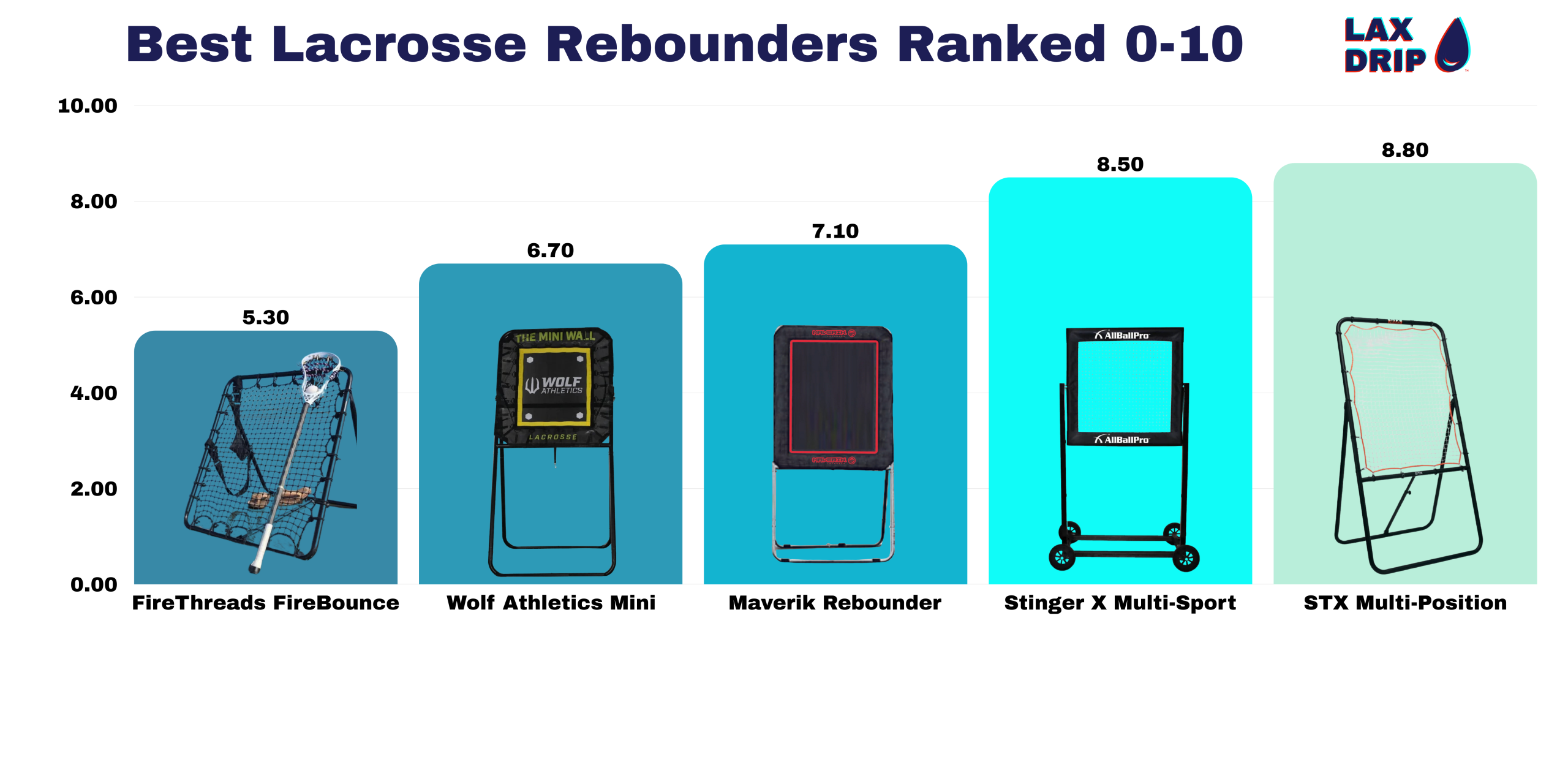
Best Lacrosse Rebounders
I’ve spent over 10 hours researching the lacrosse rebounder market to find the best options for all types of players.
Below you can find my top choices for rebounders and pitch backs that can help take your game to the next level. Take note of the “best features” for each product to find one that matches your skill level and needs.
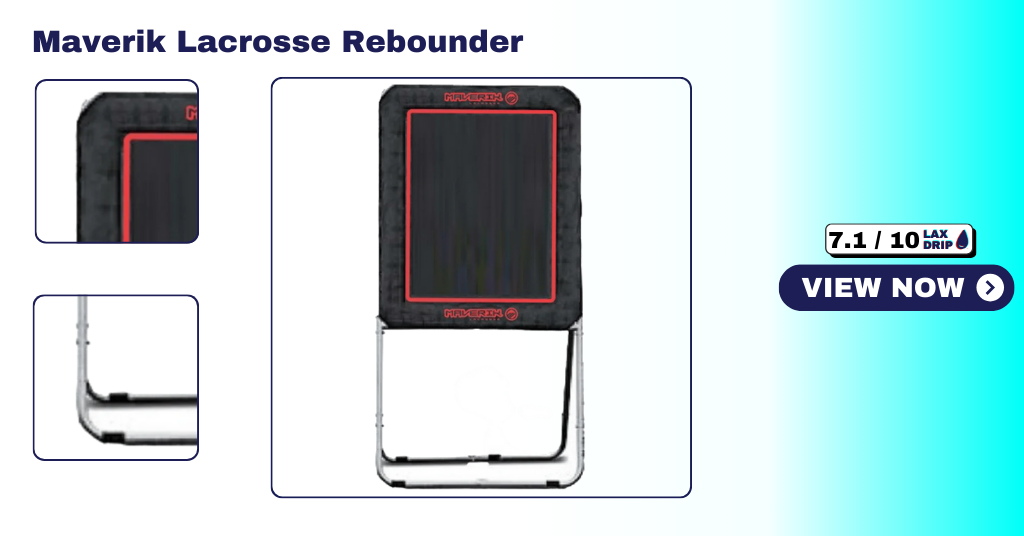
| Best features | Adjustable angle | Heavy-duty net |
| Overall size | 4 ft wide x 7 ft tall |
| Net size | 4 ft wide x 3 ft tall |
| Frame material | Steel |
| Weight | 32 lbs |
| Warranty | 30-day |
The Maverik Lacrosse rebounder is an excellent training rebounder. I have found it indispensable for improving my passing and shooting accuracy, especially as a midfielder and attacker. I like how its adjustable angle allows me to customize my training sessions.
The heavy-duty net consistently delivers reliable rebounds, even under high-impact use, which I have found invaluable for solo drills and team practices. I also like that it’s easy to assemble and transport, making it perfect for both indoor and outdoor training.
The sturdy steel frame gives me confidence in its durability, and at 4 feet wide and 7 feet tall, it provides ample space for a variety of exercises.
Pros
- Adjustable angle for versatile training drills
- Heavy-duty net for reliable rebounds
- Durable steel frame for long-lasting use
- Easy assembly and portability
Cons
- Slightly heavier compared to some alternatives
- Smaller rebound surface than some premium models
Other Buying Options
>> View on Amazon
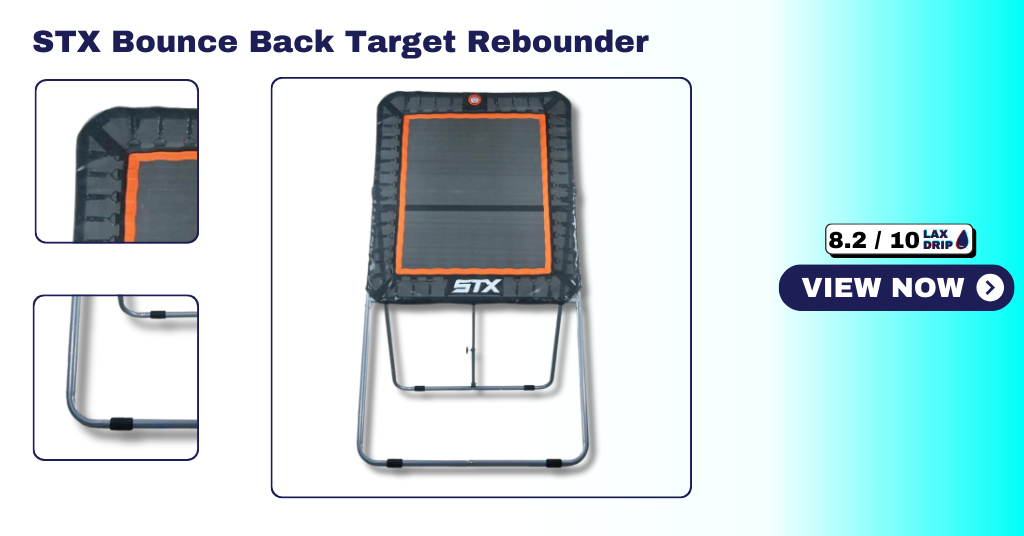
| Best features | Folds flat for easy storage, Not too loud on impact. |
| Overall size | 3.5 feet wide x 6.5 feet tall |
| Net size | 3 feet wide x 4 feet tall |
| Frame material | Alloy Steel |
| Weight | 56.7 lbs |
| Warranty | 30-day |
I have been using the STX Bounce Back Target for a while now, and it’s one of the most reliable rebounders I have tried. Its rust-resistant alloy steel frame is incredibly sturdy, and I love how the adjustable angles let me practice a variety of techniques, from passing to shooting and catching.
The ball return is consistent and fast, even from longer distances, which has improved my accuracy and reaction time. The orange target area is a great feature for honing precision during feeding practices.
However, assembling it was a bit of a hassle due to the nuts and bolts, but once set up, it’s rock solid. I would recommend storing it indoors or covering it to prevent wear on the net straps.
Pros
- Fast return speed for long-distance practice
- Adjustable steel frame for varied rebound angles
- Durable and rust-resistant construction
- Folds flat for easy storage
Cons
- Assembly can be time-consuming
- Net straps may degrade if left exposed to sunlight
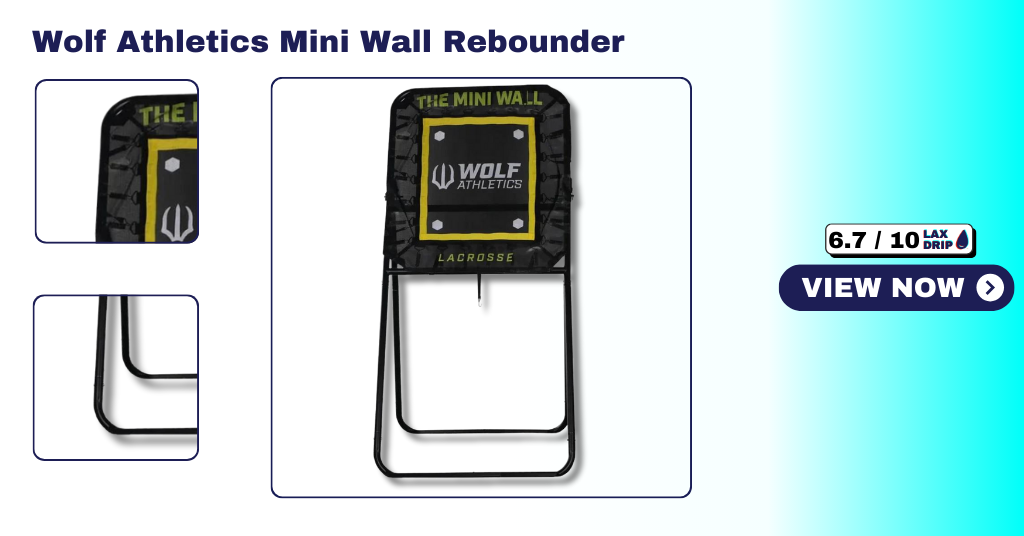
| Best features | Fastball return speed, compact design |
| Overall size | 3.6 ft wide x 6.5 ft tall |
| Net size | 3 ft wide x 4 ft tall |
| Frame material | Alloy Steel |
| Weight | 29 |
| Warranty | 30-day |
I picked up the Wolf Athletics Mini Wall rebounder because of its compact, foldable design. It’s been a great addition to my backyard training setup. At just 30 pounds, it’s lightweight yet sturdy, making it easy to move and store.
Initially, I was worried that the smaller 3′ x 3′ target area might limit my practice options, but I was pleasantly surprised by its performance. The high-tension trampoline springs deliver fast and accurate rebounds, which have been perfect for improving my reaction time and hand-eye coordination.
While advanced players might find the smaller shooting space restrictive, I think it’s an excellent option for beginners or young athletes working on passing and catching drills.
The adjustable angles allow me to focus on different techniques, from quick passes to precision shots. The durable alloy steel frame holds up well outdoors, but I would recommend storing it indoors or covering it to prevent wear over time.
Pros
- Compact and foldable design for easy storage
- Lightweight yet durable construction
- High-tension springs for fast and accurate rebounds
- Adjustable angles for versatile training
Cons
- Smaller target area may not suit advanced players
- Limited space for long-distance shooting drills
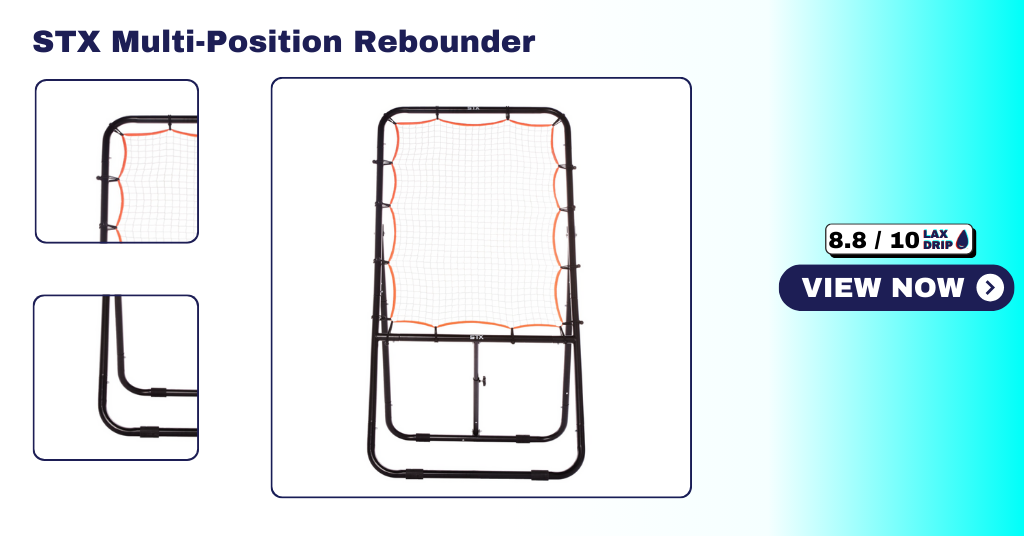
| Best features | Fastball return speed, compact design |
| Overall size | 3.6 ft wide x 6.5 ft tall |
| Net size | 3 ft wide x 4 ft tall |
| Frame material | Alloy Steel |
| Weight | 29 |
| Warranty | 30-day |
The STX Multi-Position rebounder has been a game-changer for my solo practice sessions. Its lightweight design makes it easy to carry to the field or store in my garage, and the adjustable angles allow me to work on different skills like passing, shooting, and quick catches.
What I enjoy most is how realistic the rebounds feel. It’s almost like receiving a pass from a teammate. The sturdy steel frame holds up well against hard shots, and the 3′ x 4′ nylon net provides a decent target area for drills.
One unique feature is the double-sided practice capability, which allows two players to train simultaneously without interrupting each other. However, I have noticed that the bungee-attached net sometimes absorbs too much impact, resulting in slower ball returns.
Additionally, off-center rebounds can occasionally occur, but I have found this helps improve reaction time and positioning.
Pros
- Double-sided practice capability
- Adjustable angles for versatile training
- Lightweight and portable design
- Realistic rebounds for skill development
Cons
- Slower ball return speed compared to some models
- Off-center rebounds may happen occasionally
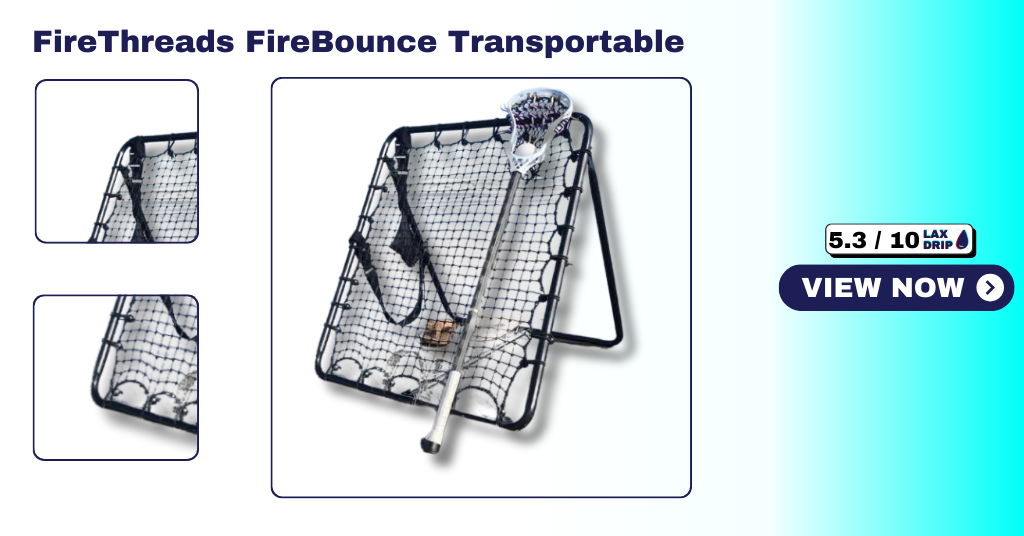
| Best features | Lightweight, 3 practice angles |
| Overall size | 2.3 ft wide x 2.9 feet tall |
| Net size | 2.3 ft wide x 2.9 feet tall |
| Frame material | Steel |
| Weight | 10 lbs |
| Warranty | One-year |
The FireThreads FireBounce Transportable rebounder is a fantastic option for players who need a lightweight, travel-friendly training tool. Weighing under 10 pounds and equipped with shoulder straps, it’s incredibly easy to fold up and take anywhere.
Despite its compact size, the steel frame is durable enough for regular use, and the high-quality net provides accurate rebounds for typical lacrosse throws. However, I noticed that it flexes under high-velocity shots, which can affect performance slightly.
One feature I liked was the inclusion of ground stakes, which keep the rebounder stable on grass or sand while minimizing rattling. The smaller 2.9′ x 2.3′ target area initially led to some missed catches, but after a few sessions, my focus and accuracy improved significantly.
With three adjustable angles and responsive bungees, it’s perfect for short passes and angled throws during travel or in limited practice spaces.
Pros
- Lightweight and portable with shoulder straps
- Durable steel tubing stakes for stability
- Three adjustable angles for versatile training
- Compact design ideal for travel
Cons
- Rattles slightly under strong shots
- Limited practice space due to a smaller target area
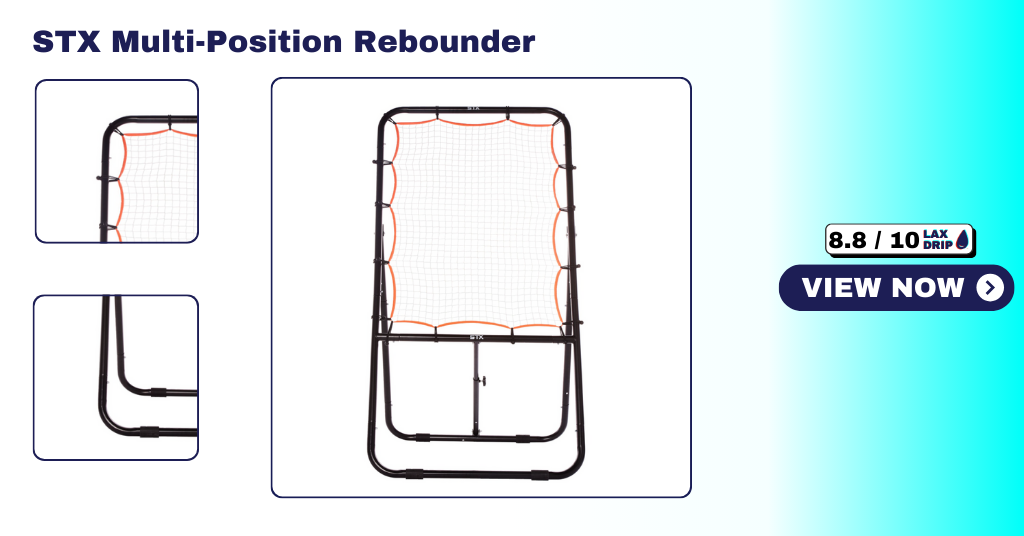
| Best features | UV-protected vinyl pitchback, Easily storable |
| Overall size | 4.2 ft wide x 7.25 ft tall |
| Net size | Just under 3.5 ft wide x 3.5 ft tall |
| Frame material | Galvanized, powder-coated steel |
| Weight | 76 lbs |
| Warranty | 30 days |
Stinger X is a multi-sport rebounder with three ledges to adjust the net levels. The adjustable angles make it perfect for individual lacrosse practice sessions.
Firstly, I loved how quickly it bounced back the ball. I started testing it with the net at its lowest level to improve my basic catching and throwing skills. The ball flew back at me quickly, improving my lacrosse stick-handling technique and focus. It has a 95% return rate to develop hand-eye coordination for better in-game performance.
Setting the net to its middle level and firing shots from a 45-degree angle rebound the ball at chest height. So, it helped me with reflexes, in-time responses, and passing at different angles.
Moreover, Its UV-protected vinyl is highly stiff and durable. The net barely has any damage, and the frame has no rust after a year of tough practice. Besides, its high-speed, realistic bounces are perfect for practicing passing without needing a feeding partner.
However, I set the net 7.2 feet high and fired away from a 90-degree angle to practice shooting and catching. It gave me a broader area to jump and catch passes from different angles. Although the practice area is limited and there is no shooting target, it still worked for me.
Furthermore, the collapsible design and 10-inch strong wheels make it conveniently portable. I even traveled with it in my car without any hassle. However, it’s 76 lbs. So, you need muscles to move it around without its wheels.
Pros
- High-Velocity Return: It has a tight polyvinyl net frame that throws back the ball hard, perfect for maintaining shot velocity and catching practice.
- Adjustable Height and Angles:The three fixing ledges allow net settings at different heights to adjust the screen for young players and adults. Besides, you can also adjust angles for feeding, passing, and shooting practice.
- Durable Construction: The strong, weather-resistant galvanized, powder-coated steel frame does not rust even if used in the rain.
- Easily Portable and Storable: The collapsible design makes it easy to store anywhere. Although heavy, you can also transport it through high-quality large wheels.
Cons
- Small Practice Area: Net frame offers limited practice space. So, it’s good with direct shot practice but lacks space for angled lacrosse goal shooting practice.
- Heavy: Although the net height and adjustment make it suitable for young lacrosse players, the heavy construction limits mobility despite the wheels.
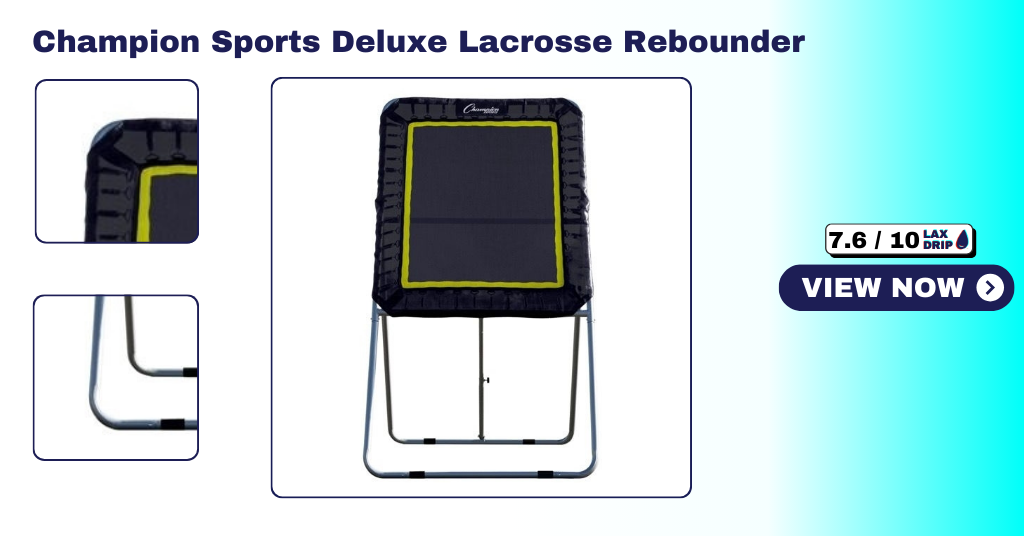
| Best features | Large rebound area |
| Overall size | 4 ft wide x 8 ft tall |
| Net size | 4 ft wide x 6 ft tall |
| Frame material | Steel |
| Weight | 64 lbs |
| Warranty | 90 days |
The Champion Sports Deluxe XL Lacrosse Rebounder—as the name implies—is a large rebounder that is slightly raised off the ground. It is heavy-duty and has strong rebound velocity, making it another good option for more advanced players.
On the downside, there is only a 90-day warranty with this Champion rebounder, leaving you out of luck if something goes wrong after the first 3 months of use. In addition, the heavy weight may be too much to handle for younger players.
Pros
- Strong rebound velocity: This Champion rebounder has strong rebound levels due to its tightly wound net giving you crisp passes back each time.
- Heavy & sturdy: As the second-heaviest rebounder on this list, you can expect it to last long and stay stable even with the hardest passes.
- Good visibility: The large yellow outline of the netting area makes it easy to aim at even when you are far away.
Cons
- May be too heavy for young players: The rebounder may be too heavy for younger players to move around the yard or store.
- Assembly instructions unclear: Some steps were missed in the assembly instructions making it somewhat difficult to assemble.
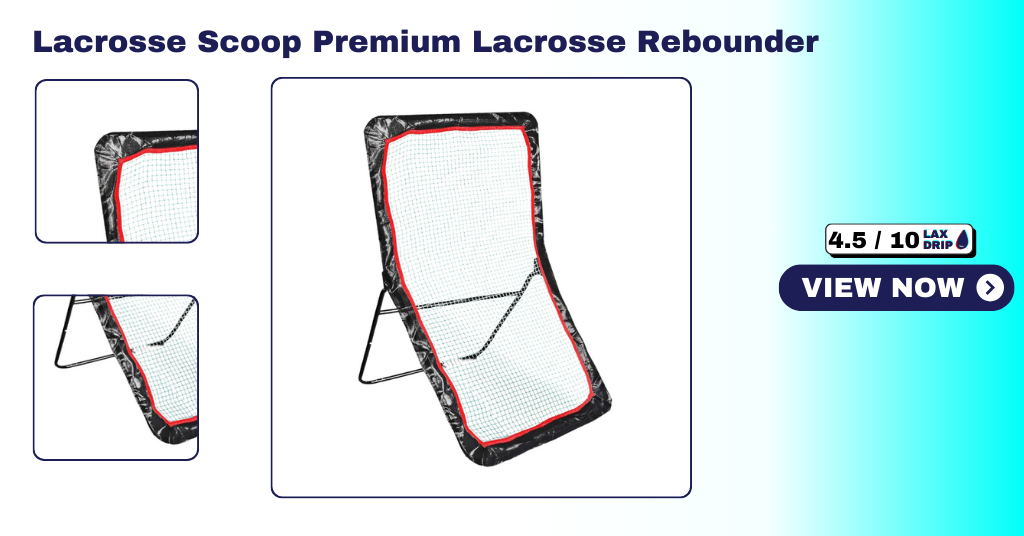
| Best features | Money-back guarantee, best customer reviews |
| Overall size | 4 ft wide x 6.5 ft tall |
| Net size | Just under 4 ft wide x 6.5 ft tall |
| Weight | 27.2 lbs |
| Warranty | Money-back guarantee |
The Lacrosse Scoop Premium Lacrosse Rebounder is our top pick for the best lacrosse rebounders of 2023.
It provides a large rebounder area but is light enough for most players to move around the yard. It is also adjustable so you can change the angle the ball returns at based on what you are working on. Many customers also are satisfied with how well balls bounce back of this rebounder, providing “passes” that are close to what you get when having a real catch.
On the downside, the legs on this rebounder don’t fold in, making it a bit harder to store if you aren’t going to leave it in your yard. Additionally, there is no target area to help you work on your aim.
Perhaps the best thing with the Lacrosse Scoop rebounder, however, is that it comes with a 100% money-back guarantee, so if you aren’t satisfied with it, you can easily return it and receive your money back.
Pros
- Large & adjustable: The Lacrosse Scoop Premium Lacrosse Rebounder is large and adjustable, allowing for a variety of return angles depending on how you want to use it. Whether you are trying to simply have a catch with yourself or work on ground balls, this rebounder is a great option with 5 different angles to choose from.
- Light & foldable: The target area is larger than most competing products despite the unit being one of the lightest available. The top half of the rebounder folds down for more compact storage, though the back legs don’t fold in.
- Good bounce back: Customers are generally happy with the amount of bounce back the rebounder provides and you can adjust the tightness of the net to provide more or less bounce back depending on your needs.
- 100% money-back guarantee: This product has some of the best customer reviews and there is a 100% money-back guarantee if you are not satisfied with your purchase.
Cons
- Legs don’t fold in: Since only the top half folds down (not the back support), it isn’t as easily storable as some competing pitch backs.
- No target area: There is no target area on the net like some other rebounders provide.
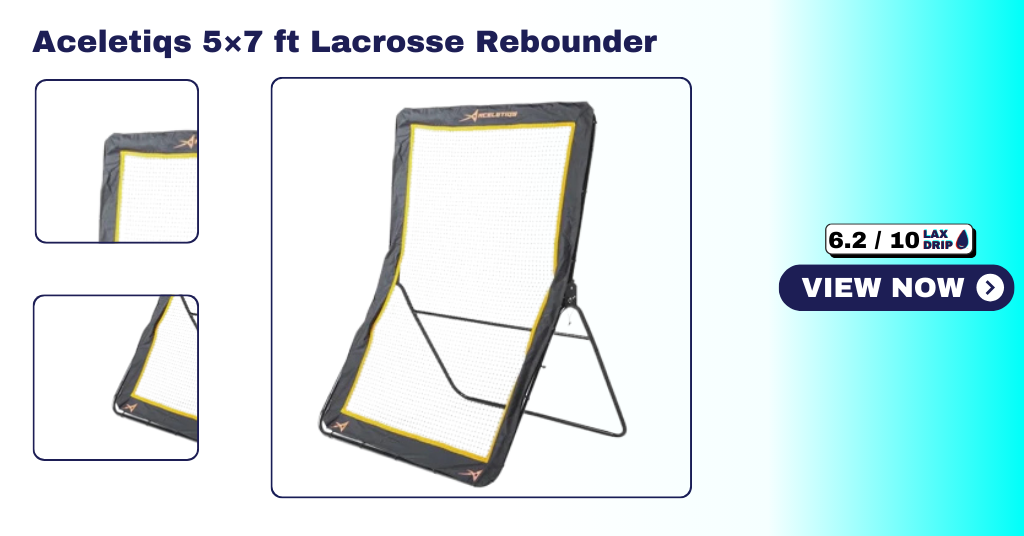
| Best features | Lifetime warranty, large rebound area, great customer reviews |
| Overall size | 5 ft wide x 7 ft tall |
| Net size | Just under 5 ft wide x 7 ft tall |
| Frame material | Powder-coated metal |
| Weight | 31 lbs |
| Warranty | Lifetime satisfaction guarantee |
If you prefer a slightly larger rebounder, the Aceletiqs Lacrosse Rebounder is a great option to consider. It is 5 ft wide by 7 ft tall, providing a massive area for you to practice on. Despite its size, it’s easy to assemble, taking well under an hour for most people. It is also adjustable so you can change the return angle based on what you are working on.
Like the Lacrosse Scoop rebounder, the bottom legs on this option don’t fold in, making it a bit more difficult to store in a tight space. With that being said, there is a lifetime satisfaction guarantee so if you find that this is a big problem, you can return it to receive your money back.
Pros
- Very wide w/ many return angles: The Aceletiqs Lacrosse Rebounder is wider than any of the others on this list, making it a great option for beginners who aren’t as accurate as well as more advanced players who want a variety of return angles.
- Adjustable: The top half of the rebounder can adjust into 4 different positions allowing it to be used for a variety of drills.
- Lifetime satisfaction guarantee: The pitch back has great customer reviews and comes with a lifetime satisfaction guarantee should anything go wrong.
- Easy to assemble: This is one of the easiest rebounders to assemble on this list. It should take you under an hour and requires no tools.
Cons
- Legs don’t fold in: Only the top half of the rebounder folds down making it harder to store than alternative options.

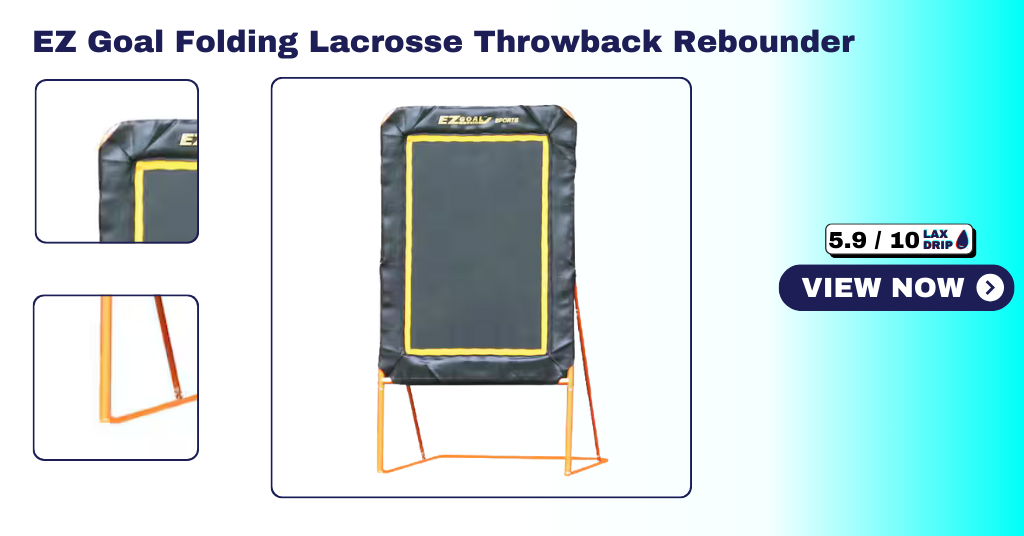
| Best features | Heavy-duty, large rebound area, easily storable |
| Overall size | 4 ft wide x 8 ft tall |
| Net size | 4 ft wide x 6 ft tall |
| Frame material | Powder-coated 17-gauge steel |
| Weight | 70 lbs |
| Warranty | 1 year |
Unlike the previous two rebounders, the net portion of the EZ Goal Professional Folding Lacrosse Throwback Rebounder is a bit raised off the ground, providing a higher target. It also has a tightly woven net, providing great bounce back.
This EZ Goal rebounder is clearly made of high quality materials with it’s 17-gauge steel frame and heavy-duty net. Though this is definitely a huge benefit of this product, it’s important to note that it’s pretty heavy at 70 lbs, and may be difficult for younger players to move around the yard.
Finally, despite its size, this rebounder collapses down flat for compact storage. You should have no problem fitting it into your garage or another smaller storage space.
Pros
- Very large & collapsible: Standing at 8 feet tall, the EZ Goal Professional Folding Lacrosse Throwback Rebounder is one of the largest rebounders on the market but also easily collapses down for compact storage. While most rebounders fold up somewhat, the EZ Goal Rebounder collapses to nearly flat so you can store it in your garage or another small space.
- Durable: It is made of heavy-duty steel and springs that are UV-protected so they won’t deteriorate if left outside.
- Adjustable return angle: The telescoping frame allows you to adjust the return angle of the ball so you can practice all kinds of passes and ground balls.
Cons
- Heavy: The heavy-duty materials used to create the EZ Goal Rebounder make this one of the heaviest options available. While this is good for the longevity of it, it may make it difficult to transport for younger players.
- Difficult to assemble: The assembly instructions can be difficult to understand.
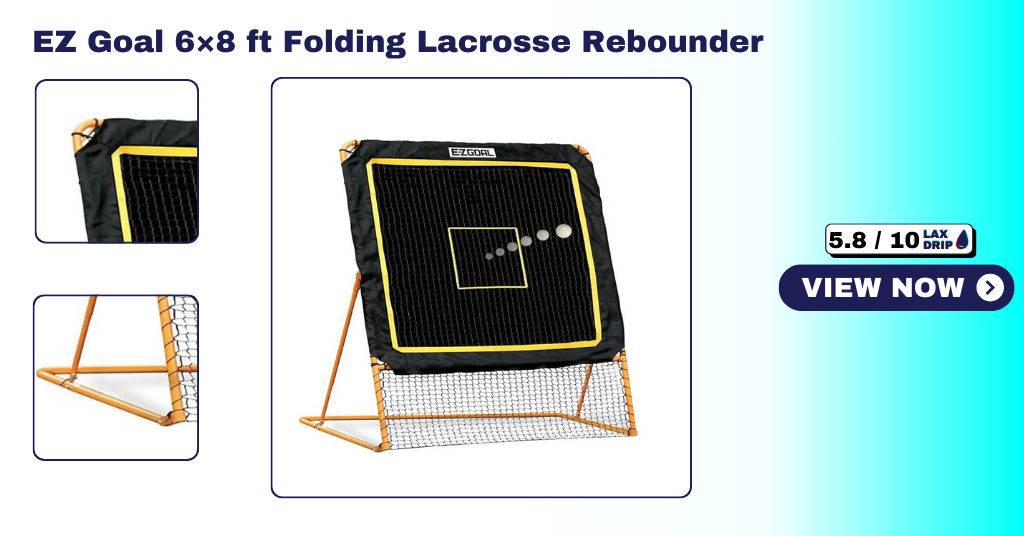
| Best features | Heavy-duty, large rebound area, easily storable |
| Overall size | 4 ft wide x 8 ft tall |
| Net size | 4 ft wide x 6 ft tall |
| Frame material | Powder-coated 17-gauge steel |
| Weight | 70 lbs |
| Warranty | 1 year |
The EZ Goal 6’x8′ Professional Folding Lacrosse Rebounder is the largest on our list with a massive target area, making it great for beginners and advanced players alike. It is big enough that beginners will have a hard time missing it and large enough for advanced players to use at long distances.
This rebounder also provides great rebound velocity and is very heavy-duty. While this makes for a durable product, it can be difficult to assemble, especially when it comes to attaching the net to the frame. Almost every review talks about this but most customers were also very satisfied once they got it setup.
Pros
- Massive rebounder: This EZ Goal rebounder is the largest on our list, providing a massive surface area to practice against.
- Good rebound velocity: The rebounder has great return velocity allowing for crisp return passes.
- Includes target area: The net comes with a target that you can use to improve your accuracy.
- Heavy-duty: The 17-gauge steel frame is very strong and should last for a long time.
- UV-treated nety: The net that comes with this rebounder is UV-treated so it won't break down if left out in the sunlight for long periods of time.
Cons
- Can be difficult to assemble: Most customers noted that the assembly of this rebounder is difficult—especially when it comes to attaching the net.
- May be too large & heavy for young players: With its large size and weight of 61 lbs, this rebounder may be difficult for young players to move around the yard.
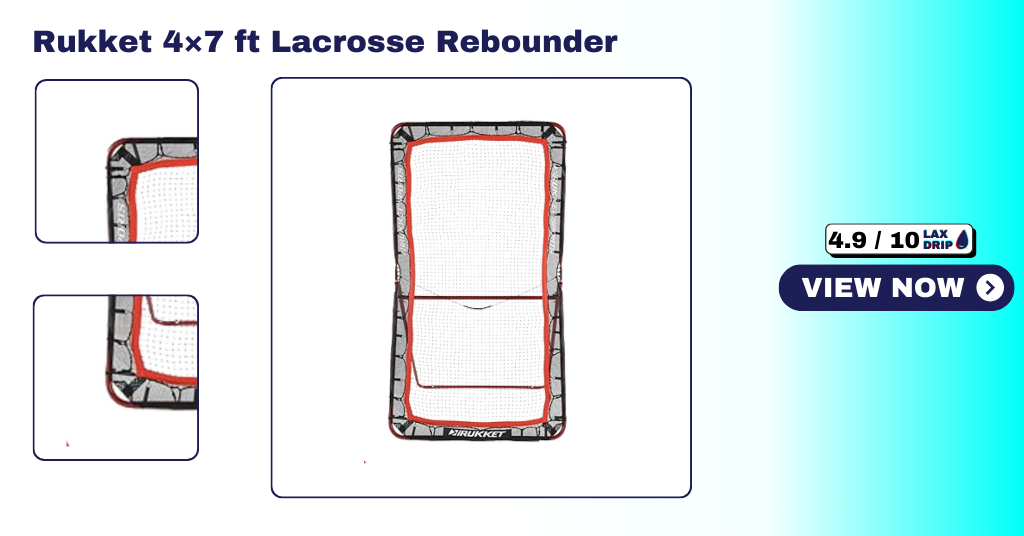
| Best features | Lifetime warranty, large rebound area, strong bounce back |
| Overall size | 4 ft wide x 7 ft tall |
| Net size | Just under 4 ft wide x 7 ft tall |
| Frame material | Powder-coated metal |
| Weight | 37 lbs |
| Warranty | Lifetime |
The Rukket 4×7 ft Lacrosse Rebounder is very similar to the first two options on this list. It is the same size and shape as the Lacrosse Scoop rebounder, also comes with a lifetime warranty, and its legs don’t fold in for easy storage.
The main differences with this rebounder are that it comes with a target area for practicing aim and it can be a bit more difficult to assemble.
Pros
- Large & adjustable: The Rukket Lacrosse Rebounder is another large, adjustable rebounder that can be used for a variety of drills. The top half adjusts into 4 different angles to change the return path of the ball.
- Good rebound velocity: The pitch back has great rebound velocity allowing for crisp return passes. It also comes with extra cords to adjust the tension as needed.
- Includes target area: The net comes with a target that you can use to improve your accuracy.
- Lifetime warranty: There is a lifetime warranty incase anything goes wrong or breaks.
Cons
- Can be difficult to assemble: Some customers reported having difficulty assembling the rebounder.
- Legs don’t fold in: Only the top half of the rebounder folds down, making it harder to store than competing products that fold nearly flat.
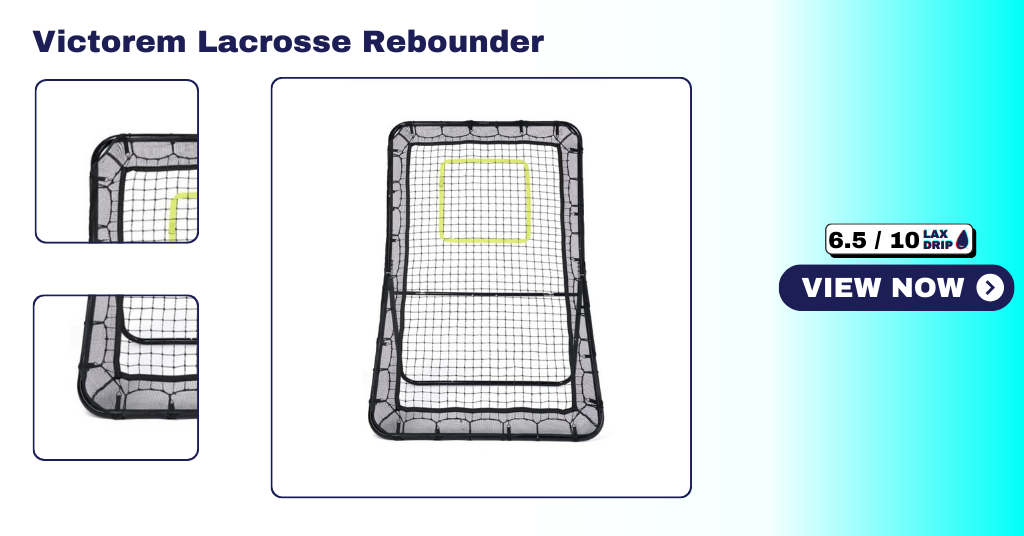
| Best features | Lightweight, extra net included, best for younger players |
| Overall size | 4 ft wide x 6 ft tall |
| Net size | Just under 4 ft wide x 6 ft tall |
| Material | Metal |
| Weight | 20.25 lbs |
| Warranty | Unknown |
The Victorem Lacrosse Rebounder is an especially good option for younger players due to its light weight and large target area. It should be easy for most players to move around and the target area allows for practicing aim. It also comes with a replacement net and mesh cover that protects the bungee cords connecting the net to the frame.
Since this rebounder is so lightweight, it isn’t the best option for older and more advanced players. The net and frame may break down too quickly to make it worth the purchase.
Pros
- Good for beginners: The Victorem Lacrosse Rebounder is cheaper and lighter than the others on this list, making it a good option for beginners.
- Includes replacement net & mesh cover: A replacement net is included incase the original wears down or loses tension. In addition, there is a mesh cover to reduce the chance that you hit the bungee cords.
- Adjustable return angle: You can adjust the angle of the top half of the rebounder into 5 different positions as needed based on the drill you are doing.
- Includes target area: There is a target on the net so you can work on improving your accuracy.
Cons
- Very light: Since the rebounder is so much lighter than alternatives, it’s not a great option for more advanced players who may find it to be too unstable for consistent use.
- May break down for some: Many customers reported the product breaking down within the first year, some of which also had a hard time getting refunds or replacement parts.
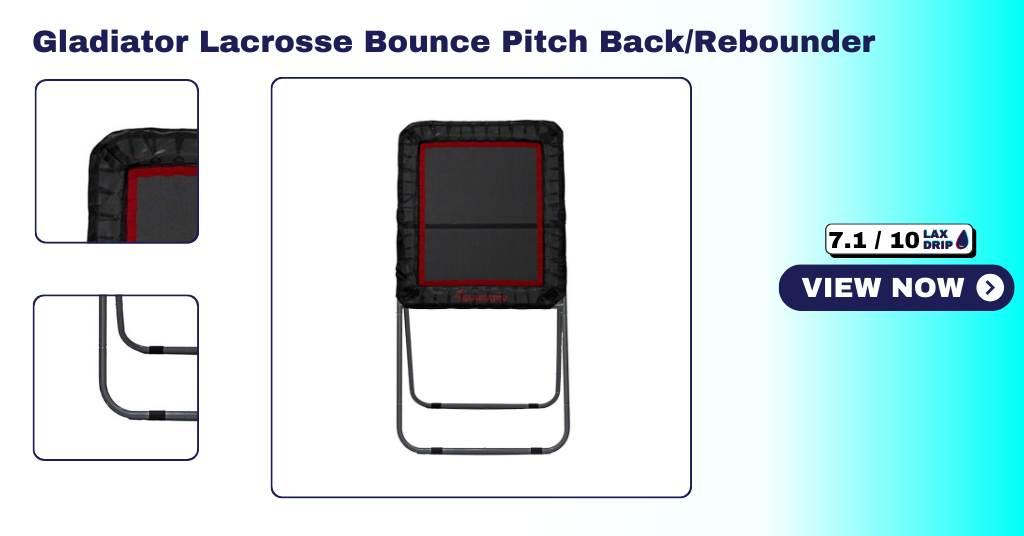
| Best features | Easy assembly, folds flat for easy storage, heavy-duty |
| Overall size | 4 ft wide x 7 ft tall |
| Net size | 4 ft wide x 3 ft tall |
| Frame material | Steel |
| Weight | 58 lbs |
| Warranty | 1 year |
The Gladiator Lacrosse Professional Pitch Back/Rebounder is another rebounder that is raised off the ground with a tighter-woven net. Of all the rebounders on this list, it may provide the highest rebound velocity, making it a great option for intermediate and advanced players.
It also folds flat for easy storage and comes pre-assembled, making it one of the most convenient rebounders on this list.
On the downside, some customers have noted that it was delivered with missing pieces or that it rusted pretty quickly. You may want to store the rebounder in your garage or another indoor place when not using it to help combat this.
Pros
- Easy assembly & storage: If easy assembly and easy storage are at the top of your rebounder wish list, this may be the best option for you. The net comes pre-assembled and the rebounder folds flat so you can easily store it.
- Heavy & durable: The Gladiator Pitch Back/Rebounder is one of the heaviest products on this list, making it a great option for more advanced players with more power.
- High rebound velocity: This unit has strong rebound levels, returning crisp passes.
Cons
- Has come with missing pieces for some: Some customers reported that the Gladiator Pitch Back arrived damaged or missing pieces.
- May rust: The unit is more susceptible to rusting than some competing rebounders.
Lacrosse Rebounder Buying Guide
There’s no single best lacrosse rebounder on the market. With so many options available, the best for you will depend on your skill level, how much space you have, and what you want to use it for.
Here are some things you should consider when choosing a rebounder or pitch back:
Size & Storability
It’s important to consider the size of the rebounder for two reasons.
First, you should choose a size that matches your skill level. Beginner players may want to choose a larger rebounder with more surface to aim at. More advanced players, on the other hand, may want to choose one with less net area so they can work on their accuracy and have more return velocity.
Next, you should consider how much room you have to use and store the rebounder. If you only have a small practice area or little room for storage, a smaller rebounder (or a larger rebounder that folds flat) is your best bet. If you have plenty of room, a larger rebounder may make more sense so you can still use it from longer distances.
Durability
It’s also important to consider what your lacrosse rebounder is made of and how durable it is. You may save $50 to $100 by choosing a cheaper rebounder, but if it only lasts a year before you have to buy a new one, you’ll end up paying more in the long run than you would if you bought a quality product from the start.
Many of the best lacrosse pitch backs use high-gauge, powder-coated steel that is resistant to breaking down and rusting.
Portability
If you will be moving your rebounder around your yard or to entirely different locations (such as your practice field), you should make sure you choose one that is light enough to carry and will fit in your car, if necessary.
Some lacrosse rebounders can get up to 75 lbs which would be very difficult for a young player to transport. Be sure to check the weight of the options you are considering before making your selection.
Rebound Angles
Most lacrosse pitch backs allow you to adjust the angle of the rebound net area so you can change what type of pass you receive back. Look for a rebounder that has a wide range of angles so you can practice ground balls, line drives, and passes with more loft.
Rebound Strength
The best lacrosse bounce backs are able to do what their name suggests well…actually bounce the ball back to you. Ideally, the ball will come back to you around the same speed that you throw it.
There is nothing worse than having to throw the ball as hard as you can at the rebounder just to have it barely bounce off.
You can usually get a good idea of how well a lacrosse ball will bounce off a rebounder by pushing your hand up against the net to see how tight it is.
Customer Reviews
Don’t just look at the overall customer review score before purchasing a lacrosse rebounder. Be sure to read customer reviews and see what they specifically liked and disliked about the product (like I have done above).
One customer’s issue (such as how heavy the unit is, for example) may be irrelevant to you. On the flip side, even if a rebounder has a great overall review score, there may be a single issue that many customers have that is a dealbreaker for you.
Price
Last but not least, you should be sure to compare the prices of rebounders to find one that fits your budget as well as your needs. With such a wide range of prices, it can be difficult to figure out how much you should be spending.
I recommend comparing the rebounders in your price range and looking for the one with the best customer reviews and features you care about.
When to Buy a Lacrosse Rebounder
I attribute most of my lacrosse success to playing wall ball as much as possible. Throughout middle school and high school, I tried hitting the wall every day.
Every lacrosse player can benefit from playing wall ball, no matter their age or skill level. The constant repetitions help develop muscle memory that is crucial for longterm success.
There are 2 common ways to play wall ball: using an actual wall or using a rebounder.
If you have a solid brick or stone wall near (or on) your house, that may be sufficient if it doesn’t chip when you hit it repeatedly and if there are no windows in danger of being shattered.
If you don’t have a reliable wall, or if you prefer to have a wall closer to your goal to practice catching feeds and shooting, a rebounder is your best bet.
The main advantages of rebounders are that you can move them around as needed and adjust the angle of them to do different drills. Plus, you don’t have to worry about breaking a window and having your parents freak out on you.
Lacrosse Rebounder FAQs
Can I adjust the return angle of my lacrosse rebounder?
For most rebounders, you simply have the make the angle of the bottom legs wider (for a higher return) or narrower (for a lower return). Others have two different angles of net built into the rebounder, allowing you to control the return angle based on where you hit it.
How can I make the ball return faster to me?
You can try tightening the rebounder net by connecting the row/column of diamonds a few inches in from the outside of the net to the connectors.
So instead of having the outer section of diamonds connected to the outside of the rebounder, try connecting the third, fourth, or fifth section to it. Over time, you may have to continue tightening the net as it breaks in.
How can I make the ball return more slowly?
To make the ball rebound more slowly, try connecting one of the outermost sections of diamonds to the rebounder. If the outermost section of diamonds of the net is already connected to the frame, your only option is to stand further away or throw the ball easier.
How much do lacrosse rebounders cost?
Rebounders typically cost anywhere from $80 to $300 depending on the brand, size, and quality.
How much do lacrosse rebounders weigh?
Most lacrosse rebounders weigh in the 20 lb to 70 lb range.
Sample Drills Using Your Lacrosse Rebounder
There are countless drills you can do using your lacrosse rebounder or pitch back. I encourage you to experiment and try making up new games that can keep practice fun and challenging. Here are some of my favorite drills using a rebounder:
Wall Ball
As mentioned above, wall ball is one of the most important drills for any lacrosse player.
So what is wall ball?
In its simplest form, you just throw the ball against the wall, catch it, and repeat.
There are, however, many variations you can do to increase the difficulty and improve your stick skills. In the following list, you can see some of my favorites. (Note that you should do every drill equally with both your right and left hand, even if you aren’t comfortable with your offhand yet. These repetitions are crucial to developing your offhand, and doing so can give you a big advantage over your competition.)
- Switching hands: Throw the ball with your right hand, catch it with your right hand, split to your left hand, throw with your left hand, catch with your left hand, split to your right hand, repeat.
- Quick stick: Throw the ball, catch it in your stick, and throw it again without cradling. To do this you will have to give with the ball as it comes into your stick to gain control before releasing it again.
- One-handed quick stick: The same as above except with one hand. This will help develop your wrist strength and comfort throwing the ball one handed.
- Behind the back: Throw the ball at the wall behind your back, catch it normally, and repeat.
- Ground balls: Throw the ball towards the bottom of the wall so it bounces at least once before coming back to you. Scoop the ball and repeat.
- Bad passes: To simulate bad passes, I will throw the ball away from the side I am throwing with (so towards the left of the rebound if I am throwing with my right hand), so it comes back away from the hand my stick is in. Either cross your stick over or switch hands to catch it and repeat.
When playing wall ball, I usually will start with 100 right-hand passes, 100 left-hand passes, 100 passes switching hands, then 50 of each of the above with both hands.
Simulating Feeds
I remember before I got my rebounder, I would just toss the ball up a few feet in the air then catch it and shoot. How often does a teammate pass you a ball straight up in the air from a foot away though?
That’s why rebounders and pitch backs are so great for time and room shots. By using the rebounder in combination with a goal, you can practice receiving realistic feeds from teammates.
Simply line the rebounder up 10 or so yards away from you, throw the ball against it, step or crow hop towards the direction of the ball, catch it, and shoot on goal.
Passing and Catching on the Run
Last but definitely not the least difficult, you can also use your rebounder for passing and catching on the run.
While this can be difficult for beginners, it’s essential to practice since your feet will rarely be still when throwing and catching in games.
You can practice throwing and catching on the run by running directly at your rebounder while throwing it or running parallel to the face of the rebounder. If running sideways (as opposed to directly at it), but sure to angle your pass so the ball rebounds to where you will be, not where you are when you pass it.
How We Rate Lacrosse Rebounders
We take our ratings seriously and only recommend products that we would use ourselves.
To come up with our ratings for each product, we test the product ourselves whenever possible, review product specifications (weight, materials used, etc.), and read customer reviews/talk to lacrosse players we know that use the product.
While we can’t physically test out every single lacrosse rebounder on the market, we do our best to try out each that we rate. When testing rebounders, we mostly consider how well the ball returns when throwing at it because, well, that’s what rebounders are for. Aside from that, we consider if the materials seem high quality to get a gauge of whether the rebounder will hold up well over time.
If you ever have any feedback for any of the products listed on this page or have a recommended addition, please contact us and let us know!
Other Products You May Want to Consider
Buying a lacrosse rebounder is a great way to improve your skills. Here are some other pieces of equipment that you may want to consider alongside your new rebounder: