I have often seen lacrosse players argue about this. Is a textured lacrosse ball better than a non-textured one? Yes, a textured ball is better than a non textured ball because it has delayed grease, enhanced grip, and improved control.
If you have ever played lacrosse, you know that not all balls are manufactured the same. Some feel perfect in your hands, while others seem determined to slip out at the worst possible moment.
So, let’s settle this once and for all with an informative breakdown of textured vs non-textured lacrosse balls.
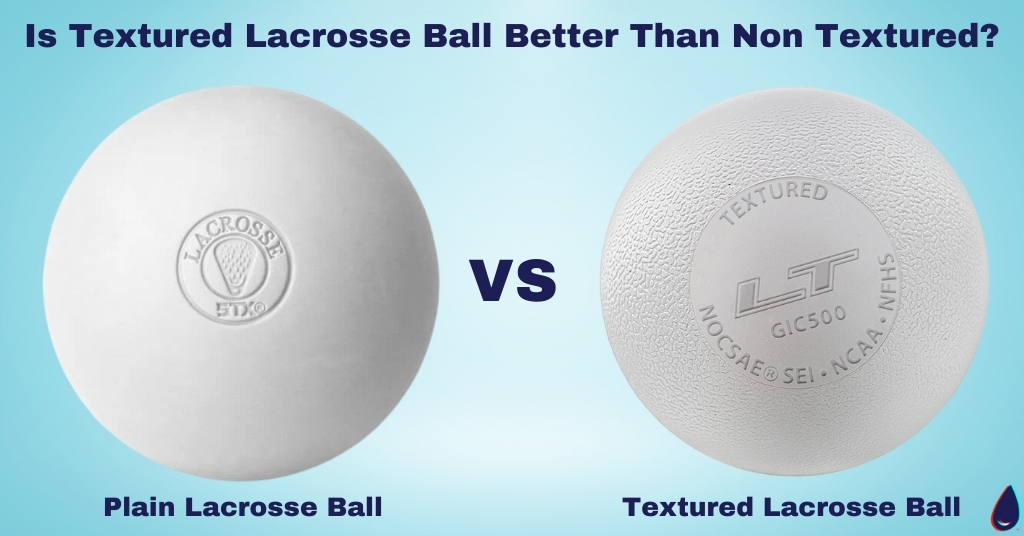
What Are Textured and Non-Textured Lacrosse Balls?
Before I talk about the details, let’s get our basics straight.
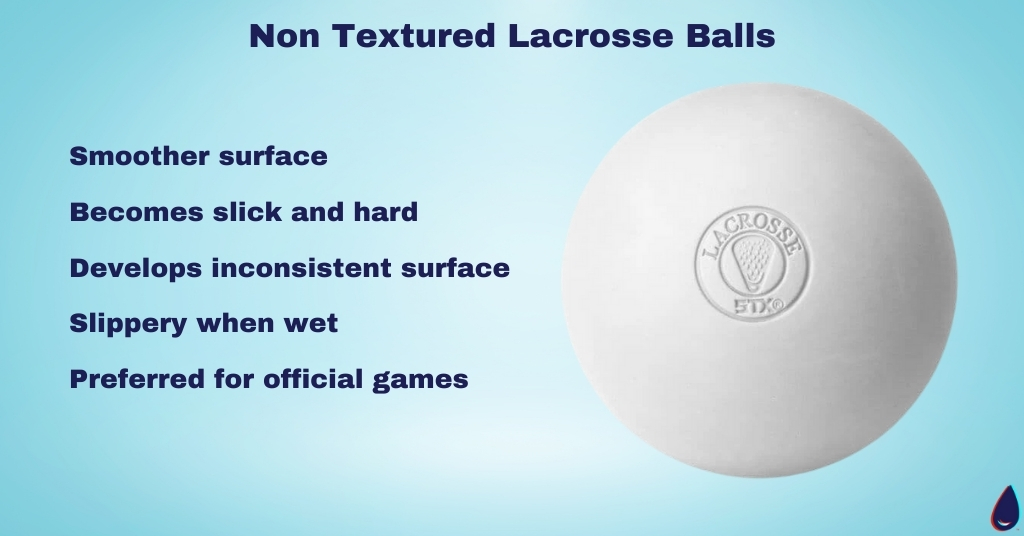
- Non-Textured Lacrosse Ball: This is your traditional, smooth rubber lacrosse ball. These have been the gold standard for years. Non-textured lacrosse balls are used in official games and training sessions.
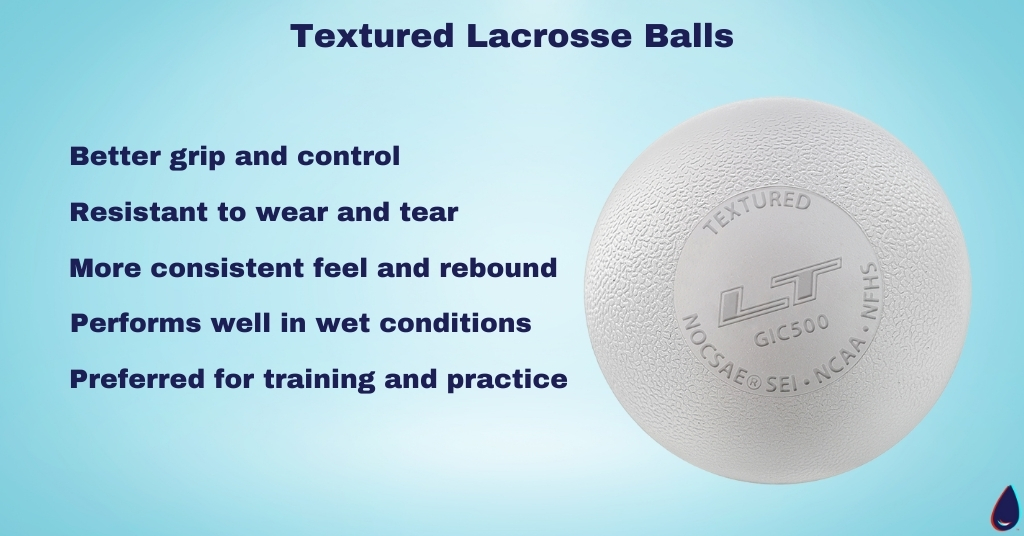
- Textured Lacrosse Ball: The textured lacrosse ball is a rather innovation. After 2019 when Guardian Innovations released the first textured lacrosse ball “Pearl LT” approved for play by the NCAA and NFHS. This one is a relatively newer innovation. These balls have a slightly rough or patterned surface. They are designed to improve grip and control.
Grip and Control: Does Texture Make a Difference?
If you have ever tried throwing a lacrosse ball in humid or wet conditions, you know the struggle is real. One second, your shot is perfect; the next, the ball slips like it just got out of a butter bath.
Here is where textured balls make their move:
They have slightly rough surfaces, which means your stick and gloves get more traction. This helps to make more precise passes and shots.
You will also notice that non-textured balls tend to develop that annoying slick layer (known as grease), making them harder to control. Textured balls delay this process, keeping their grip longer.
In my opinion, along with tens of players, textured lacrosse balls take the lead when it comes to handling and control, especially in challenging conditions.
Durability: Which Ball Lasts Longer?
We all know that lacrosse balls take a beating. From high-speed shots to bouncing off walls, they go through a lot. But which one holds up better?
For a better game, durability matters a lot!
| Feature | Textured Lacrosse Ball | Non-Textured Ball |
| Grip Over Time | Lasts longer | Wears down faster (greaser effect) |
| Durability | More resistant | Can degrade quicker |
| Weather Adaptability | Performs well in all conditions | Slippery when wet |
Textured balls not only last longer but also maintain their grip for extended periods. This means you will need fewer replacements and fewer surprise fumbles in a game.
Read More: How Hard Are Lacrosse Balls?
Performance in Different Weather Conditions
Ever played lacrosse in the rain? I used to love playing in the rain, getting dirty, yet making endless memories. But it turns into an entirely different sport, more like slip-and-slide dodgeball.
Textured balls outperform their smooth counterparts when it comes to:
- Wet conditions: Better grip means less slipping.
- Cold weather: Maintains traction even when it’s freezing outside.
- Hot weather: Holds up without becoming slick.
A textured ball is getting all the aura points up till now.
Cost and Availability
Is textured lacrosse ball better than non textured ball? Let’s get real and talk about the price tag.
Textured balls are slightly expensive, but I would like to say one thing: it’s better to have quality equipment that will last longer rather than a cheap one that you have to change often.
| Factor | Textured Ball | Non-Textured Ball |
| Cost | Slightly higher | Standard pricing |
| Lifespan | Longer | Shorter |
| Replacement Rate | Less frequent | More frequent |
If a textured ball lasts twice as long as a non-textured one, then spending a little extra upfront saves money in the long run. Plus, no one likes constantly swapping out greased-up, slippery balls.
Both lacrosse balls are easily available in the market.
Lacrosse Players’ Preferences: What Do Players Say?
I talked to some players (both casual and competitive) to know what they had to say, and the results were interesting:
- “I switched to textured balls last year, and my passes feel much more accurate”
- “Textured balls don’t get as greasy, which is a game-changer in wet games”
- “Honestly, I didn’t think it would make a difference, but now I can’t go back to non-textured”
Many players love the enhanced control of textured lacrosse balls. That said, some also prefer the feel of non-textured balls. They say that the grip should come from skill rather than the ball itself. (A bold take, but hey, to each their own)
Read More: Why Are Lacrosse Balls So Bouncy
Want to See the Difference in Action?
Check out this awesome comparison video.
Speed Test! Textured Lacrosse Balls – YouTube
Rules & Regulations: Are Textured Balls Legal?
For lacrosse equipment, adherence to specific standards ensures both safety and consistency. Textured lacrosse balls are no exception and must meet particular criteria to be deemed legal for play by the NOCSAE, SEI, NCAA, and NFHS.
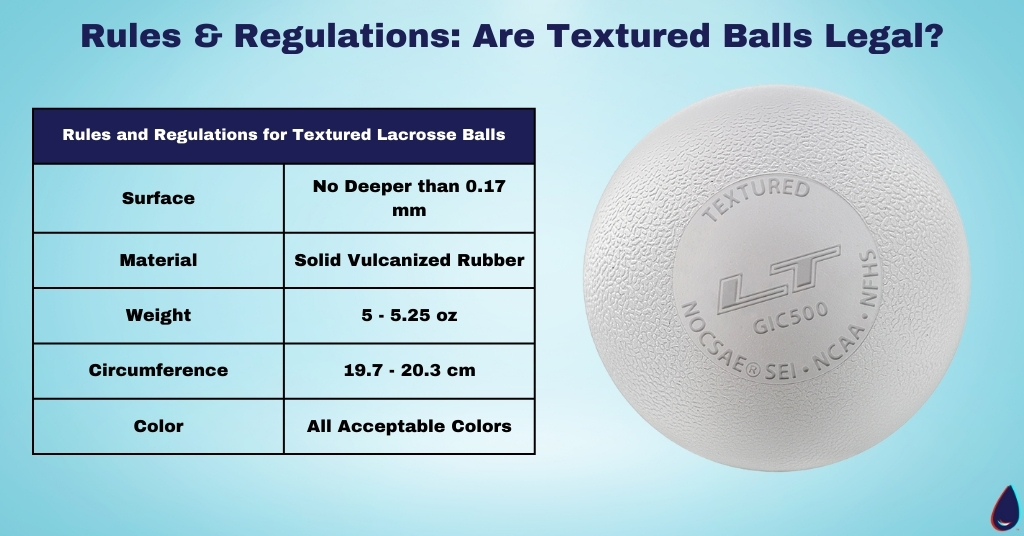
NOCSAE Standards
The National Operating Committee on Standards for Athletic Equipment (NOCSAE) sets the benchmark for lacrosse ball specifications. According to NOCSAE standards:
- Surface Texture: Balls can be smooth or slightly textured, with the texture depth not exceeding 0.007 inches (0.17 mm).
- Material: Balls must be made of solid rubber or suitable synthetic materials.
- Weight: The acceptable range is between 5.0 and 5.25 ounces (142 to 149 grams).
- Circumference: Balls should have a circumference between 7.75 and 8.0 inches (19.7 to 20.3 cm).
- Color: Acceptable colors include white, yellow, orange, lime green, or pink
To be approved for official gameplay, lacrosse balls must display the marking “Meets NOCSAE Standard”.
SEI Certification
Beyond NOCSAE compliance, Safety Equipment Institute (SEI) certification is crucial. This certification indicates that the ball has gone through numerous tests for safety and performance. Manufacturers often highlight SEI certification to assure players and organizations of the ball’s quality.
Also, if you are looking to buy lacrosse balls on a budget, check this article. Where to Buy Lacrosse Balls: Bulk & Cheap Options
People Also Ask
Are Textured Lacrosse Balls Better?
Yes, textured lacrosse balls offer better grip, enhanced control, and durability. They don’t develop the “greaser” effect as quickly as non-textured balls, making them a great choice for consistent performance in all weather conditions.
What Is the Best Lacrosse Ball?
The best lacrosse ball depends on preference. Textured balls provide better grip and last longer, while non-textured balls offer a traditional feel. For improved control and durability, many players prefer textured lacrosse balls.
Are Textured Lacrosse Balls Legal?
Yes, textured lacrosse balls are legal if they meet NOCSAE standards and have SEI certification. They must adhere to specific weight, size, and texture guidelines to be approved for official gameplay.
What Type of Ball Is Used in Lacrosse?
Lacrosse uses solid rubber balls, which can be smooth (non-textured) or textured for improved grip. Both types are used in games and training, but only NOCSAE-certified balls are allowed in official matches.
Do Textured Lacrosse Balls Last Longer?
Yes, textured lacrosse balls last longer because they resist the “greaser” effect and maintain grip over time. They are more durable in different weather conditions, making them a cost-effective choice for frequent players.
So the answer to the question, “Is textured lacrosse ball better than non textured ball?” is yes. But the choice comes down to your preferences and playing conditions. If you want better grip and control, hate dealing with “greaser” balls, and play in wet or unpredictable weather, a textured lacrosse ball is 100% worth it.
If you prefer a more traditional feel and don’t mind replacing balls more often, non-textured balls still get the job done.