
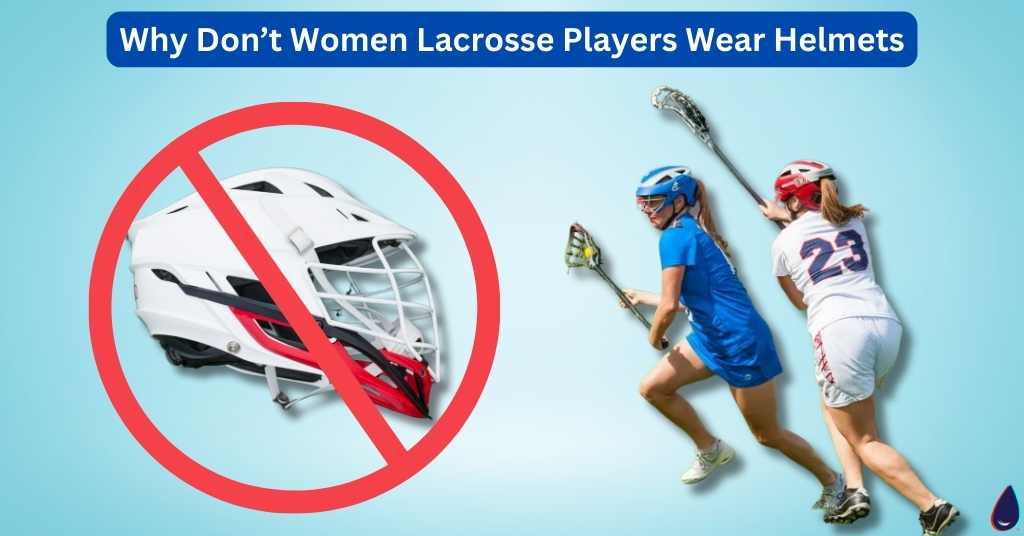
Men’s lacrosse players wear helmets as a must, while women are left with just goggles and mouth guards. Why the difference? why don’t women lacrosse players wear helmets? Is it about tradition, safety, or something else? Women lacrosse players don’t wear helmets because body checking is not allowed.
- What Safety Gear Do Women Lacrosse Players Wear?
- How Does Women’s Lacrosse Differ from Men’s Lacrosse?
- Historical Context: Tradition Over Safety?
- Are Women’s Lacrosse Players Allowed to Wear Helmets?
- Do Helmets Reduce Injuries in Women’s Lacrosse? Standards and Regulations
- Should Helmets Be Mandated in Women’s Lacrosse?
- How Do Other Sports Approach Head Protection?
- People Also Ask
Whenever you choose to play a sport, the main reason is your passion; however, we still can’t deny the risks involved.
Sports like hockey, football, and lacrosse are contact sports with higher injury rates. Therefore, one would ideally think that all players wear protective gear.
Head protection is required in most contact sports; the absence of helmets in women’s lacrosse might seem strange and even concerning.
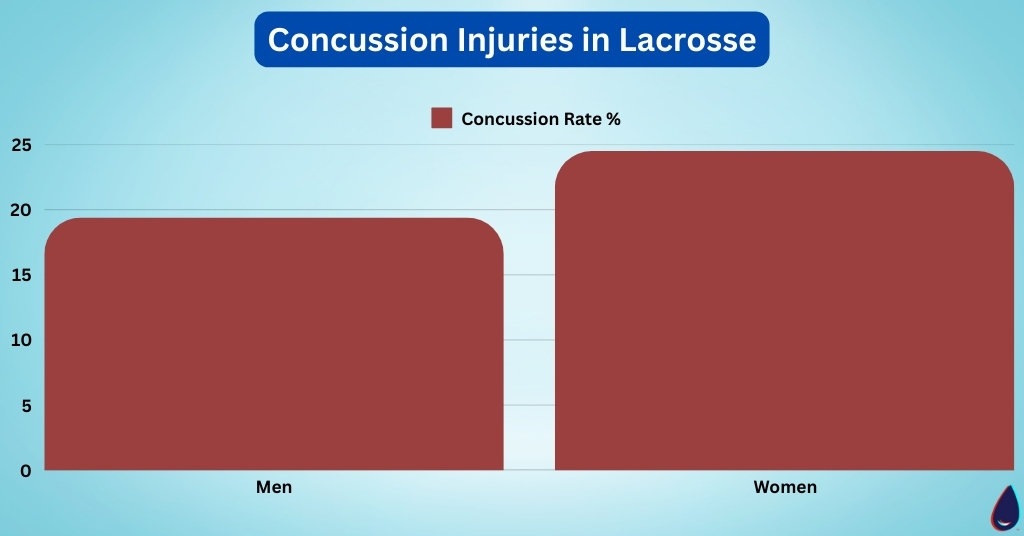
Concussions account for about 24.5% of injuries in women’s lacrosse, making them the most common head injury. Yes, this might be a lower percentage compared to men’s lacrosse, but just because the concussion rate is lower in women’s lacrosse doesn’t mean that head safety should be optional.
However, there’s a good reason why women players don’t wear helmets.
Let’s find out why women players don’t wear lacrosse helmets.
What Safety Gear Do Women Lacrosse Players Wear?
First, let me tell you that while helmets aren’t part of the standard gear, women’s lacrosse players aren’t completely unprotected. Here’s what their typical safety gear looks like:
| Equipment | Purpose |
| Goggles | Protect the eyes from flying balls and sticks |
| Mouthguards | Cushion the impact on teeth and jaw |
| Gloves (Only for Goalies) | Provide hand protection |
Men’s lacrosse is a contact sport, so body checking is allowed while it is illegal in women’s play; this reduces the risk of head trauma significantly.
How Does Women’s Lacrosse Differ from Men’s Lacrosse?
The following is a basic comparison of men’s vs. women’s lacrosse in terms of contact, protective gear, and field size.
| Aspect | Men’s Lacrosse | Women’s Lacrosse |
| Contact Level | Full body checks allowed | No body checking |
| Protective Gear | Helmets, pads, gloves, jocks, supporters | Goggles, mouthguards |
| Field Size | Smaller field | Larger field |
Historical Context: Tradition Over Safety?
Women’s lacrosse has a rich history dating back to the early 20th century when it was introduced as a non-contact version of the men’s game. The emphasis was on skill rather than physicality.
Over time, this led to a culture where protective gear, including helmets, was deemed unnecessary for women’s lacrosse since no contact or body checks were allowed.
The belief that women’s lacrosse is safer without helmets persists, even though the game has evolved. Critics argue that introducing helmets could change the nature of play, making it more aggressive. However, goggles are good enough for personal safety.

Are Women’s Lacrosse Players Allowed to Wear Helmets?
I would like to clarify that women lacrosse players can wear pre-approved helmets. There’s no barring. Some players like to wear helmets who already have faced a concussion. Wearing the helmet is to an extent personal choice as well. Nevertheless, helmets put a limitation on visibility and movement
But let me tell you that the stats show that most of the head injuries that women get while playing lacrosse are due to head-to-gear contact.
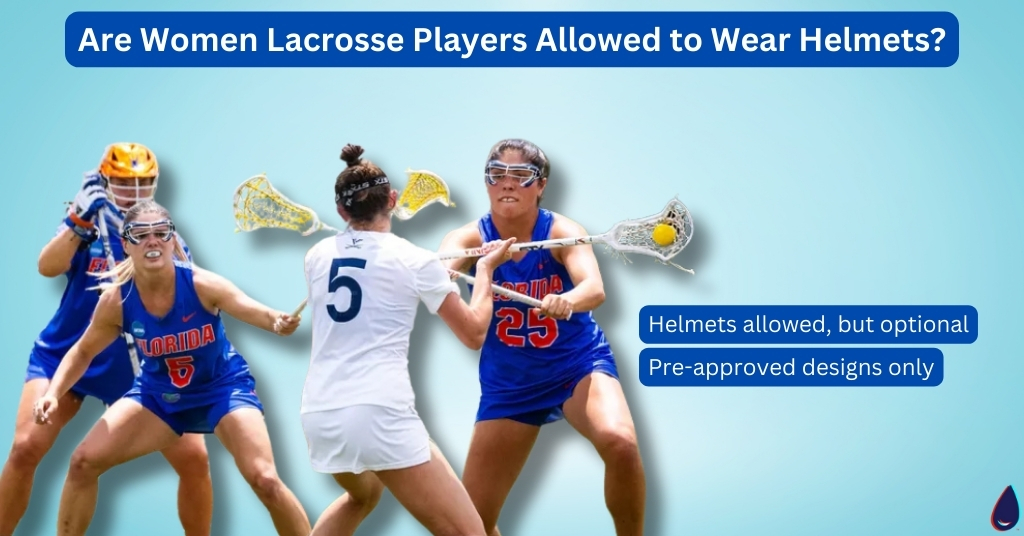
This clearly shows that the girls are either getting hit by the lacrosse stick or the ball on the head, leading to concussions.
There might not be full-body contact in women’s lacrosse, but there are injuries, and that accounts for something.
Marty Soller (a lacrosse official) says that there are penalties for having your stick in the player’s sphere (7″ around the head, 12″ in middle school). These lacrosse rules are designed to limit the risk of head injury as well.
Do Helmets Reduce Injuries in Women’s Lacrosse? Standards and Regulations
US Lacrosse issues helmet guidelines for men’s lacrosse but does not have similar requirements for women’s lacrosse. However, women are allowed to wear optional headgear as long as it meets ASTM standards. This helmet is typically lightweight and less restrictive than traditional helmets.
Some states have started to implement headgear requirements at the youth level. This move aims to reduce concussions while preserving the essence and spirit of women’s lacrosse.
Some advocates believe that headgear could “make the game safer without compromising its essence,” especially at younger levels where players are still learning techniques.
Should Helmets Be Mandated in Women’s Lacrosse?
Proponents of helmets argue that safety should be prioritized over tradition.
On the other hand, purists believe that helmets would fundamentally alter the nature of women’s lacrosse.
Some players also say that it feels weird to be the only one to wear a helmet on the field, and it draws unnecessary attention, so they just go in without the helmets.
The primary concern against helmets is the potential for increased aggression. Players may feel invincible with helmets, leading to riskier behavior—a phenomenon known as the “gladiator effect.”
On the other hand, research suggests that even with non-contact rules, accidental collisions can still cause concussions.
Injury statistics show that, according to the National Center for Catastrophic Sport Injury Research, concussion rates in women’s lacrosse are higher than in many other women’s sports.
Several perspectives from coaches and medical experts emphasize that head injuries are “still prevalent despite the non-contact rules,” urging a re-evaluation of current protective measures.
While these numbers highlight potential safety concerns, the debate over helmets remains controversial.
How Do Other Sports Approach Head Protection?
If we compare the use of helmets in sports like field hockey, we see that helmets are required due to the high risk of head injuries from balls, sticks, and contact.
The trend across sports shows a gradual shift toward better head protection, but lacrosse remains divided, and the question remains: why don’t women lacrosse players wear helmets?
| Sport | Helmet Requirement | Rationale |
| Women’s Field Hockey | Yes | High risk of head injuries from balls and sticks |
| Softball | Yes | Protection against high-speed pitches |
| Soccer | No | Minimal headgear despite frequent headers |
People Also Ask
Why Don’t Girls Wear Helmets in Lacrosse?
Girls don’t wear helmets in lacrosse because the game is designed to be non-contact, significantly reducing the risk of head injuries compared to men’s lacrosse.
Why Do Girls Only Wear Goggles in Lacrosse?
Girls wear goggles in lacrosse to protect their eyes from accidental contact with balls or sticks. Unlike helmets, goggles provide targeted protection without altering gameplay.
Why Don’t Girls Wear Pads in Lacrosse?
Since body checking and aggressive physical contact are illegal in women’s lacrosse, the need for protective padding is greatly minimized compared to men’s lacrosse.
Why Is Body Checking Illegal in Women’s Lacrosse?
Body checking is banned in women’s lacrosse to keep the game focused on skill rather than physical dominance, creating a safer playing environment.
What Safety Gear Is Mandatory for Girls in Lacrosse?
Mandatory safety gear includes goggles and mouthguards to protect players’ eyes, teeth, and jaw, with optional gloves and ASTM-standard lightweight headgear allowed.
Why don’t women lacrosse players wear helmets? This conversation on helmets in women’s lacrosse is far from over.
What do you think? Should helmets become a standard, or should the current playing setup prevail?