I may receive a commission if you purchase products through the links on this page at no additional cost to you. This helps me keep this site free but doesn’t affect my opinions in any way.
As a midfielder myself, I know the importance of finding a great lacrosse head that can excel in all parts of the game.
Middies are unique in that they play on both sides of the field and in transition. They need a head that can pass and shoot well on top of being stiff enough for defense and scooping ground balls.
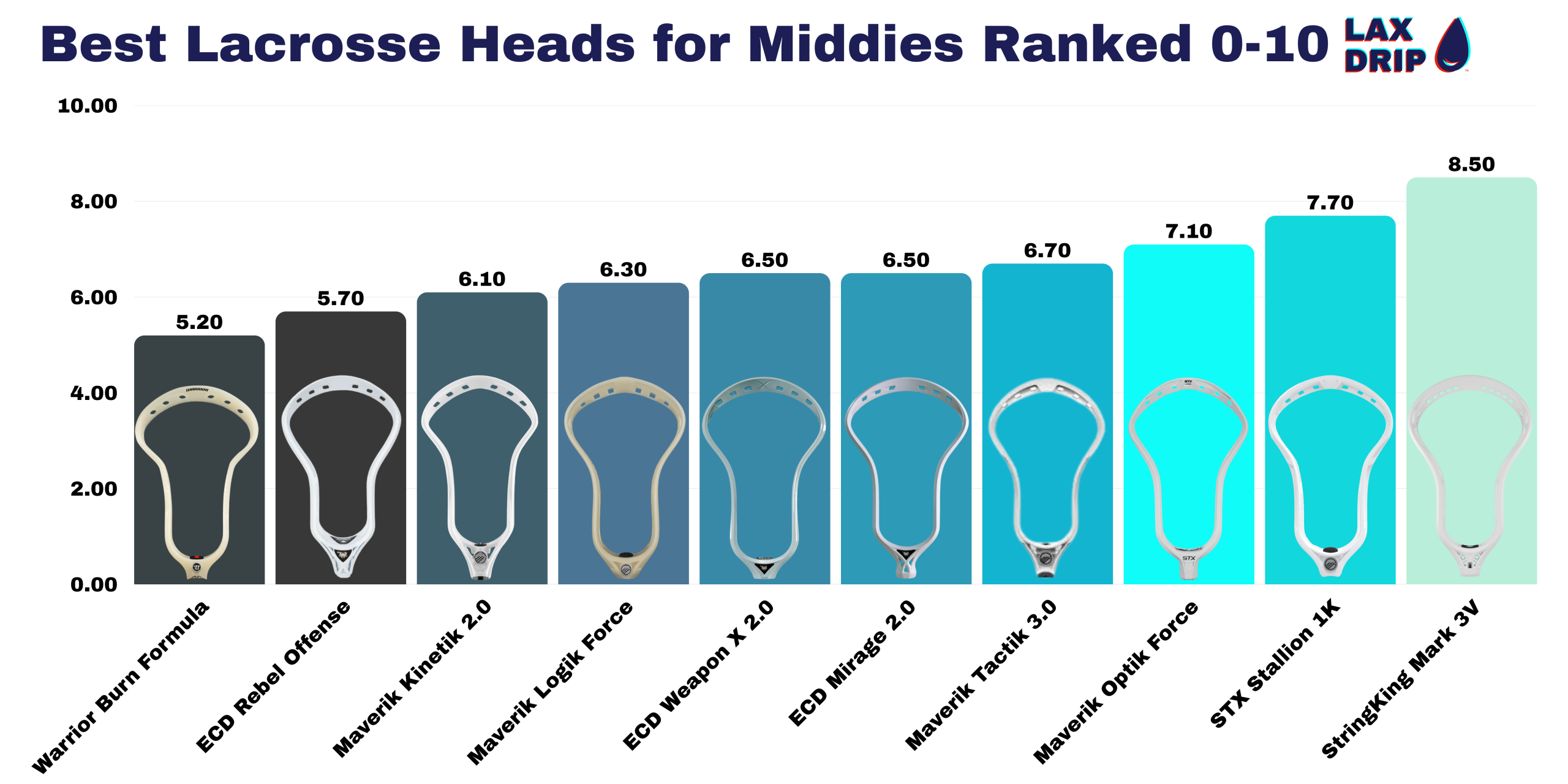
To help my fellow midfielders, I put together this guide that goes over the best middie heads currently available as well as details what you should look for when choosing one.
16 Best Lacrosse Heads for Middies
Before we dive into the best heads for midfielders, I wanted to note that if you are a faceoff man, you should check out my guide to the best lacrosse heads for faceoffs. That goes options for both FOGOs and faceoff men that stay on the field.
To find the best midfield heads, I started off by considering 39 heads either designed specifically for middies or for offense, in general.
I then narrowed by list down by reading customer reviews, looking at which were the most popular in the college and pro levels, and by checking out as many of the heads as possible at my local sporting goods store.
What I ended up with is the 9 best heads for middies and 4 budget options for those looking to save.
Best Lacrosse Heads for Midfielders:
- Maverik Optik Force
- StringKing Mark 3V
- STX Duel 3 Lacrosse Head
- ECD Weapon X 2.0
- Warrior Burn Formula
- Maverik Logik Force
- ECD Delta Graphene
- Maverik Tactik 3.0: Tied #1 Best Overall
- STX Stallion 1K: Tied #1 Best Overall
- Nike L3: Best for Light Weight
- Maverik Kinetik 2.0: Best for Outside Shooters
- STX Hyper Power: Best for Whip & Accuracy
- StringKing Mark 2V: Best Versatility & Stringability
- ECD Mirage 2.0: Best for Outside Shooters
- Warrior Evo QX2-O: Best for Those Who Prefer Lower Pockets
- ECD Rebel Offense: Best for Versatility
| Weight | 4.85 |
| Ideal Pocket | Low | Mid-low |
| Stiffness | Extremely Stiff |
| # String Holes | Average |
| Year Released | 2024 |
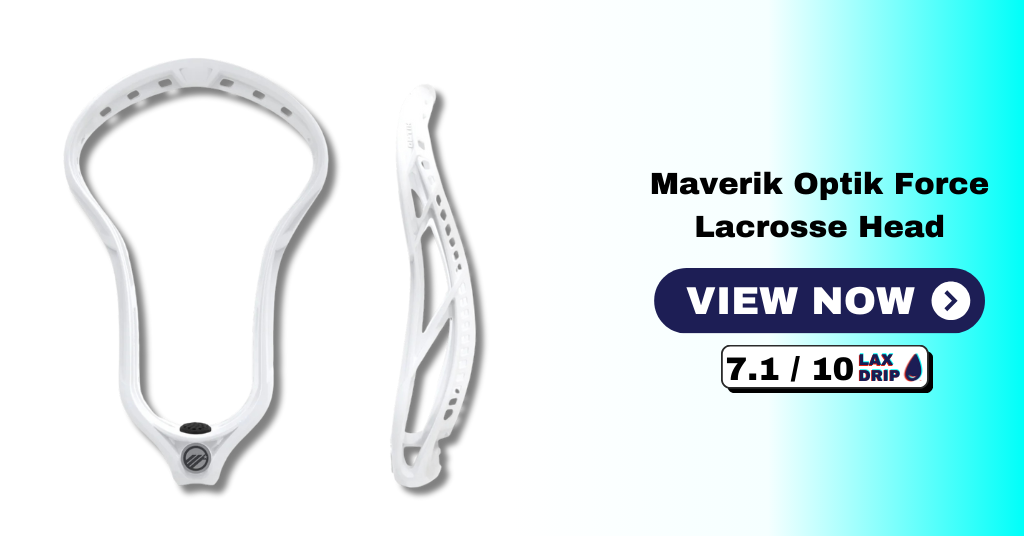
Maverik took 3 years to upgrade Optik 3 and release Optik Force in 2024. It’s the lightest and most durable head of the Optik series for offensive middies, weighing only 4.8 oz.
Even with its noticeably thinner sidewalls, the Force tech material flawlessly maintained its shape. I easily cradled through traffic because the shorter throat with a honeycomb design resists warping and unwanted flex.
It also provided better hand positioning for controlled passing and quick releases than Optik 3. However, the slightly tapered scoop takes some adjustment when attacking groundballs from an angle.
Regardless, the mid-low pocket placement results in smooth cradling and fast ball movement, making dodging and transition play effortless. You can also customize the pocket with its 20 sidewall holes.
Pros
- Stiff and aesthetic sidewalls
- Multiple sidewall holes for pocket customization
- High shooting speed
- Great scoop
Cons
- The tapered scoop misses some catches
- Less forgiving for beginners
All Buying options
| Weight | 4.5 |
| Ideal Pocket | Mid |
| Stiffness | Average |
| # String Holes | Above-average |
| Year Released | 2024 |
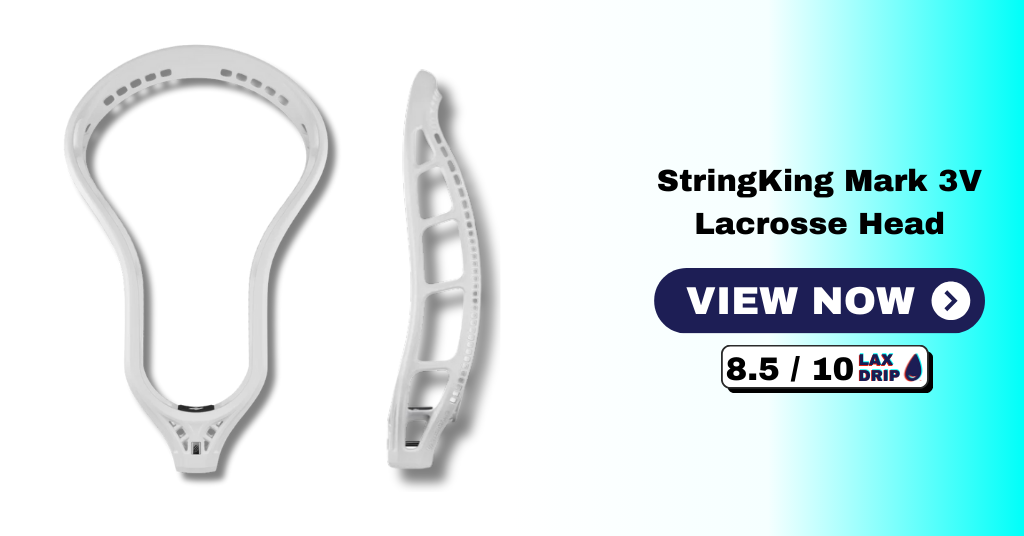
The StringKing Mark 3V keeps the wide face of its predecessor but trims down to just 4.5 ounces, making it one of the lightest options for offensive middies.
Besides, it’s extremely stiff, which provides consistent ball control and accurate passing. Although the lack of flex makes it difficult for beginners to cradle in traffic, its sidewall doesn’t warp and easily absorbs checks.
Moreover, the wider face and pinched sidewalls offer fast-paced shooting and accurate passing. Even when shooting on the run, I didn’t experience any unnecessary whip or drag on my release.
Furthermore, its 32 sidewall holes allowed me to string a mid pocket that allowed secure cradling. It also helped me generate more power on my shots without extra force. Thus, it’s the perfect head for elite middies.
Pros
- Lightweight and Stiff
- Durable and warp-resistant
- Consistent shooting accuracy
Cons
- Expensive
- Not suitable for young players
| Weight | 4.9 |
| Ideal Pocket | Mid |
| Stiffness | Moderate Flex |
| # String Holes | Average |
| Year Released | 2021 |
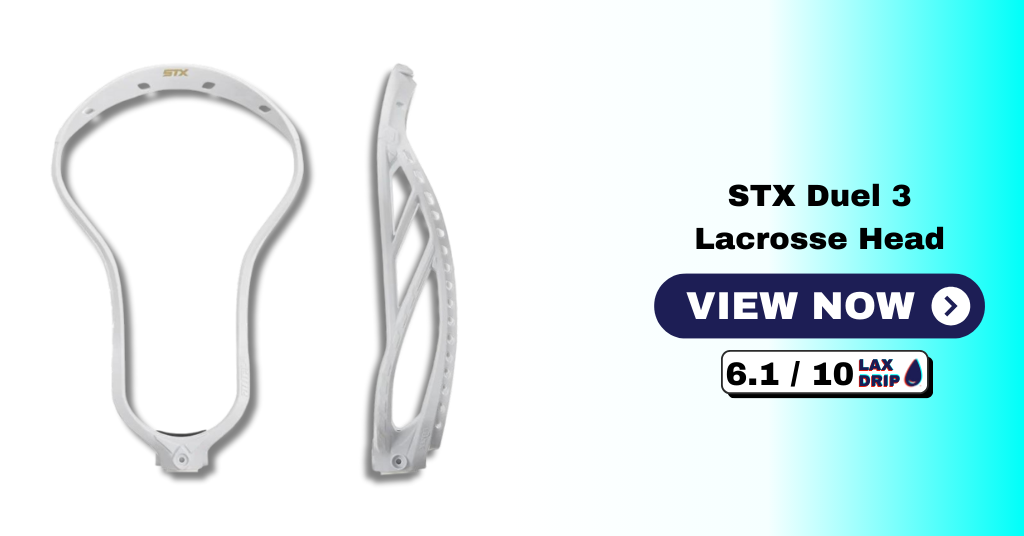
The STX Duel 3 is built for faceoff specialists. However, I wanted to see how it transitions after the draw. The short throat and deep offset effortlessly take quick clamps. I could easily pop the ball out. At the same time, the mid-pocket placement allowed me secure cradling when dodging defenders.
Moreover, the STX design team has nicely engineered flex points to provide subtle flex for consistent release. Once I secured possession, the slightly flared face shape gave me enough control to push in transition.
Although it doesn’t have the tightest hold like a pure offensive head, the stiff sidewalls prevented wobbling. I loved the shooting speed and accuracy. There is enough stiffness to generate power without losing control.
Despite weighing 4.9 ounces, it’s a durable head. Hence, it’s a suitable head for middies who take the occasional draw.
Pros
- Quick clamps and clean exits
- Engineered flex points for controlled release
- Stiff sidewalls provide high-speed shooting
- Durable for occasional draws
Cons
- It doesn't provide the tightest ball hold
- Limited stringing options
| Weight | 4.5 |
| Ideal Pocket | Mid |
| Stiffness | Average |
| # String Holes | Above-average |
| Year Released | 2024 |
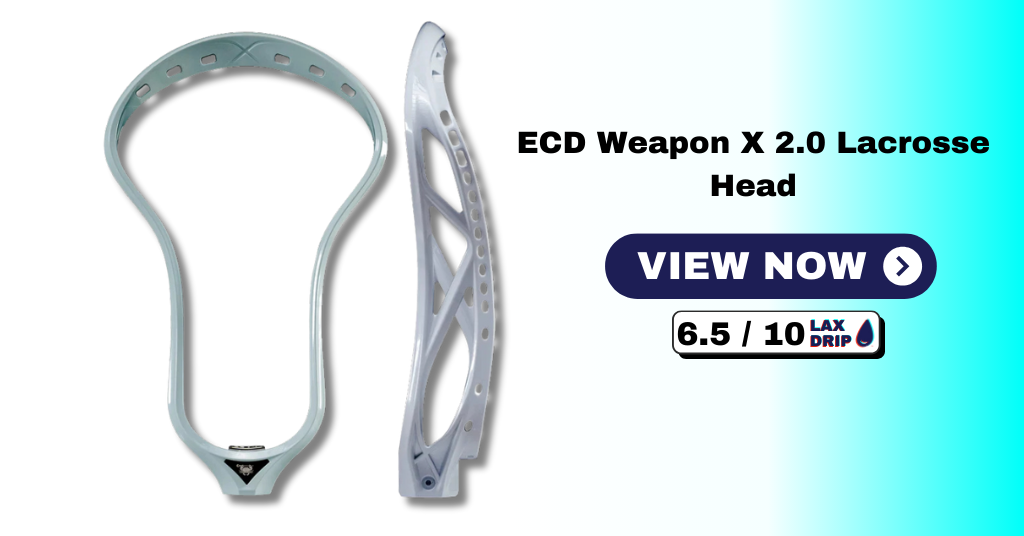
I have taken plenty of reps with the ECD Weapon X 2.0, and its Bone version is more suitable for transition middies.
It’s got enough flex to win clamps and handle 50/50s, but it’s stiff enough to win groundball battles. Although it’s slightly heavier, weighing 5.1 oz, the Flexform plastic easily maintains its shape.
Moreover, its asymmetrical sidewalls allow quick reaction, and I didn’t struggle to control the ball on exits. The mid-low pocket setup offered quick releases of the pass. There was no awkward hold that slowed down a break.
It’s not the fastest shooter. However, it offers consistent release, and I didn’t feel I had to adjust my mechanics too much. Hence, it’s one of the best lacrosse heads for middies who push transition, providing maximum control.
Pros
- Durable Flexform plastic built
- Asymmetrical sidewalls for better control
- It easily snaps back to its shape after the clamp
- Consistent and immediate ball release
Cons
- Fewer sidewall holes
- Slower long-distance shots
All Buying options
| Weight | 5.3 |
| Ideal Pocket | Mid |
| Stiffness | Flexible |
| # String Holes | Average |
| Year Released | 2024 |
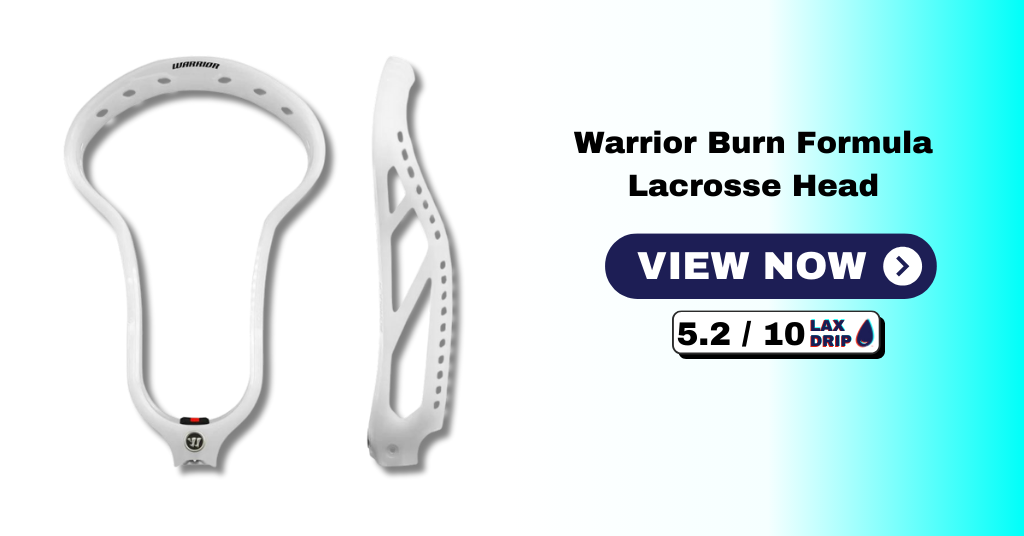
The Warrior Burn Formula surprised me as a true faceoff and stay-on (FOSO) head. Unlike most FO heads that sacrifice shooting accuracy for flexibility, it has a balanced profile to avoid warping.
Although I didn’t like the sidewall hole pattern, the stiffer sidewalls and mid-pocket design gave me solid control when carrying the ball. Thanks to the Blade Rail technology, I easily cradled the ball upfield, initiating fast breaks.
Furthermore, the ball settled into the mid-pocket setup better than Weapon X 2.0, which helped me transition smoothly from clamp to pass. Its rounded scoop reduced drag, cleanly scooping ground on the run, even in tie-ups.
Besides, it weighs 5.3 ounces and easily generates power when feeding teammates without worrying about unstable releases. The Therma-Loc+ plastic held up well, and I liked the extra screw holes over a throat plug for better shaft security.
Pros
- Durable Therma-Loc plastic built
- Doesn’t lose its shape in summer
- Excellent shooting speed and accuracy
Cons
- Fewer sidewall holes
- Slightly Heavy
All Buying options
| Weight | 4.85 oz |
| Ideal Pocket | Mid | Mid-low |
| Stiffness | Flexible |
| # String Holes | Average |
| Year Released | 2025 |
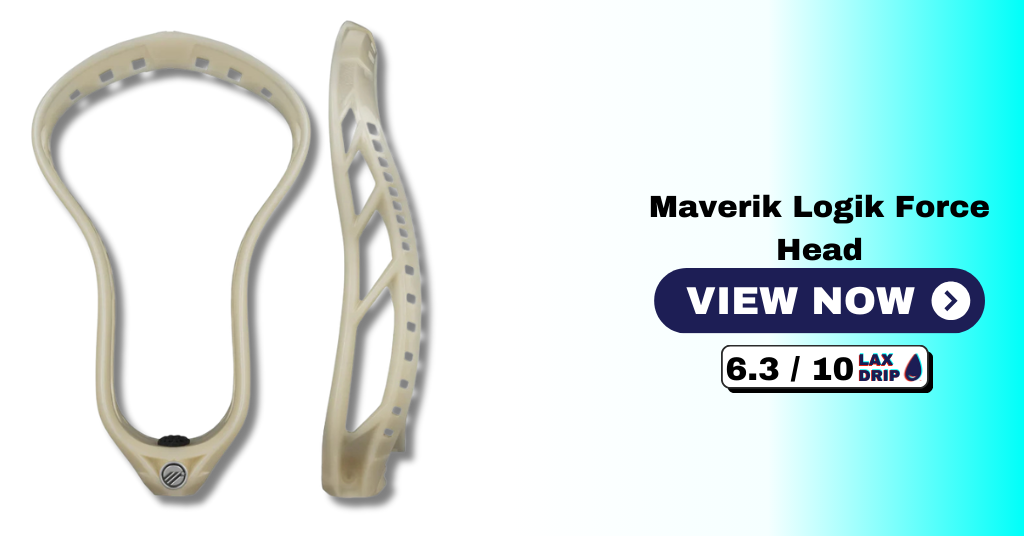
The Maverik Logik Force is another great face-off middie head on my list with a balance of flex and shape retention. Its honeycomb-textured rails significantly improved my grip during clamps while providing clean exits without excessive warping.
The narrow throat provided excellent ball security, especially when taking checks. However, the wider spacing of the sidewall holes near the throat made the initial stringing process challenging.
Regardless, I strung a mid-low pocket, which significantly helped me release the ground ball quicker than Weapon X 2.0. It’s subtle flex off-centered some of my passes, but the short-distance shooting was accurate.
Thus, if you need more stiffness, try Mark 2F or the Warrior Burn Formula-Bone variant.
Moreover, the smooth, rounded scoop gave me reliable groundball pickups and held up well despite rough use. Still, after a few months, I noticed some stress marks near the throat.
Pros
- Warp resistant
- Durable and lightweight
- Narrow throat for secure cradling
Cons
- Stress marks after heavy use
- Slightly off-center passing
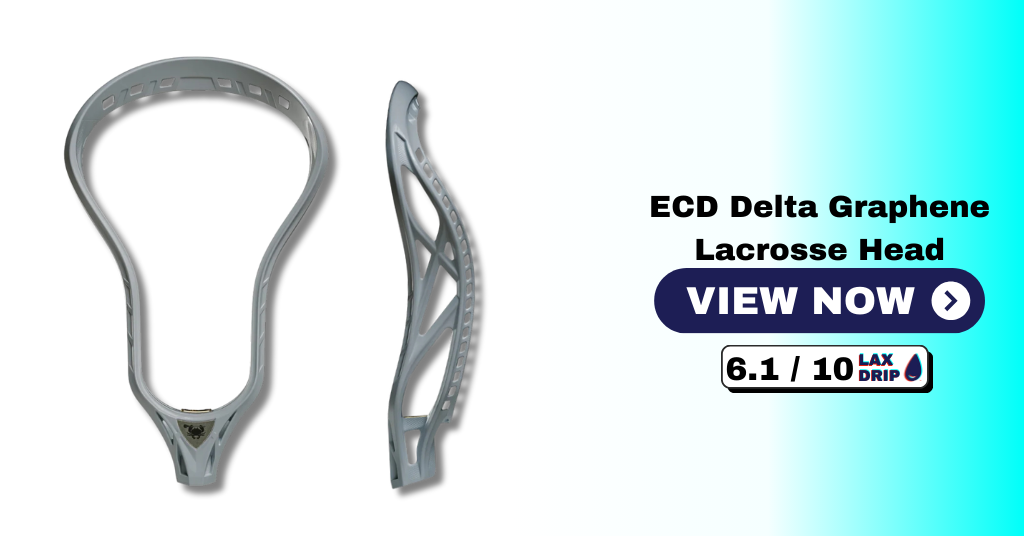
| Weight | N/A |
| Ideal Pocket | Mid to mid/high |
| Stiffness | Above-average |
| # String Holes | Average |
| Year Released | 2023 |
The ECD Delta Graphene is one of the best lacrosse heads for defensive middies. At just 5.6 ounces, it’s one of the lightest defensive heads I have used. Still, the X-shaped strut design keeps it stiff and durable. It helped me throw some powerful checks to disrupt the opponents.
Furthermore, the moderately wide face easily intercepted passes and caught ground balls from every angle. The curved scoop funneled ground balls smoothly, making scrappy plays easier to win.
Besides, it has a narrow throat that creates a secure hold on the ground ball. Thus, it smoothly absorbs checks and maintains control under pressure.
Although it creates a stiff mid-high pocket that doesn’t shift much, it offers consistent release. Hence, if you are a beginner, You can also opt for a slightly flexible head like the ECD DNA 2.0 or Maverik Optik 3.
Pros
- Lightweight but extremely stiff
- Easily deliver powerful checks
- Easily funnels groundball in pocket
- Durable and weather-resistant
Cons
- Stiff pocket with minimal shift
- Less forgiving for beginners
8) Maverik Tactik 3.0
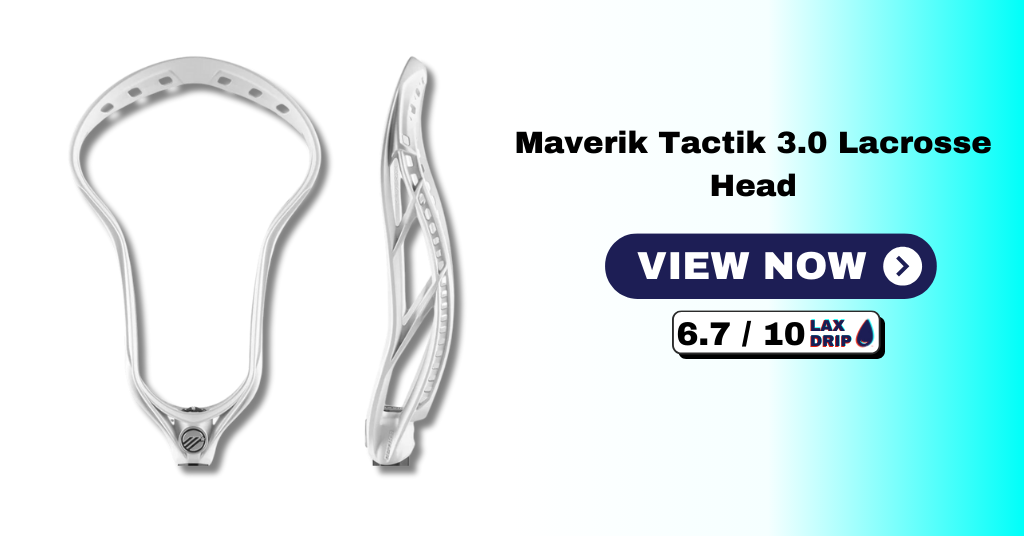
| Weight | 4.85 oz |
| Ideal Pocket | Mid | Mid-low |
| Stiffness | Flexible |
| # String Holes | Average |
| Year Released | 2025 |
The Maverik Tactik 3.0 comes in as tied for first in our list of the best heads for middies—and for good reason. It’s one of (if not the) best all-around midfielder heads currently available.
The Tacktik 3.0 is light, very stiff, and has a ton of stringing holes that allow you to customize your pocket to your preferences.
The Tactik 3.0 is an upgrade on what was previously rated our top-rated midielder head in the Tactik 2.0.
The 3.0 comes with Maverik’s CoreControl technology that distributes the weight to the most important parts of the head, giving you more control, increasing stiffness, and decreasing weight.
The third version of the Tactik has a level 3 bottom rail that makes it great for a mid/low to mid/high pocket—something that many middies prefer.
It has a great stiffness-to-weight ratio which makes it great for both offense and defense. Also, it has a great scoop that makes ground balls a breeze.
The Tactik 3.0’s face shape is more pinched than the Tactik 2.0’s face shape. It is tighter towards the throat but opens up towards the midpoint of the head like the old version did.
Overall, the Tactik 3.0 is a great choice for midfielders and I think you’ll be very happy with this head from Maverik if it’s what you decide to go with.
Pros
- Very stiff
- Relatively light
- A ton of sidewall holes
- Great scoop
Cons
- Sidewall holes are a bit small
9) STX Stallion 1K
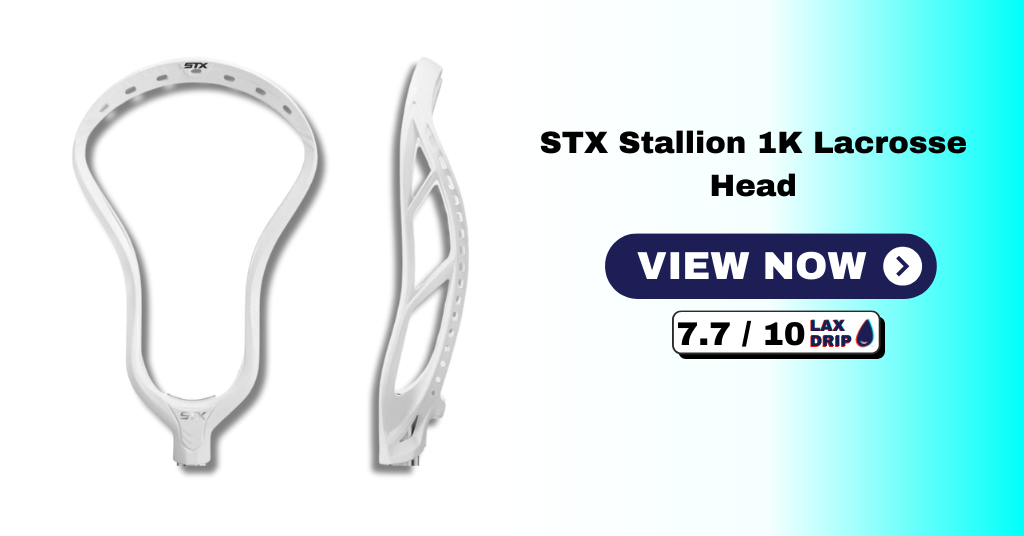
| Weight | N/A |
| Ideal Pocket | Mid to mid/high |
| Stiffness | Above-average |
| # String Holes | Average |
| Year Released | 2023 |
The brand new STX Stallion 1K ties the Tactik 3.0 as the best lacrosse head for middies in our opinion.
Unlike the older STX Stallion Omega, the 900 is much less prone to breaking and is much lighter—something that is especially noticeable when we tested shooting with the two heads.
In addition, compared to the Stallion 900, the 1K is stiffer and has better shape retention thanks to its improved EnduraForm plastic.
It still has STX’s Speed Scoop which is loved by many players because it’s great for ground balls but also has a slight lip the covers the top string holes so they don’t interfere when you’re scooping.
The Stallion 1K has a great face shape as well. It has a narrow pinch on the bottom half of the head and gradually opens up towards the scoop.
Though it only has an average amount of stringing holes, they’re placed well and you shouldn’t have any trouble getting your ideal pocket in it. It also has Innerlock technology that makes stringing on the inside rail easier and more secure.
The biggest downside of the Stallion 1K is that it’s not great for low or even mid-to-low pockets due to the offset being towards the middle to top of the head. Of course, this is really only a problem if you prefer low pockets.
Overall, the new Stallion 1K is an awesome option for middies, especially those that prefer higher pockets and like to shoot from outside/on the run.
Pros
- Stiff & durable
- Speed Scoop is amazing
- Lightweight
- Great face shape
Cons
- Not great for low pockets
*Video for older STX Stallion 900
10) Nike L3
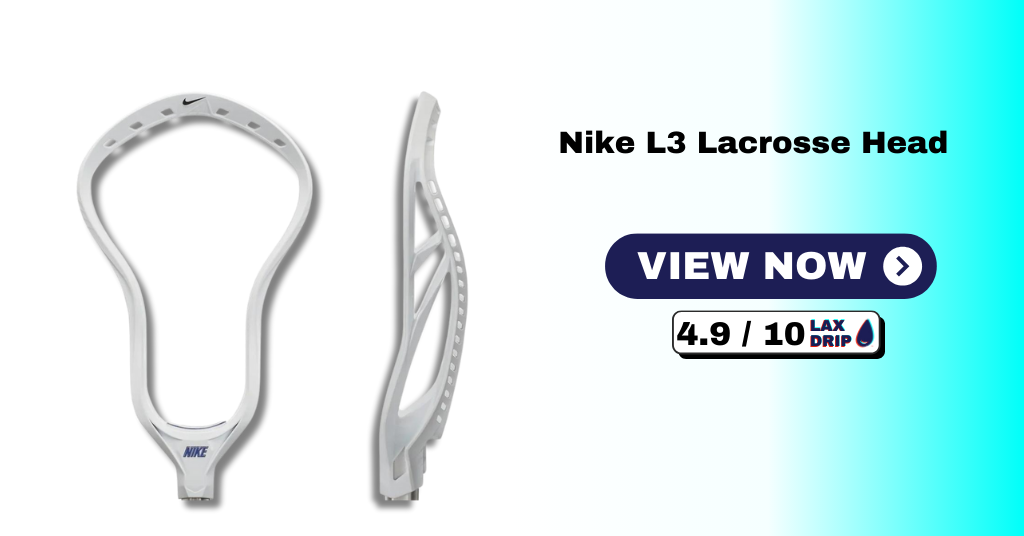
| Weight | N/A |
| Ideal Pocket | Mid to mid/high |
| Stiffness | Above-average |
| # String Holes | Average |
| Year Released | 2023 |
The Nike L3 is the most recently released head on this list and is one of the best. It’s already one of the top choices among college midfielders throughout the nation.
The newest head in the popular Lakota line has a smooth face shape that isn’t too pinched, making it a great option for offensive middies, D middies, and LSMs alike.
We’ve found the L3 to be extremely easy to string up despite it only having an average number of sidewall holes. The wider face shape and smooth flare definitely contribute to this.
In addition, the offset is towards the middle of the head, making it great for anywhere from a mid/low to mid/high pocket.
The only real drawback of this head is that it’s not the best for those who prefer very tight face shapes. If you fall into this boat, you may want to check out the Maverik Kinetik 2.0 (see below) or the ECD Mirage 2.0.
Overall, you won’t be disappointed if you go with the Nike L3. It’s a versatile head and we expect to see if on college lacrosse fields throughout the nation for the 2023 season.
Pros
- Very lightweight
- Easy to string
- Stiff
- Good for a variety of positions
Cons
- Wider face shape than alternatives
11) Maverik Kinetik 2.0
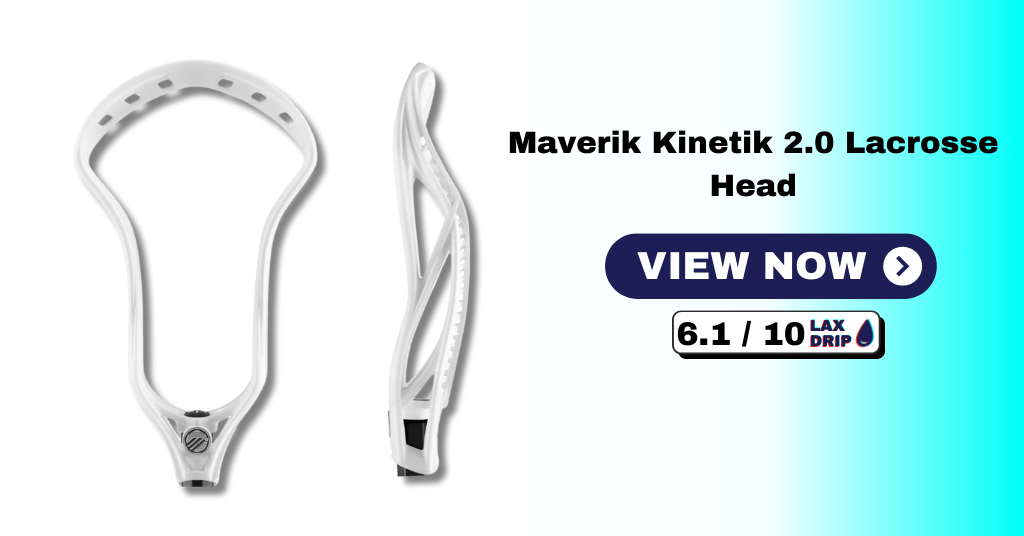
| Weight | <4.8 oz |
| Ideal Pocket | Mid/high to high |
| Stiffness | Average |
| # String Holes | Average |
| Year Released | 2020 |
If you are an outside shooter that prefers high pockets, the Maverik Kinetik 2.0 may just be your best option. When I’m not facing off, it’s my preferred head of choice.
The first thing you’ll notice is that it has a very unique shape. It has a tight pinch throughout most of the head and an aggressive flare towards the scoop.
The scoop is still just over the minimum of 6 inches, though, so even that is narrow compared to competitors.
The Kinetik 2.0 has a gradual offset until about 3/4 of the way up the head where it cants back forward at a sharp angle—part of which makes it so great for outside shots.
While I haven’t used a radar gun to confirm this, it feels like I get at least a few extra MPHs on my shot speed with the Kinetik 2.0 compared to my other heads.
Compared to the original Maverik Kinetik, the 2.0 has a more rounded scoop, a slightly tighter face shape, and is easier to string.
Overall, this is a great improvement on the original Kinetik which was one of the most popular heads over the past few years.
Pros
- Helps increase shot velocity
- Tight pinch throughout head
- Great for high pockets
- Relatively light
Cons
- Not great for low or mid-to-low pockets

12) STX Hyper Power
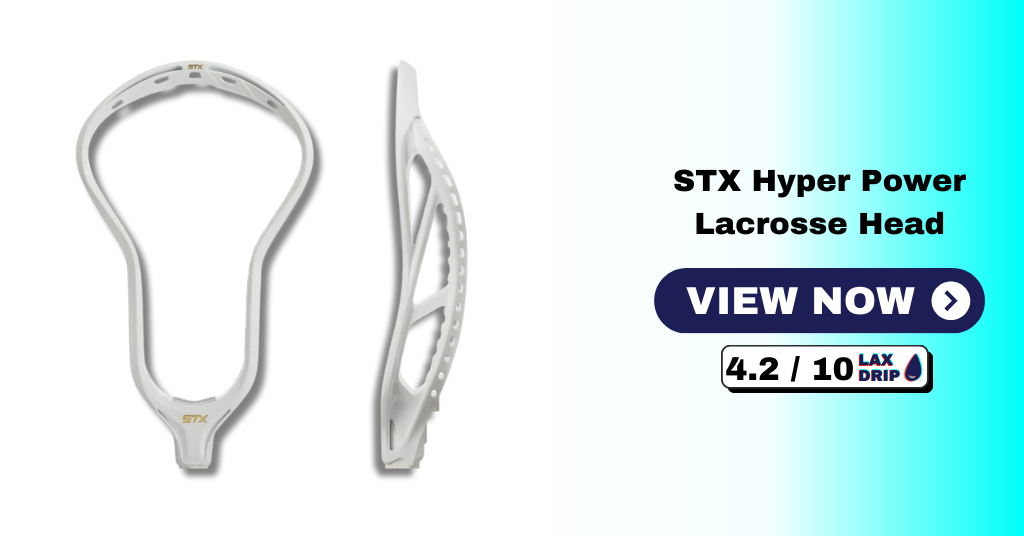
| Weight | 4.9 oz |
| Ideal Pocket | Mid to mid/high |
| Stiffness | Above-average |
| # String Holes | Average |
| Year Released | 2021 |
The newly released STX Hyper Power is next up on our list of the best midfield lacrosse heads.
If you are a fan of the Proton Power, Super Power, or Ultra Power, then you’ll love the Hyper Power—the next head in that series.
Like the Ultra Power, the Hyper Power features the Power Ramp geometry that has a more-traditional offset towards the throat but comes back forward towards the scoop, helping increase power.
It’s supposed to increase shot speed by pushing the ball more down and forward, allowing you to wind up more and holding the ball in the head for longer. On the downside, it may take some getting used to since it’s so unique.
Another benefit of the Power Ramp is that it makes high angle ground balls easier. You don’t have to get your butt end as close to the ground since the scoop is already angled forward.
As compared to the Ultra Power, the Hyper Power has a tighter face shape that is more similar to a Stallion.
Pros
- Very stiff & durable
- Great for ground balls
- Power Ramp increases shot speed & accuracy
Cons
- Limited customer reviews since brand new
All Buying Options
13) StringKing Mark 2V
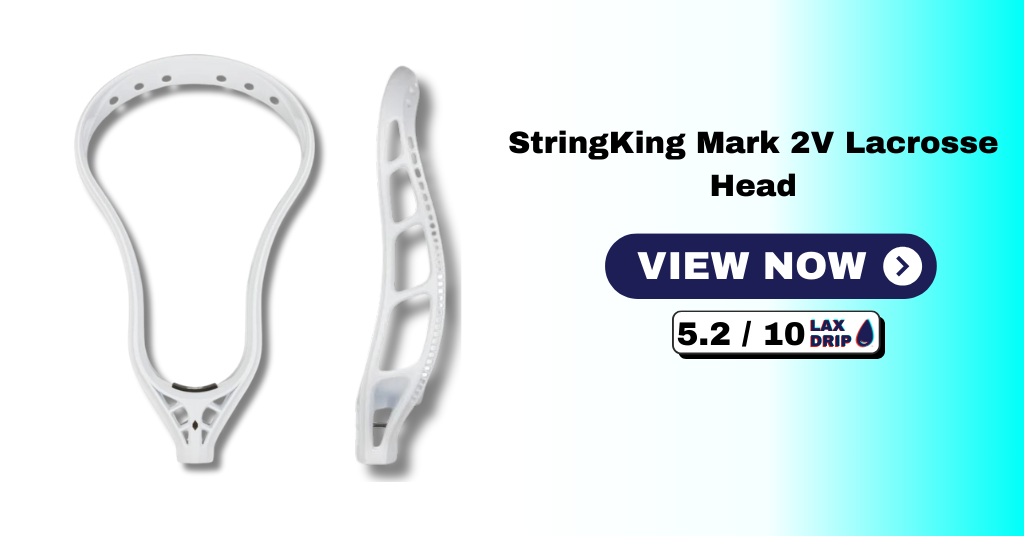
| Weight | 4.7 oz |
| Ideal Pocket | Mid |
| Stiffness | Above-average |
| # String Holes | Many |
| Year Released | 2017 |
The “V” in the StringKing Mark 2V stands for versatile—and that’s exactly what this head is.
It is mainly designed for midfielders but could be used for almost any position: attack, offensive middie, defensive middie, LSM, or defense.
It is lightweight, stiff, and has more stringing holes than any other head on this list.
The Mark 2V also has one of the most popular scoops in the game. It has rounded edges to make sure it doesn’t stab into the ground and helps you pick up ground balls at a variety of angles.
This head also has an amazing stiffness-to-weight ratio. It is one of the stiffer heads on this page even though it only weighs 4.7 oz.
If you prefer very pinched heads, you may be better off going with another option. While the 2V isn’t wide by any means, it is wider than some of the other heads on this list.
The last thing to note with the Mark 2V from StringKing is that it has a locking bolt to help reduce head rattle. While I haven’t tested this out myself (yet), it seems that it works well based on customer reviews.
Pros
- A TON of sidewall holes
- Very stiff but light
- Great scoop
- Has locking bolt to reduce head rattle
Cons
- Wider face shape than some other options
14) ECD Mirage 2.0
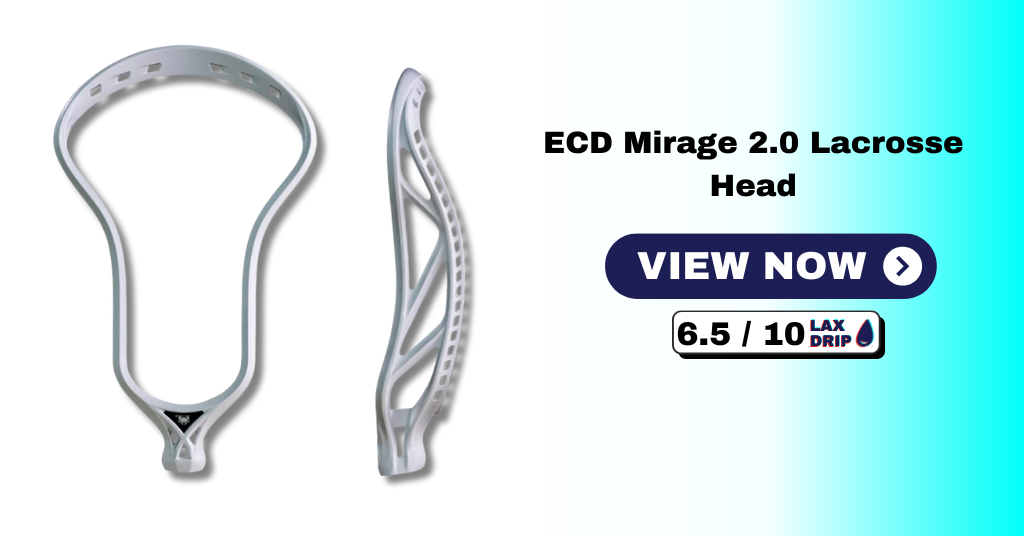
| Weight | 4.7 oz |
| Ideal Pocket | Mid |
| Stiffness | Above-average |
| # String Holes | Many |
| Year Released | 2017 |
ECD revamped the original mirage to make the Mirage 2.0—arguably the best head for outside shooters on the market today.
Similar to the original Mirage, it features an aggressive face shape with a tight pinch throughout most of the head.
It also has a higher offset than most other middie heads, making it great for stringing a mid/high to high pocket.
What’s new for the Mirage 2.0?
Most notably the improved scoop is much better than the original. Whereas the scoop used to be one of the biggest complaints of the original Mirage, the scoop on the 2.0 is often cited as one of the best features.
In addition, the face shape is slightly tighter, giving you just a bit more control and hold—something that’s especially important for dodging midfielders.
Overall, if you are an outside shooter, you will love the ECD Mirage 2.0. It features almost everything you could want in a head and comes from one of the best companies in lacrosse.
Pros
- Great for mid/high pockets
- Aggressive face shape
- Many stringing holes
Cons
- Heavier than some alternatives
- Not the best for low pockets
All Buying Options
15) Warrior Evo QX2-O
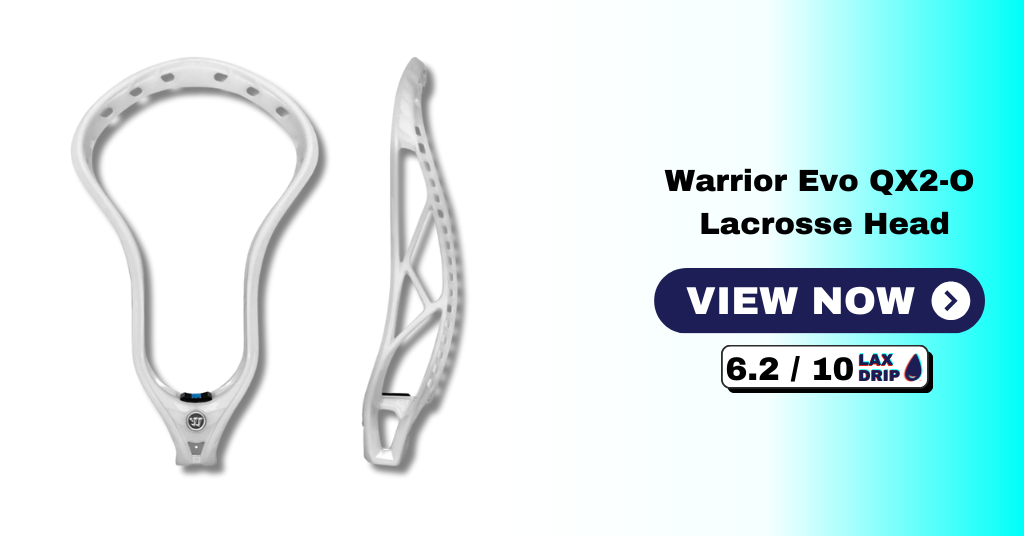
| Weight | 5.0 oz |
| Ideal Pocket | Mid/high to high |
| Stiffness | Average |
| # String Holes | Above-average |
| Year Released | 2020 |
The Warrior Evo QX2-O is the newest member of the popular Evo family of heads. The “O” part of the QX-O stands for offense—and that’s exactly who this head is made for.
The Evo QX2-O is an upgrade over the original QX-O mainly thanks to its tighter face shape, increased stiffness, and better scoop.
Its face shape is similar to the Evo 5 and QX-O with a pinched throat that opens up to the wide scoop. The QX2-O, however, is slightly more pinched, giving ball carriers better control of the ball.
Like the QX-O, the QX2-O is very stiff, making it a great option for middies who play both sides of the ball. The new Therma-Loc+ hybrid thermoplastic resin and update sidewall strut design makes the newest Evo head even stiffer.
In the Evo QX2-O, Warrior also improved the scoop, by making it more rounded, and eliminated some unnecessary materials making it lighter than its predecessor.
This is one of the few heads on this list that is ideal for a lower pocket. Whereas most middie heads have a max offset towards the center of the head, the Evo QX-O’s is towards the throat.
There are also many stringing holes so you can customize your pocket to your preference.
Some customers have noted that the sidewall holes end early, possibly causing you to have to tie off sooner than you’d prefer.
Pros
- Very stiff
- Nice face shape
- Throat lock eliminates head rattle
Cons
- May be hard to string for some
- Not great for med/high to high pockets
16) ECD Rebel Offense
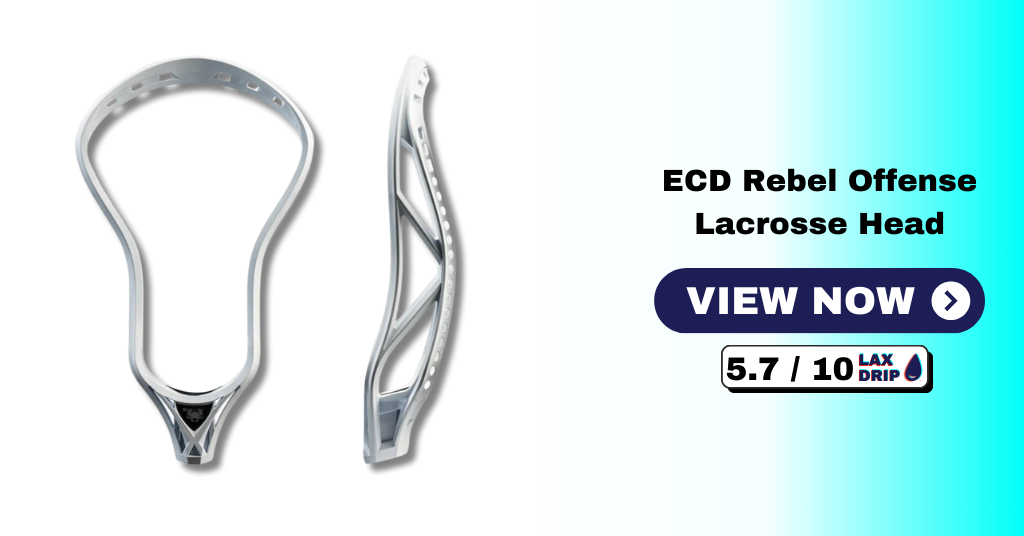
| Weight | 5.0 oz |
| Ideal Pocket | Mid/high to high |
| Stiffness | Average |
| # String Holes | Above-average |
| Year Released | 2020 |
The ECD Rebel Offense is a great choice for both attackmen and middies. It is stiff, yet light, and has a great face shape.
It has a pretty narrow pinch towards the throat and gradually starts flaring out a little lower than many other offensive heads. The scoop is slightly narrower than a lot of other heads as well.
One of my favorite parts about the Rebel Offense is the versatility in stringing options. The max offset is towards the middle of the head, allowing for anywhere from a mid/low to mid/high pocket.
There are also numerous stringing holes so you can customize your pocket how you like it.
Finally, the Rebel Offense has a great scoop that makes it easy to pick up ground balls from a variety of angles. It also has a slight lip to it that ensures your top string doesn’t interfere with scooping the ball.
On the downside, there are some customer reviews talking about this head breaking quickly online. While this doesn’t seem to be too common, it’s something to consider.
Budget Middie Lacrosse Heads
- STX Stallion U 550: This older version of the Stallion has many of the same great features of and a similar face shape to the Stallion Omega but is much cheaper. It has a good stiffness-to-weight ratio and is durable, making it a good budget option for middies.
- StringKing Mark 1: Now that StringKing has come out with its line of Mark 2 heads, the Mark 1 is much cheaper. It is a bit heavy compared to alternatives but holds up well. Lastly, it has a ton of stringing holes making it great for a variety of pockets. You can find a strung version here.
- Brine King 2: The Brine King 2 was a pretty popular head when it was released in 2017. Now that it’s a few years old, you can often find it discounted, making it a good choice for midfielders looking to save a buck. It has a nice face shape and is durable, but is a bit heavy at 5.2 oz.
- Epoch iD Vision: This head was designed specifically for players around the U14 age group. It features a slightly wider face shape than many higher-level midfield heads but is a much better option than most other youth and intermediate heads available today.
>> Read More: Cheap Lacrosse Heads
What to Look for in a Midfield Lacrosse Head
With so many heads that are suitable for middies on the market, it can be difficult to choose one. Which is best for you depends on your style of play and preferences.
To help you decide which makes the most sense for you, I listed out 7 things you should consider when comparing the best middie lacrosse heads.
1) Face Shape
Whereas most attackmen prefer very narrow heads and most defensemen prefer wider heads, there is no one common face shape that most midfielders look for.
You’ll notice that the heads listed above vary in how pinched they are and their overall face shape. Some are very pinched like most attack heads, while others a bit a wider.
I recommend that less advanced players choose a wider head to help with catching. D middies often prefer wider heads as well to give them more surface area for laying checks. More advanced players should look for narrower pinches to increase control and accuracy.
2) Weight
You’ll also notice that the heads above vary a lot in weight. Assuming strength and durability are equal, the lighter head is usually the better option. Lighter heads allow you to move your stick faster, increasing your shot speed compared to heavier heads.
For midfield heads, anything under 5 oz can be considered light. Heads that are over 5.5 oz or so are noticeably heavier and may slow you down a bit. Combining a relatively light head with a light (but strong) shaft can give you one of the best lacrosse sticks for midfielders possible.
3) Stiffness & Durability
Even the lightest head won’t function well if it is a complete noodle or breaks regularly.
Unless you are a faceoff man, you typically should be looking for a stiff head that won’t flex during scoops and when getting checked.
You also want to find a head that will stay stiff and won’t break over time. Often, heads start out stiff when they are brand new but become more flexible in high temperatures.
4) Pocket Placement
Finding a head that is designed for your ideal pocket placement is also important.
The easiest way to tell where a pocket should ideally go on a head is by looking for where the max offset (or where the bottom rail is the lowest) is.
For example, heads like the Kinetik 2.0 above, have a high offset that make them great for high pockets. Heads with a lower offset, like the Warrior Evo 5, are better for low to mid/low pockets.
Most midfielders (myself included) prefer mid to high pockets that give them a bit more whip for shooting on the run and outside shots, but it really comes down to personal preference.
5) Scoop
Since middies spend a lot of time in transition and on the wing for faceoffs, they often have to pick up a lot of ground balls. This makes having a good scoop crucial.
Look for a scoop that has a nice rounded shape to it that makes picking up ground balls smooth.
Scoops that are more angled/rounded (when looking down your stick) allow you to pick up balls at a higher angle in relation to the ground. Flat scoops, on the other hand, force you to bend over a lot which may slow you down.
6) Stringing Holes
Back in the day, heads often came with 10 sidewall holes or less. This made it really difficult to string different kinds of pockets simply because you were limited by the number of holes.
Luckily, most head manufacturers took note of this common pain point and offer 15+ sidewall holes.
Even though it shouldn’t be a problem for most heads, it’s worth checking out the stringing holes of the heads you are considering to make sure there are enough and the size/shape looks good for your stringing preferences.
7) Strung vs. Unstrung
The last thing to consider is whether to buy a strung or unstrung head.
In the past, I would have recommended going with an unstrung head so you could string it yourself or have a friend string it for you.
More recently, however, a lot of companies such as ECD and StringKing have started offering much better string jobs on their strung heads, making them viable options.
If you decide to go with a strung head, do some research to see if customers typically like the string job and if it meets your preferences. Avoid factory-strung pockets—which are typically very shallow and poor overall—at all costs.
High School & College Head Rules
NFHS (high school) rules for lacrosse head dimensions started to match NCAA (college) rules starting in 2018. Previously, high school heads could be narrower towards the throat but had to be wider towards the scoop, and vice-versa for college heads.
Now that both organizations have the same set of rules, any head that meets NCAA rules is legal for NFHS as well. Here are the rules for heads:
- Minimum width of 6″ at the widest part of the head
- Minimum width of 3.5″ on front and back of the head at 5″ up from throat of the head
- Minimum width of 3″ at 3″ up from throat of the head
- Minimum width of 3″ at 1.25″ up from throat of the head
The following diagram from Stringers Society makes the rules a little easier to visualize:

If you are buying a head that was released in the past 2 years, you shouldn’t have to worry about it meeting these regulations.
If you are buying a head from 2017 or before, you should check to see if it meets NCAA specs. If it does, it should also meet current NFHS rules. If not, then it is likely illegal for both high school and college since the new NFHS rules went into effect in 2018.
>> Read More: Lacrosse Head & Pocket Rules
How We Rate Middie Lacrosse Heads
We take our ratings seriously and only recommend products that we would use ourselves.
To come up with our ratings for each product, we test the product ourselves whenever possible, review product specifications (weight, number of stringing holes, etc.), and read customer reviews/talk to lacrosse players we know that use the product.
When testing heads, we bring them to a field and test for passing, catching, shooting, scooping ground balls, and checking—all with a standard pocket to reduce the number of variables. When it’s not possible to extensively test a product ourselves, we spend extra time talking to real customers who have used the product for a while themselves.
If you ever have any feedback for any of the products listed on this page or have a recommended addition, please contact us and let us know!
People Also Ask
How to Pick a Lacrosse Head?
Consider the head’s face shape, weight, stiffness, pocket placement, scoop, stringing holes, and whether it is strung or unstrung. Choose based on your style of play and preferences.
How Do You Become a Good Middie in Lacrosse?
Focus on skills such as passing, shooting, ground ball scooping, and defensive play. Develop speed and endurance to excel in both offensive and defensive roles.
When Did the Stallion 1K Come Out?
The STX Stallion 1K was released in 2023.
What Are the Key Differences Between a Midfielder’s Head and Other Positions’ Heads?
Midfielder heads are typically designed to be more versatile, offering a balance between offensive and defensive capabilities. They often have a mid to high pocket for quick releases and better ball control, while attack heads may focus more on precision and accuracy, and defense heads on durability and checking.
How Do Stringing Holes Affect the Performance of a Lacrosse Head?
Stringing holes impact the customization of the pocket. More stringing holes allow for better personalization of the pocket’s depth, placement, and channel, which can enhance ball control, release speed, and overall performance based on the player’s preference.
Other Products to Consider Alongside Your New Midfield Head
If you opt to go with an unstrung middie head, you’ll need mesh and strings.
Below you can find some of my top choices for both full string kits as well as just mesh. You can also check out our Best Lacrosse Mesh Guide to learn more.
You can also check out some of our other gear guides that can help you take your game to the next level:
- Best Attack/Middie Lacrosse Shafts
- Best Lacrosse Heads
- Best Lacrosse Balls
- Best Lacrosse Rebounders
- Best Lacrosse Helmets
- Best Portable Lacrosse Goals
- Best Lacrosse Nets & Replacement Nets
- Best Lacrosse Backstops