
You might call yourself the biggest lacrosse fan, but could you name all 10 lacrosse positions, including the ones that most people overlook? When a friend asked me, What are the 10 positions in lacrosse? I rattled off the usual attackmen, midfielders, and defenders.
But then came the follow-up: What about LSM? FOSO? FOGO? That’s when I realized that I was talking to a real fan wanting to know all about lacrosse positions.
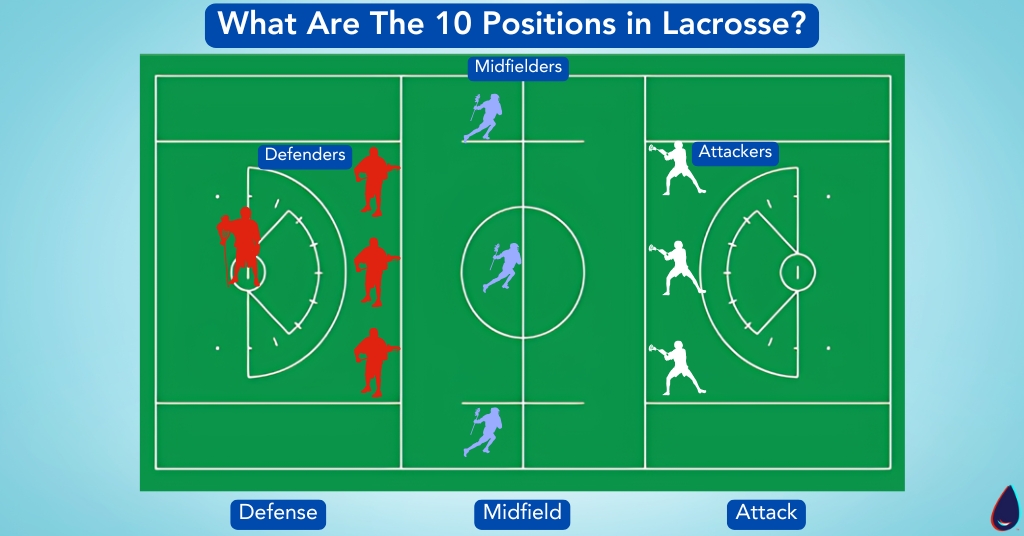
In this guide, I will talk about the 10 distinct lacrosse positions and their impact on the field, discussing not only the core positions but also the specialized roles that give teams their strategic edge.
Overview of Lacrosse Positions
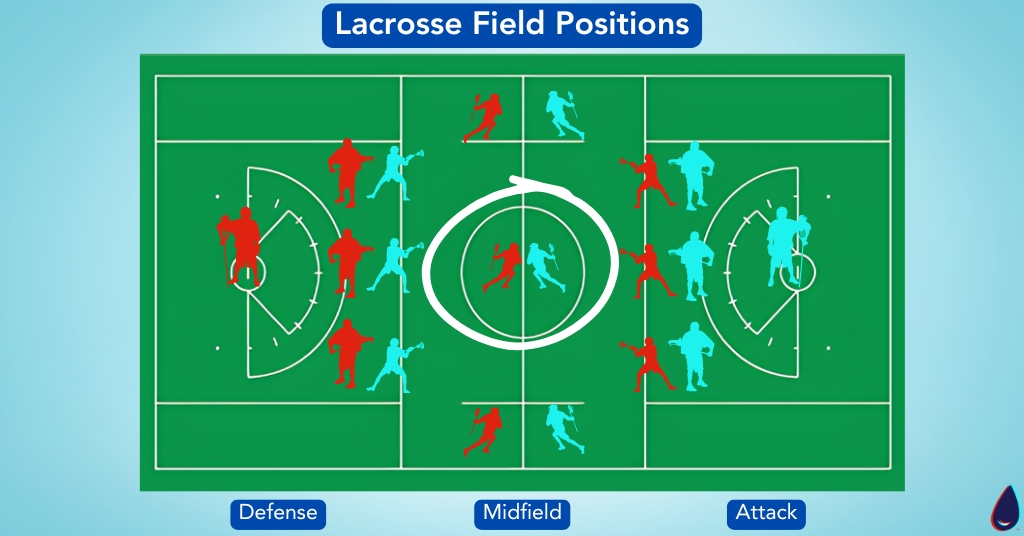
There are 4 main types of lacrosse positions. These positions are attackers, midfielders, defenders, and goalie. The following table shows the in-field count of these positions in lacrosse.
| Player Type | In Field Count |
| Attackers | 3 |
| Midfielders | 3 |
| Defenders | 3 |
| Goalies | 1 |
Winning a game is never achieved alone; it requires the combined efforts of the entire team. To perform your role effectively, it is essential to understand your responsibilities.
Every lacrosse team is made up of players assigned to specific positions. These positions help maintain balance and strategy during the game. Without well-defined roles, the game would lack structure and flow.
| Position | Type | Role Description |
| Attackers | Offensive | Score goals and create plays |
| Midfielders | Both | They are the transition between offense and defense |
| Long Stick Midfielder (LSM) | Defensive | Defend midfield and assist defenders |
| Short Stick Defensive Midfielder (SSDM) | Defensive | Defend midfield and support transition |
| Face-Off Specialist (FOGO and FOSO) | Specialist | Win face-offs and gain possession |
| Defenders | Defensive | Prevent the opposing team from scoring |
| Goalie | Defensive | Protect the goal and stop shots |
Each player must understand their position to perform effectively and support their team.
Now that you know the importance of different lacrosse positions, let me tell you about what are the 10 positions in lacrosse.
If you wish to learn about lacrosse terms and slang, I have compiled them here.
Breakdown of the 10 Lacrosse Positions
Attack Positions
Attackers
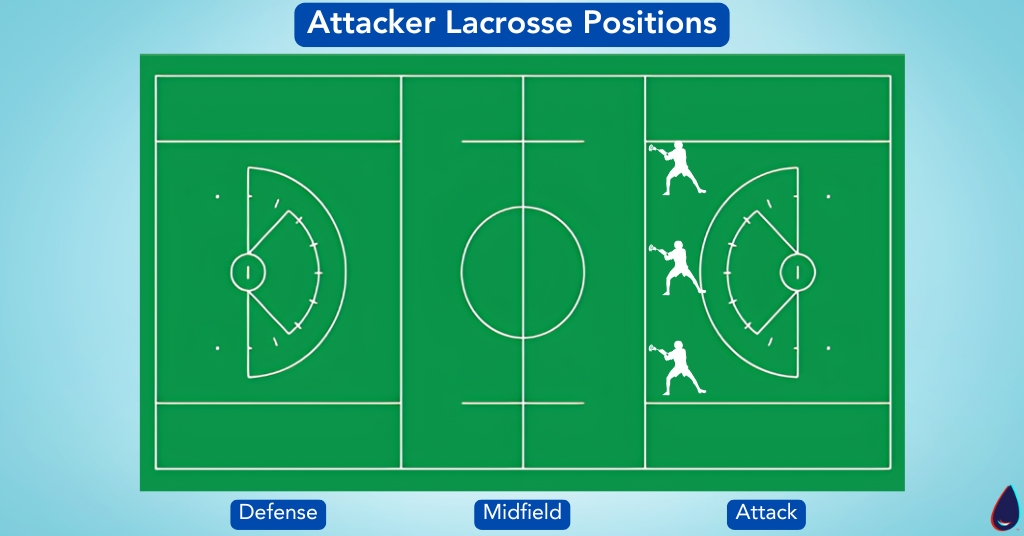
Attackers are your primary offensive players on the field. As an attacker, you are responsible for scoring goals and creating opportunities for your team. There are three attackers on the field at the same time. They align in the same line just before the restraining line.
As an attacker, it’s essential to have nerves of steel and remain calm under pressure.
Left Attack & Right Attack
These players work on the left and right sides of the offensive field, respectively. They assist the central attacker by opening passing lanes and making quick shots on goal.
Responsibilities of Attackers
Here are the main duties of attackers
- Score goals
- Set up plays
- Maintain possession
- Always be ready in case of sudden attacks from the opposition.
- Have excellent stick-handling skills.
Apart from these responsibilities, there are two roles that attackers should fulfill on the field:
Crease Point Attacker:
Their role is to score a goal near the offense crease point, from up close, the goalpost
Offside Attacker:
They have the expertise to score a goal anywhere on the field. They need accuracy and precision, which is very impressive.
You must know two great attackers, Lyle Thompson and Jordan Wold, who are famous for their excellent goal-scoring skills.
Learn about the 5 greatest lacrosse players of all time here.
Midfield Positions
Midfielders
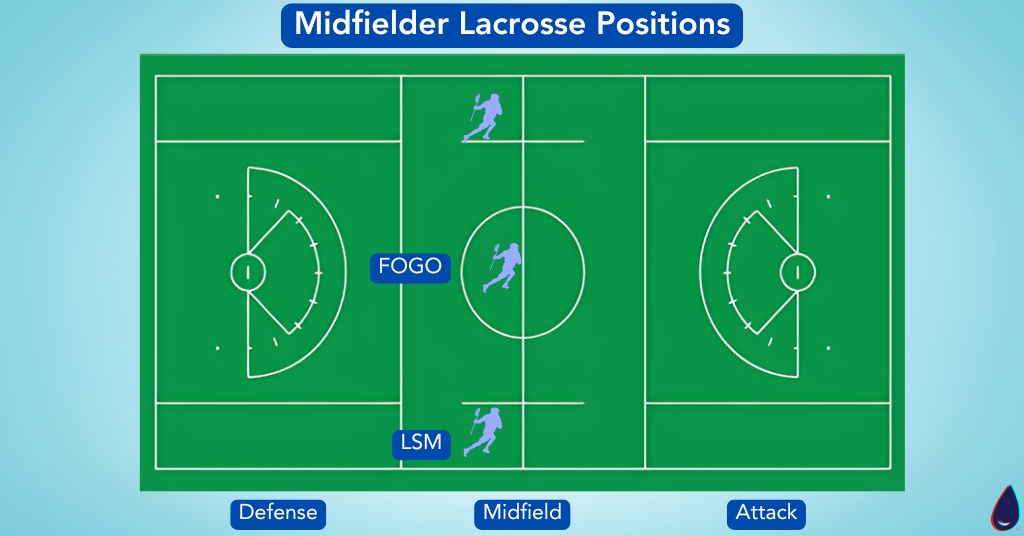
Midfielders are also known as “middies.”. They play both offense and defense. They are all-rounders. Being a midfielder isn’t easy. You need to have excellent stamina. They are like one size fits all.
Responsibilities of Middies
- Transition the ball between offense and defense
- Play both offensive and defensive roles
- Take face-offs (if needed)
Apart from these responsibilities, there are typically two types of midfielders on the field.
Offensive Midfielders:
Offensive midfielders spark the attack, driving their team’s offensive play.
Defensive Midfielders:
Defensive midfielders focus on stopping the opposing offense and preventing scoring opportunities.
Long Stick Midfielder (LSM)
They are your special category midfield players. The LSM is a defensive midfielder who uses a long lacrosse stick to disrupt the opposing offense.
Some of the legendary LSMs you should know are Tucker Durkin, Greg Danseglio, Michael Ehrhardt, and Matt Landis.
Responsibilities of LSMs
- They recover the fallen ball from the ground.
- Defense against midfielders
- Clearing the ball
Short Stick Defensive Midfielder (SSDM)
SSDMs play defense but with a short lacrosse stick, giving them better agility.
Responsibilities of SSDM
- Defend against fast midfielders
- Support transition plays
- Mark opposing midfielders
Differences Between LSM and SSDM
If you are still perplexed about long-stick midfielders and short-stick midfielders, then I have drawn a table for you to have a better understanding of the difference between the two.
| Feature | LSM | SSDM | ||
| Stick Length | Long stick (52-72 inches) | Short stick (40-42 inches) | ||
| Role | Defensive specialist | Defensive and transition | ||
| Speed | Typically slower | Faster and more agile | ||
| Matchups | Covers tall attackers | Covers quick midfielders | ||
| Field Presence | Used in defensive plays | Plays in both defense and transition |
Face-Off Specialist (FOGO and FOSO)
FOGO stands for “Face Off, Get Off” and FOSO stands for “Face off, Stay On”.
FOGOs specialize in winning face-offs and quickly subbing out for another player. They have their eyes on the ball as soon as the face-off starts.
FOSOs specialize in winning face-off duels and staying on the field.
Role of Face-Off Specialists in the Game
- Gain initial possession of the ball.
- Execute quick passes
- Maintain ball control
Defense Positions
Defenders
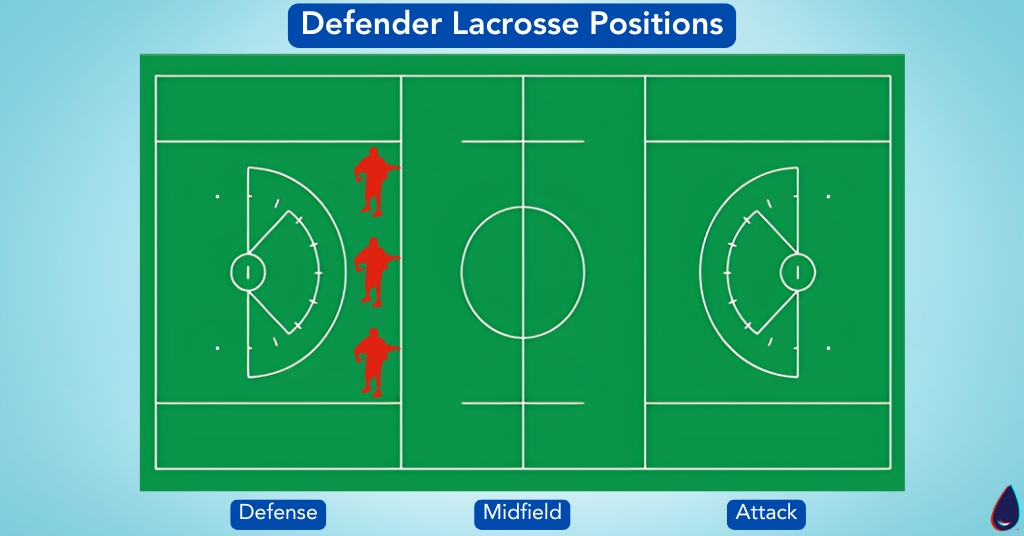
Defenders are the backbone of a lacrosse team. There are three defenders on the lacrosse field for a team. However, there are two types of defenders: Close and Check.
In their roles, close defenders may need to engage physically to dislodge the ball from an opponent’s possession.
Whereas check defenders focus more on strategy than physicality, although their primary role is to block opponents from scoring.
Responsibilities of Defenders
- Guard opposing attackmen
- Block shots
- Clear the ball to midfielders
Goalie Position
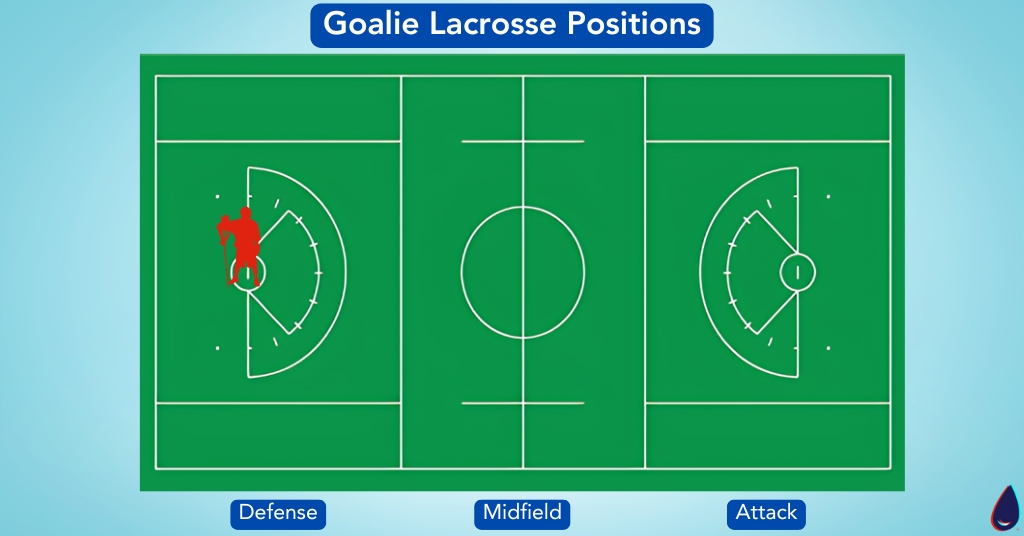
The goalie is the last line of defense in lacrosse. They are a combination of quick reflexes, speed, and a whole lot of courage. They stand against speed shots, stopping the goal of the opposing team. They are a different breed.
Goalies play an important role in turning the game around. When it feels like your team isn’t gaining possession of the ball and the opposition is close to scoring a goal. The goalie would stand in the way of it.
Responsibilities of Goalies
- Guarding their team’s goal
- Shot-stopping
- Clearing the ball
- Directing the defense
Some notable goalies are Blaze Riorden, John Galloway, Eric Peters, and Colin Kirst. They are like superheroes in the lacrosse world.
Substitutions and Rotations in Lacrosse
Substitutions and rotations play a crucial role in lacrosse strategy, allowing teams to maintain high energy levels and gain a tactical advantage over their opponents.
| Substitutions | Rotations |
| Quick swaps that bring fresh players onto the field to maintain peak performance. | Pre-planned movements that shift players in and out strategically to disrupt the opponent’s game plan. |
Both substitutions and rotations help teams:
- Keep players fresh and mentally sharp
- Exploit defensive or offensive mismatches
- Control the pace and momentum of the game
- Adapt to changing situations on the field
By rotating players effectively, coaches keep opponents guessing and maintain a dynamic, unpredictable style of play.
Read More: How Much Do Professional Lacrosse Players Earn?
People Also Ask
How Many Positions Are There in Lacrosse?
There are 10 lacrosse positions, including attackers, midfielders, defenders, goalies, and specialists like Face-Off Specialists, Long Stick Midfielders, and Short Stick Defensive Midfielders.
What Are the 12 v 12 Positions in Girls Lacrosse?
Girls lacrosse features 12 positions: 3 attackers, 5 midfielders, 3 defenders, and 1 goalie, with midfielders playing both offensive and defensive roles.
What Are the 10 Rules of Lacrosse?
The 10 basic lacrosse rules include offside restrictions, body checking, face-offs, shot clocks, stick regulations, penalties, substitutions, goal crease violations, out-of-bounds rules, and defensive clearing time.
What Are the Positions in Lacrosse?
Lacrosse positions include attackers, midfielders, defenders, goalie, Face-Off Specialists, Long Stick Midfielders, and Short Stick Defensive Midfielders, each with distinct offensive and defensive responsibilities.
What Is the Hardest Position in Lacrosse?
The goalie is considered the hardest position in lacrosse due to its high-pressure role in stopping shots, directing defense, and making split-second decisions.
You can also watch this video to learn more:
Lacrosse Positions EXPLAINED (2025)
Now that you know what are the 10 positions in lacrosse, you can better understand each role’s impact on the game.